If you’re a utility manager, industrial operations lead, or energy infrastructure planner, the question of switching station costs never stays limited to the initial capital outlay. I’ve been in the switching station supply and maintenance business for 12 years, first as a field tech, then a project manager, and now I spend most days walking with clients through the messy, unglamorous side of keeping power flowing reliably. Too many stakeholders fixate only on buying the right station, then get blindsided by the annual costs that sneak up—missed inspections, unplanned equipment failures, compliance fines, and even downtime that eats into revenue. This post breaks down those annual costs, how they add up, and what you can do to keep them from blowing your budget. Switching Station
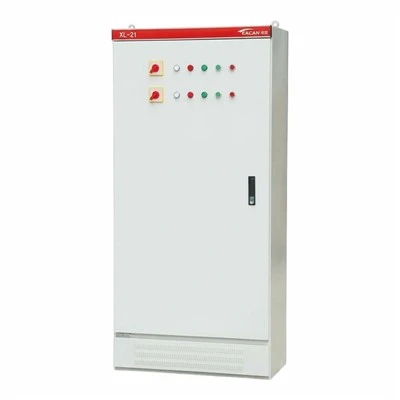
First, let’s start with the core of what a switching station actually does for context. These are the backbone of medium and high-voltage grids—they route power between generation plants, substations, and end users, switch loads during outages, and protect equipment from surges or faults. Unlike a distribution substation, which feeds neighborhoods, a switching station moves large volumes of power, so any unplanned downtime here cascades fast. That’s why maintenance isn’t just a “nice to have” for these assets; it’s non-negotiable.
Routine Preventive Maintenance: The Fixed Base Cost
The biggest slice of your annual budget is preventive maintenance, and it’s split into site-specific and equipment-specific line items. For a standard 15kV to 69kV switching station (the most common for industrial and small utility use), routine tasks happen on a set schedule—quarterly, semi-annually, or annually depending on environmental factors.
On-site labor is usually the largest part of this. I’ve seen clients hire either an in-house team or contract out every task, and numbers vary wildly. For a medium-sized switching station (say, 4 to 8 switch bays, buswork, and auxiliary equipment), contract preventive maintenance runs between $12,000 and $22,000 per year. Why the gap? If your site is in a coastal area with salt air, or a dusty mine site, technicians spend extra time cleaning busbars, checking for corrosion, and replacing degraded seals—add 20 to 30% to that baseline. In-house teams can cut that cost by 15 to 20%, but only if you invest in training them on high-voltage safety protocols, tooling, and regulatory updates. A lot of utilities skip that training and end up paying more for contractor call-outs anyway.
Then there’s parts and consumables, which make up 25 to 35% of the preventive maintenance budget. These aren’t random; they’re the small, replaceable items that wear out annually. Think dielectric testing oils for circuit breakers, thermal paste for bus connections, replacement gaskets for equipment enclosures, calibration tools for protective relays, and battery replacements for the station’s control systems. For a typical station, that’s $3,500 to $6,500 a year. If you have older legacy equipment (pre-2010, often with obsolete parts), that number jumps because you might need custom-ordered components that carry a premium.
Don’t overlook environmental compliance checks, either. Most regions require annual infrared thermography scans of buswork and connections, dielectric strength testing of insulation, and arc flash hazard assessments. These aren’t “nice to have”—OSHA, NFPA, and regional energy regulators mandate them. A lot of maintenance packages bundle these in, but if you’re doing them separately, they add another $1,800 to $4,000 annually. For example, an infrared scan for a 69kV switching station runs around $2,500 alone.
Corrective & Reactive Maintenance: The Variable Cost
This is the line item that sinks most budgets. Preventive maintenance stops 70 to 80% of equipment failures, but the remaining 20% hits unexpectedly, and it’s expensive. Last year, I worked with a manufacturing plant whose switching station had a circuit breaker fail mid-production; the unplanned repair cost them $18,000 in parts and labor, plus $27,000 in lost product revenue. For utilities, that number is even higher—an outage at a switching station can affect thousands of customers, leading to regulatory penalties as well.
Corrective maintenance costs vary dramatically by equipment age and condition. For a station that’s under 10 years old, well-maintained, reactive repairs usually run $5,000 to $10,000 a year. But for a station over 20 years old, even with regular upkeep, components like dead-tank circuit breakers, protective relays, and switchgear mechanisms start to degrade faster. I’ve seen these costs hit $25,000 a year for legacy stations because parts are hard to source, and techs need specialized training to work on older equipment.
A big mistake I see clients make here is skipping “minor” corrective tasks to save money. Last year, a small utility put off replacing a corroded bus connection in a switching station for a year, costing them $12,000 in repair plus a $7,500 fine from the state’s energy regulator for an unplanned outage. That’s the kind of short-sighted choice that makes annual maintenance costs look out of control.
Regulatory & Insurance Costs: The Hidden Lines
Most people forget these when they’re budgeting, but they add up fast. First, annual site inspections from regulatory bodies. In the U.S., that might be the Public Utility Commission or OSHA; in Europe, it’s national energy regulators. These inspections are usually every 1 to 3 years, but they carry associated costs: pre-inspection audits, fixing any non-compliance issues, and any consulting fees to prep documentation. For a mid-sized station, that’s $2,000 to $5,000 per inspection, spread out over your annual budget.
Then there’s liability insurance specifically for high-voltage equipment. General business insurance rarely covers switching station risks—you need a specialized policy that accounts for arc flash hazards, property damage, and customer outage liability. Premiums depend on equipment age, maintenance history, and location, but they typically run $3,000 to $8,000 a year. For a station in a high-fire-risk area, that can go up another 10 to 15%.
Technology & Upgrades: The Ongoing Investment
Maintenance isn’t just fixing things—it’s keeping your station aligned with current technology, which adds a set of annual costs. If you’re running a station built before 2015, your protective relays are likely electromechanical or early digital models that don’t integrate with smart grid systems. Upgrading to modern digital relays, which can send real-time fault data and reduce outage response time, costs $5,000 to $12,000 per bay when done as part of a planned upgrade. A lot of clients spread this out over 3 to 5 years, so that’s $1,000 to $4,000 added to your annual maintenance budget.
Another key tech investment is remote monitoring. I’ve seen clients cut annual maintenance costs by 15 to 20% after installing a small remote monitoring system that tracks temperature, pressure, and equipment status 24/7. That system’s annual cost (data plans, software subscriptions, occasional sensor replacements) runs $1,200 to $3,000, but the early fault detection it pays for itself within a year.
Real-World Example: Putting It All Together
Let’s make this concrete. Last year, we worked with a mid-sized industrial switching station for a food processing plant in the Midwest. It’s 10 years old, 30kV, has 6 switch bays, and is in a low-dust, non-coastal location. Their annual maintenance cost breakdown looked like this:
- Preventive maintenance (labor, parts, inspections): $16,800
- Reactive repairs: $7,200 (one circuit breaker seal replacement, a minor relay calibration)
- Regulatory compliance prep: $2,800
- Liability insurance: $4,100
- Remote monitoring system (added mid-year): $1,800
Total annual cost: $32,700. That’s right around the midpoint for a station of this size.
Compare that to a 25-year-old legacy switching station in the same region, owned by a small rural utility. Their costs:
- Preventive maintenance: $19,200 (extra cleaning and corrosion work)
- Reactive repairs: $21,500 (two circuit breaker replacements, custom relay parts)
- Regulatory compliance prep: $3,500
- Liability insurance: $5,900
- No remote monitoring yet: $0
Total annual cost: $50,100. That’s a 53% higher cost, mostly due to legacy equipment. It’s not that the old station is “bad”—it just needs more work to stay compliant and reliable.
How to Reduce Annual Costs Without Cutting Quality
The good news is that you don’t have to accept these numbers as fixed. As a switching station supplier, we work with clients every day to optimize these costs without sacrificing reliability. Here are the strategies that consistently work:
- Pair preventive maintenance with data: Use remote monitoring to catch small faults before they become expensive repairs. For the industrial client we mentioned earlier, adding remote monitoring cut their reactive repair costs by 30% in the first year.
- Schedule upgrades proactively, not reactively: Don’t wait for a legacy part to break before replacing it. Buying components in bulk, or choosing standardized equipment for new builds, can cut parts costs by 20 to 25%.
- Train your in-house team: A lot of utilities spend more on contract maintenance than they need to. We offer custom training for in-house teams on high-voltage maintenance, which cuts long-term costs and ensures consistency.
- Review insurance and contracts annually: Maintenance packages and insurance premiums change. Every year, shop around and renegotiate your contracts—we’ve had clients save $3,000 a year just by switching to a maintenance provider that specialized in their station type.
At the end of the day, the cost of maintaining a switching station isn’t a random number—it’s a function of how old your equipment is, where it’s located, and how intentional you are about maintenance. Skip the small, regular tasks, and you’ll pay way more in downtime and repairs. Plan for them, and you’ll keep costs manageable while keeping power flowing reliably.
If you’re looking to optimize your switching station’s maintenance budget, need a quote for equipment upgrades, or want to learn more about how we tailor solutions to your specific site, feel free to reach out to discuss your needs in detail.
20kV-35kV Oil Immersed Transformer References
- NFPA 70E: Standard for Electrical Safety in the Workplace, 2024 Edition
- IEEE Std. C37.100: Standard for Common Definitions for Power Switchgear, 2017 Edition
- U.S. Energy Information Administration, “Transmission and Distribution Infrastructure Maintenance Costs,” 2022
- Occupational Safety and Health Administration (OSHA), “High Voltage Equipment Maintenance Compliance Guidelines,” 2023
Shandong Xunchi Electric Co., Ltd.
Shandong Xunchi Electric Co., Ltd. is one of the most professional switching station manufacturers and suppliers in China, featured by quality products and low price. Welcome to wholesale advanced switching station made in China here and get quotation from our factory. Customized orders are welcome.
Address: No.1 East Campus of Dachi Company on the North Ring Road, Yongchang Street Office, Chengwu County, Heze City, Shandong Province, China
E-mail: sdxcdq@126.com
WebSite: https://www.china-xunchielectric.com/
