If you’re a home brewer, you’ve probably spent hours perfecting your grain bill, dialing in mash temperature, and chasing that crisp, balanced bitterness—but there’s one step that often gets overlooked until it derails your entire brew day: sparging. As someone who’s been in the beer brewing equipment industry for over 12 years, I’ve watched hundreds of home brewers struggle with sparge water volume, and too many end up with wort that’s too thin (low gravity, watery beer) or too concentrated (off-flavors, harsh bitterness from extracted tannins). The truth is, sparge volume isn’t a guess—it’s a science, and it’s tied directly to your equipment, your grain bill, and the efficiency you’re chasing. Let’s break this down so you can nail it every time, no fancy degree required. Beer Brewing Equipment
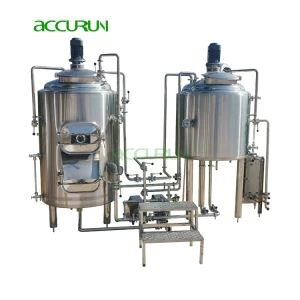
First, let’s start with the basics: what is sparging, anyway? After you mash your grains (soaking them in hot water to convert starches into sugars), you need to rinse all those sweet, sugary wort out of the grain bed. That rinse is sparging, and the water you use here is sparge water. The volume matters because it’s the main factor that determines how much sugar gets extracted from the grain, and thus the original gravity (OG) of your finished wort—OG is the backbone of your beer’s alcohol content, body, and sweetness. Too little sparge water, and you’ll leave sugar in the grain, leading to low ABV and a thin beer. Too much, and you’ll dilute the wort so much that even if you boil it down, you might end up with stuck fermentation or a harsh, astringent taste from over-extracted grain husks.
But here’s the thing: there’s no one-size-fits-all number for sparge volume. It depends almost entirely on your brewing equipment, because not all home setups handle sparging the same way. Let’s break it down by the most common equipment types I see brewers using, since that’s where most mistakes happen.
If you’re a new brewer with a all-in-one (BIAB) system, like a single pot that does mash, lautering, and boiling all in the same vessel, sparge volume is super straightforward—because you don’t do a traditional batch sparge or fly sparge here. BIAB relies on the “grain bed” inside the bag, and you use the volume of water you need to hit your target pre-boil volume. For example, if your target pre-boil is 5 gallons (19 liters), your sparge water is just the water you add to the grain during mash, plus any extra to make up the difference. Wait, hold on—mash volume is separate. Your mash is usually 1.25 to 1.5 quarts of water per pound of grain (2.6 to 3.1 liters per kg of grain) for most BIAB setups. So for a 10-pound grain bill, that’s 12.5 to 15 quarts of mash water. So to hit a 5-gallon pre-boil, you’d add sparge water (which in BIAB terms is just extra water) to that: 5 gallons is 20 quarts, minus 12.5 to 15 quarts, gives you 5 to 7.5 quarts of sparge water. Simple, right? But even here, don’t guess—measure your grain weight and use that ratio. I’ve had a customer last month who used too little sparge water in their BIAB and ended up with a 1.030 OG instead of their planned 1.055, and they thought their yeast was bad until we walked through the numbers.
Next, if you’re using a batch sparge system—super common for brewers with a separate mash tun, either a plastic cooler or a metal brew basket—this is where you’ll adjust sparge volume more intentionally. Batch sparging means you do two rounds of rinsing: first you mash, drain the first runnings (which are the sweet wort), then add a second volume of hot water, let it rest to make a second wort, and drain that too. The goal here is to get as much sugar as possible without over-diluting. For batch sparge, the rule of thumb I teach is: total sparge water volume (mash + sparge) minus the grain absorption equals your pre-boil volume. Wait, grain absorption is key here—grains soak up water like a sponge. Most base malts absorb about 0.12 to 0.15 gallons per pound of grain (0.9 to 1.1 liters per kg). So if you have a 10-pound grain bill, that’s 1.2 to 1.5 gallons of water absorbed by the grain. Now, your target pre-boil volume: let’s stick with 5 gallons again. So total water needed for mash and sparge is pre-boil volume plus grain absorption, right? So 5 gallons + 1.2 to 1.5 gallons = 6.2 to 6.5 total gallons. Then, your mash water is 1.25 quarts per pound (as before, 12.5 quarts = 3.125 gallons for 10 pounds), so your sparge volume for batch sparge is total water minus mash water: 6.2 to 6.5 gallons minus 3.125 gallons = 3.075 to 3.375 gallons. That’s your first sparge, and if you need a second, you’d use the same logic—just don’t overdo it. I’ve seen brewers use more than 3.5 gallons for a 10-pound grain bill here, and they ended up with runnings that were thin, and the boil took twice as long because they had to evaporate all that extra water.
Now, the trickiest one for many brewers is fly sparging, which is when you trickle sparge water slowly over the grain bed while draining the wort at the same time—your mash tun has a false bottom, so the water runs through evenly. Fly sparging is more common with medium to large setups, and here sparge volume is tied to your “lauter efficiency” target, not just pre-boil volume. For fly sparge, the traditional formula is: target total wort (pre-boil) + grain absorption + dead space absorption. Wait, dead space is the water that gets trapped in the lines, the false bottom, and the bottom of your mash tun—usually about 0.5 to 1 gallon for most home brew equipment. So let’s adjust that example: 10 pounds of grain, 0.12 gallons absorbed per pound = 1.2 gallons. Dead space = 0.75 gallons. Target pre-boil = 5 gallons. So total water needed is 5 + 1.2 + 0.75 = 6.95 gallons. Mash water for fly sparge is a bit different, usually 1.5 to 1.75 quarts per pound to get a thicker mash that doesn’t compact the grain bed. So 10 pounds = 15 to 17.5 quarts = 3.75 to 4.375 gallons of mash water. So sparge water volume for fly sparge is total water minus mash water: 6.95 minus 3.75 = 3.2 gallons, to 6.95 minus 4.375 = 2.575 gallons. But here’s where fly sparging gets tricky: you can’t just pour all that sparge water at once. You have to trickle it evenly, and stop when the runoff reaches about 1.010 gravity—any more, and you’re pulling tannins. That’s why I always recommend a refractometer for fly sparge brewers, because it takes the guesswork out of when to stop.
Wait, but what if your equipment is different? Let’s say you have a 5-gallon mash tun, not a 10-gallon one. Or you brew all-grain vs extract? No, extract brewers don’t do sparging, but if you’re moving to all-grain, this applies. The biggest mistake I see new all-grain brewers make is not accounting for their equipment’s absorption and dead space. Last year, a brewer who used a metal mash tun came to me with a batch of beer that tasted like wet cardboard—turns out he used the same sparge volume as his buddy with a plastic cooler mash tun, and his metal tun had 1 gallon more dead space, so he over-diluted the wort, leading to tannin extraction. That’s why it’s critical to test your own equipment if you can—do a small test brew with a known grain bill, measure how much water your grains absorb, how much is stuck in dead space, and adjust your sparge volume accordingly.
Another thing to factor in: water pH? No, that’s separate, but wait—no, sparge water pH can affect sugar extraction, but volume is still the main variable here. Wait, let’s not get distracted. The key takeaway is that sparge volume is a balance between three things: how much sugar you need, how much water your grains will absorb, and how much water your equipment will hold onto.
Now, let’s talk about common pitfalls that even experienced brewers fall into. First, “topping up” with sparge water mid-boil. A lot of brewers think, “I’ll just add extra water to my boil to hit the target volume,” but that’s a mistake. Adding sparge water after lautering means you’re adding water that’s not fully filtered through the grain bed, so you might not get the full sugar extraction, and you’ll end up with a weaker beer than planned. Second, not accounting for evaporative loss during boil. Wait, that’s part of pre-boil volume—if your boil loses 1 gallon, you need to add that to your target pre-boil. So if you want 5 gallons post-boil, your pre-boil needs to be 6 gallons, because you’ll lose 1 gallon to evaporation. That ties back to sparge volume: if you miscalculate pre-boil volume because of evaporation, your sparge volume will be off too. Third, using the same sparge volume for every batch. If you change your grain bill—say, from a 10-pound pale ale to a 15-pound stout—your grain absorption goes up (stout malts absorb more water than pale malt), so you need to adjust sparge volume. More grain = more water absorbed, so less sparge water needed, to keep pre-boil volume the same. That’s a mistake I see all the time: a brewer did a stout with too much sparge water, ended up with a thin stout instead of a rich, full one, and blamed the grain, not the volume.
As someone who works with beer brewing equipment every day, I can tell you that adjusting sparge volume is one of the easiest ways to improve your brew day results, and it doesn’t require buying a bunch of fancy gear (though a refractometer is a worthwhile investment). The right equipment can make this even easier: our mash tuns, for example, have a calibrated false bottom that improves runoff consistency, so you don’t have to worry about uneven sparging, which means you can stick closer to your calculated volume. We also offer pre-sized sparge water calculators tailored to different system sizes, so you don’t have to do the math yourself—no more guessing, no more miscalculations.
But even if you’re not using our equipment, the steps I’ve outlined will work for any home setup. The best part is that once you nail your sparge volume, you’ll start seeing more consistent OGs, better ABV, and less off-flavors in your beer. It’s the small detail that separates a good home brewer from a great one, and it’s something you can master with just a few test batches.
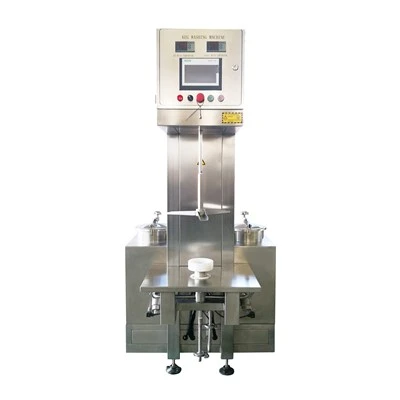
If you’re ready to upgrade your home brewing equipment to make sparging easier, or if you have questions about how to adjust sparge volume for your specific setup, we’re here to help. We’ve worked with thousands of home brewers over the years, from beginners just starting out to hobbyists with 10-gallon setups, and we can help you find the right tools to make your brew days more successful. Reach out to us to discuss your equipment needs and get personalized advice for your sparge volume goals.
Beer Tank References
- Palmer, J. J. (2017). How to Brew: Everything You Need to Know to Brew Great Beer Right. Brewers Publications.
- DeLange, B. (2018). The Complete Guide to Home Brewing. Voyageur Press.
- SPIKE Brewing. (2021). “Sparging Best Practices for Home All-Grain Brewers.” Brewing Technical Journal.
- White, D., & Zainasheff, J. (2020). Yeast: The Practical Guide to Beer Fermentation. Brewers Publications.
Taian Accurun Machinery Co., Ltd.
As one of the most professional beer brewing equipment manufacturers and suppliers in China, we’re featured by quality products and good price. Please rest assured to buy durable beer brewing equipment for sale here from our factory. Contact us for more details.
Address: Room 1002,huijin Center,Blossom plaza,Taishan district,Taian city,Shandong province
E-mail: meng.li@accurunbrew.com
WebSite: https://www.accurunbrews.com/
