Hey everyone, it’s Jake from your go-to plug supplier, here to talk about something that trips up so many people—choosing the right plug amperage. Look, I get it, when you’re rummaging through electrical supplies, the amps on the plug can feel like a random number that doesn’t matter… until it does. Like, when your space heater keeps tripping the breaker, or your new laptop charger won’t stay plugged in without overheating. That’s not the plug being “bad”—that’s you picking the wrong amperage, plain and simple. I’ve been selling plugs for 8 years now, and I’ve seen almost every mistake under the sun, so let’s break this down like we’re hanging out at my warehouse, no stuffy tech jargon allowed. Plugs
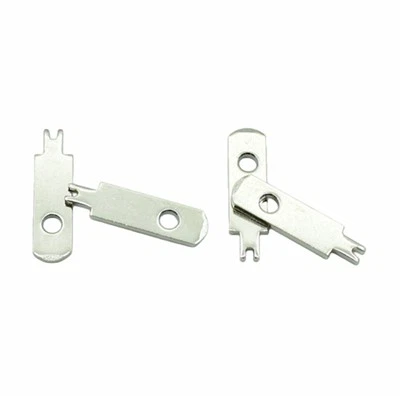
First off, let’s get the basics straight that no one ever tells you: amperage (or “amps,” for short) isn’t some made-up number. It’s the measure of how much electrical current is flowing through that plug and the device connected to it. Think of it like a garden hose: the plug is the hose, the current is the water. If you try to pour 10 gallons of water through a hose that’s only built for 5, it’s gonna burst, right? Same exact thing with electricity. If your plug’s amperage is too low for your device, you’re gonna get overheating, blown fuses, or even worse—fire risks. If it’s too high? Well, that’s just a waste, and you might not get a proper connection that keeps your gear working right.
Wait, let’s make this super concrete. Let’s say you want to plug in a space heater that’s 1500 watts. How do you calculate how many amps you need? Easy math here (I swear, it’s middle school level): Amps = Watts divided by Volts. Most homes in the US run on 120 volts for regular outlets, so 1500 ÷ 120 = 12.5 amps. That means you need a plug rated for at LEAST 13 amps—never go lower. If you grab a 10-amp plug, that’s under, and that space heater is gonna overheat so bad, you’re gonna smell plastic in no time. I’ve had a customer bring back a 10-pack of 10-amp plugs for exactly this last month; he tried running his 1500-watt power tool off them and fried three plugs before he called me. Total avoidable.
Now, here’s the part that confuses most folks—what about devices that have different plug styles, like 240-volt ones? Oh right, bigger devices like dryers, ovens, or electric water heaters run on 240 volts, and their amps are way higher. A standard electric dryer is usually 30 amps, so you can’t just swap that for a 15-amp plug, that’s a recipe for disaster. And fun fact: those 240-volt plugs are shaped totally different too, so you can’t even jam a 15-amp 120-volt plug into a 240-volt outlet, which is a safety net, tbh. That’s not an accident—manufacturers designed that mismatch to keep people from doing something stupid.
But hold up—don’t just look at the plug’s rating alone. You also gotta check the outlet and the circuit it’s on. I can’t tell you how many times someone buys a 20-amp plug, but their kitchen only has 15-amp circuits. Even if the plug fits, the circuit can only handle so much, so you’ll trip the breaker every single time. The general rule here is: the plug’s amperage can’t exceed the circuit’s amperage. That’s non-negotiable. If your circuit is 15 amps, stick to plugs rated for 15 or lower. If it’s 20, you can use a 15 or 20 amp plug, just make sure the outlet is a 20-amp one (they have a little T slot for that).
Wait, what about extension cords? Yeah, those play a role too, and people sleep on this. If you’re using an extension cord with your device, the cord’s amp rating matters just as much as the plug. A cheap, thin 16-gauge extension cord might only be good for 10 amps, so even if your plug is 13 amps, that cord is gonna bottleneck you. I always tell customers: get the thickest gauge cord you need for the length, and match its amp rating to your device. If you’re running a long extension for a power tool, go for 12 or 10 gauge—those can handle 15 or 20 amps easy. I’ve seen people use a 50-foot 16-gauge cord for a lawnmower that pulls 15 amps, and the cord got so hot it melted the insulation. No joke, that was a close call.
Another common mistake: people mix up “maximum amperage” and “actual use” for things like power strips, but wait—no, we’re not talking about power strips right now, we’re talking about plugs. Wait, no, same logic applies to the plug itself. The plug is a component, so its max rating is the most current it can safely carry. Never push it past that.
Let’s talk about when you should upgrade amperage. Like, if you’re rewiring a shop or adding a new appliance, don’t just keep using the same old 15-amp plugs. If you’re running a saw that pulls 18 amps, you need a 20-amp circuit and a 20-amp plug. Yeah, it might cost a little more upfront, but it’s way cheaper than replacing a burnt-out tool or, worse, dealing with an electrical fire. I’ve had customers skip this to save $5, and they ended up paying thousands in damage when their workshop burned down. Don’t be that guy.
Wait, what about old plugs? Like, if you have an antique lamp that has a weird old plug, and you wanna replace it? Don’t just grab any plug. Take the old one apart (safely—unplug it first!) and check its rating. Most old table lamps are 7 or 10 amps, so you don’t need a 15-amp plug for them. Using a higher amp plug on a low-wattage device is fine, actually—it’s just overkill, not dangerous. The reverse is the problem: using a low amp plug on a high-wattage device. That’s where the risk is.
Oh, and let’s clear up a myth right now: “All 15-amp plugs are the same.” No, they’re not. Some are for indoor use, some are rated for outdoor, some are for heavy-duty use. An outdoor plug needs a higher amp rating and better insulation to handle rain, snow, and temperature swings. If you use an indoor 15-amp plug for your Christmas lights outside in the rain, it’s gonna corrode, lose connection, and could cause a shock or fire. That’s why I sell specific rated plugs for different uses—indoor, outdoor, heavy-duty for tools, medical equipment, you name it. I don’t cut corners on that because I don’t wanna be the guy who sold someone a plug that almost hurt them.
Here’s a quick checklist you can pull up next time you’re buying a plug:
- Check your device’s wattage (it’s usually on a sticker on the back or bottom, or in the manual).
- Calculate amp rating: Amps = Watts ÷ Volts (Volts is almost always 120 for home devices, 240 for big appliances).
- Make sure the plug’s rating is AT LEAST that number. Never go lower.
- Check your circuit’s amp rating (you can find that on the breaker box—each switch is labeled with 15, 20, or 30, etc.). The plug’s rating can’t exceed the circuit’s rating.
- If you’re using an extension cord, match its amp rating to your device too.
- Pick a plug rated for the environment: indoor, outdoor, heavy-duty, whatever you need.
Wait, I should mention medical devices too, because those are super important. If you’re a hospital or a home user with a CPAP machine or a nebulizer, those devices have very specific amp requirements. I sell medical-grade plugs that are tested to handle the constant use and specific current needs of those devices. Never use a regular plug for medical gear—those devices are lifelines, and a faulty plug could mean they stop working when you need them most. I’ve got a whole line of those, so just ask if you need something specific.
Another thing I see a lot: people buy multi-plug adapters, like the ones that turn one outlet into three. But you gotta remember—those adapters don’t increase the circuit’s total amp capacity. If you plug three 10-amp devices into a 15-amp circuit, that’s 30 amps total, which is way over the circuit’s max, so you trip the breaker. It’s not the plug’s fault, it’s overloading the circuit. But that’s a separate issue—we’re talking about plug amperage here, so just keep in mind that the plug itself has a max, and the circuit has a max.
Let me give you a recent example to drive this home. A customer came to me last month panicking because his new space heater kept tripping the breaker. He had a 15-amp plug, the heater was 1500 watts, so that’s 12.5 amps, which should be fine. Wait, but his circuit was only 10 amps—he had a 10-amp circuit for that wall. Oh, that was the problem. So we swapped the circuit for a 20-amp one, and used a 15-amp plug, and it worked perfectly. He would’ve kept swapping plugs and wasting money if he didn’t check the circuit first. That’s the kind of thing I help customers with all the time—take 2 minutes to check these two things, and you avoid so much hassle.
Now, I know some of you are thinking, “This seems complicated, can’t I just ask someone?” Yes, that’s what I’m here for. I don’t just sell plugs— I help people pick the right one, no pressure, no upsell. If you’re not sure about what amp you need for your device, your circuit, whatever, just hit me up. I’ve been doing this for 8 years, I’ve seen every scenario, and I can give you a straight answer.
I also wanna touch on code compliance, because a lot of building codes have rules about plug amperage for new construction or remodels. If you’re a electrician or a homeowner doing a big reno, using the wrong amp plug can get you in trouble with inspections. I make sure all my plugs are UL-rated and meet current electrical codes, so you don’t have to worry about that. That’s one less stress for you.
Wait, let’s recap the key points again so you don’t forget:
- Amps = Watts ÷ Volts, so use that formula to find your minimum required amp.
- Plug amp must be at LEAST your device’s required amp— never lower.
- Plug amp can’t exceed your circuit’s amp rating.
- Match the plug to where you’re using it: indoor vs outdoor, heavy-duty vs regular.
- Don’t forget extension cord ratings if you’re using one.
I swear, 90% of the plug problems I see come from people skipping these simple steps. It’s not rocket science, it’s just paying attention to a number on a sticker, that’s it.
If you’re shopping for plugs right now, whether you need a handful for your home, bulk for a business, specialty plugs for medical or industrial use, I can hook you up. We’ve got all different amp ratings, styles, and ratings for every job. Just reach out to my team to chat about what you need—no sales pitch, no hoops to jump through, just straight answers and the right plug for your needs.
At the end of the day, choosing the right plug amperage is all about safety and saving yourself from headaches later. Don’t cut corners on this— a $5 plug is not worth damaging your devices, your home, or worse. I’ve been in this game long enough to know that taking 5 minutes to get the amp right is way better than fixing a mess after something goes wrong.

So next time you’re at the hardware store or ordering plugs online, remember the stuff I told you. And if you’re stuck, hit us up—we’re here to help. Don’t let a bad plug ruin your day (or worse).
References
Travel Adapters National Electrical Code (NEC) 2023, Article 400: Flexible Cords and Cables
Underwriters Laboratories (UL) Standard 817: Cord Sets and Power Supply Cords
Consumer Product Safety Commission (CPSC) Electrical Safety Fact Sheet: Extension Cords and Plug Safety
Foshan Haosheng Technology Co., Ltd.
As one of the leading plugs manufacturers and suppliers in China, we warmly welcome you to buy advanced plugs made in China here and get pricelist from our factory. All customized products are with high quality and competitive price.
Address: No.4, Jinsha Liansha Shangliang Development Zone Avenue, Danzao Town, Nanhai District, Foshan City, Guangdong Province, China
E-mail: 13925140140@163.com
WebSite: https://www.hssocket.com/
