When you’re under the hood of a vehicle, it’s easy to fixate on the flashy parts—performance exhaust systems, turbochargers, big brake kits—but for anyone in the aftermarket or small-scale manufacturing space, the unsung heroes of suspension stability often hide in plain sight. I’ve been supplying Panhard rods for over a decade now, and more often than not, when a customer calls with a fitment issue or a performance complaint, the conversation circles back to one overlooked detail: the pivot points. Most people think a Panhard rod is just a straight bar that keeps a rear axle from sliding left or right. But if you ignore how those pivot points are engineered, you’ll end up with a ride that’s harsh, unstable, or even dangerous. Today, I want to break down why those small, seemingly insignificant pivot points are the backbone of what a Panhard rod does—and why they matter so much when you’re sourcing the right part for your build. Panhard Rod
First, let’s recap what a Panhard rod does, because that sets the stage for why the pivot points are non-negotiable. A Panhard rod is a lateral control link used on solid-axle suspensions, most commonly in trucks, SUVs, and classic off-road builds. Its core job is to control lateral axle movement: when your vehicle goes around a corner, the body leans, and the axle would otherwise drift side-to-side without something pulling it back into alignment. Think of it like a horizontal shock absorber for side-to-side motion. But here’s the catch: the rod can’t be rigidly attached to both the chassis and the axle. If it were, every bump in the road would transmit a jarring jolt straight into the cabin, and the rod would snap under the stress of suspension flex. That’s where the pivot points come in—they allow the rod to articulate as the suspension moves, keeping the axle aligned without fighting every natural movement of the suspension.
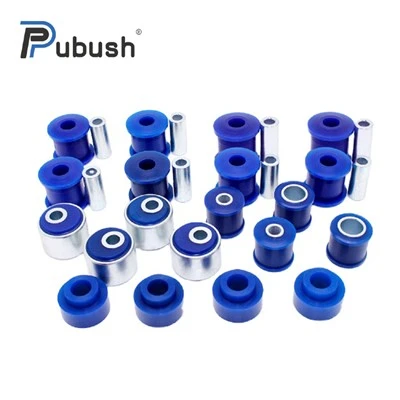
Not all pivot points are created equal, though. Over the years, I’ve seen two main types dominate the market: rubber bushed pivots and spherical bearing pivots. Each has its own pros, cons, and ideal use case, and the difference in their design directly impacts performance. Rubber bushed pivots, which are more common in factory vehicles, use a rubber or polyurethane sleeve around a metal core to create the pivot. They’re cheap, quiet, and do a good job of isolating cabin from road noise. But here’s the problem: rubber compresses and flexes under load. If you’re building a performance truck that’s hauling heavy loads or off-roading at speed, that flex adds up. A Panhard rod with a rubber bushed pivot might feel fine on the street, but when you hit a rock that tugs the axle hard, the bushing flexes enough to change the rod’s length ever so slightly. That tiny misalignment leads to uneven tire wear, vague steering, and even axle shift at high speeds. It’s a mistake a lot of first-time off-road builders make: they reuse factory rubber bushings for their new Panhard rod, only to end up fighting handling issues after a few trail runs.
Spherical bearing pivots, on the other hand, use a hardened steel ball race inside a metal housing. They’re designed for zero flex, even under heavy load. For performance builds, race cars, or vehicles that regularly carry extreme loads, this is the way to go. But they’re not perfect. Spherical bearings create more road noise and vibration than rubber bushings, which can be a nuisance on daily-driven street trucks. They also require regular maintenance—greasing every few thousand miles—to prevent wear, whereas rubber bushings are essentially maintenance-free. As a supplier, I always make sure to ask customers about their vehicle’s use before recommending a pivot type; a weekend off-roader who mainly uses their truck on pavement might be better off with a polyurethane bushing (a middle ground that balances flex isolation and load resistance), while a competitive rock crawler will need spherical bearings to handle the constant, extreme axle movement.
The placement of the pivot points matters just as much as their type. A Panhard rod’s pivot points are mounted: one on the vehicle’s chassis, and the other on the solid axle. The distance between these two points, and their relative height, is called the Panhard rod’s “moment arm,” and getting this right is critical for stability. If the pivot on the chassis is mounted too high, or too low, relative to the axle pivot, you get something called “axle wrap” or “wheel hop.” Let me explain that: when you accelerate hard, especially in a rear-wheel-drive vehicle, the axle tries to twist backward. If the Panhard rod’s pivot points aren’t aligned correctly, that twist translates into lateral movement instead. The axle shifts side to side, which makes the tires scrub against the road surface and causes wheel hop at high acceleration. It’s that annoying vibration you feel through the seat when you floor it in a truck that doesn’t have its Panhard rod aligned properly.
I see this a lot with customers who swap in a new solid axle or lift their vehicle. Lifting a truck changes the distance between the chassis and the axle, which throws the original Panhard rod’s pivot alignment out of whack. A lot of cheaper replacement Panhard rods come with fixed pivot points that can’t be adjusted, so the customer has to make do, leading to all sorts of handling problems. That’s why my team and I prioritize adjustable pivot points in the Panhard rods we supply. An adjustable pivot lets you fine-tune the alignment of the rod after installation, so you can dial out wheel hop, uneven tire wear, and drift. It’s a small feature, but it’s the difference between a build that feels planted and stable, and one that’s unsafe at highway speeds.
Another often-overlooked detail is the material of the pivot’s housing. Pivot points aren’t just about the bearing inside—they’re about how that bearing is mounted to the chassis and axle. A lot of budget Panhard rods use thin, stamped steel housings that bend or crack under extreme load. Off-roading, in particular, subjects these housings to constant impact from rocks, mud, and the force of the suspension moving. If the housing isn’t made from thick, heat-treated steel, the pivot will shift, and the entire Panhard rod’s purpose is compromised. I remember a customer who bought a cheap aftermarket Panhard rod for his Ford F-150, and after one run through a rocky trail, the chassis-side pivot housing bent so far that the rod pulled the axle off center. He had to tow his truck back to the shop, and ended up ordering a heavy-duty rod from us. That’s the kind of mistake you make when you cut corners on pivot point design; a good pivot isn’t just a rotating part, it’s a structural part that has to absorb abuse.
Temperature also plays a role in pivot point performance, especially for vehicles that operate in extreme climates. In cold weather, rubber bushings get brittle and can crack, which lets the bearing move freely, leading to play in the Panhard rod. In hot weather, they soften and flex more, which as we talked about earlier, causes alignment issues. Spherical bearings, made from hardened steel, hold up to extreme temperatures much better, making them a better choice for trucks that drive in the desert, Arctic, or other harsh environments. As a supplier, I’ve worked with clients in Canada who run spherical pivots on their snowplow trucks, because the cold would destroy rubber bushings within a few months, and clients in Arizona who prefer the durability of steel pivots for their off-road buggies.
Let’s talk about real-world impact, too. Last year, a customer who builds custom overlanding trucks came to us after his first build had persistent steering wander at 60 mph. He’d used a generic Panhard rod from a big-box auto parts store, with rubber pivot points that flexed just enough to let the axle shift side to side at high speed. The end result was a vehicle that felt like it was being pushed around by the wind, and his tires wore out in three months instead of the usual six. We supplied him a heavy-duty adjustable Panhard rod with spherical pivot points, and after he installed and aligned it, he sent us a message saying the truck felt like a completely different vehicle—stable, responsive, and no more tire wear issues. That’s the difference a good pivot point makes. It’s not a flashy part, but it solves a problem that no other suspension component can fix as effectively.
I want to be clear: I’m not saying rubber bushings are bad, or spherical bearings are always the right choice. It’s about matching the pivot point to the vehicle’s use case. If you’re building a daily driver SUV that’s mostly on pavement, a polyurethane bushed pivot is a great middle ground—it reduces noise and vibration, but is stiffer than rubber, so it resists the kind of flex that causes alignment issues. If you’re building a rock crawler, a race car, or a work truck that hauls heavy loads daily, spherical pivots are non-negotiable. And no matter which type you choose, adjustable pivot points let you fine-tune the fit, which is essential for any build that modifies the suspension or lifts the vehicle.
At the end of the day, the Panhard rod’s pivot points are a masterclass in automotive engineering: they’re simple, but their impact is profound. A lot of car builders look at suspension components as either big, expensive parts that make power, or cheap parts that just hold something together. But the pivot points are the connection that turns a bar into a functional part of the suspension. Without a well-designed pivot, a Panhard rod is just a metal tube that does nothing. With the right pivot, it’s the part that keeps your axle aligned, your tires on the road, and your vehicle stable, whether you’re cruising down the highway or crawling over rocks.

If you’re working on a build, whether it’s a classic truck, an off-roader, or a daily-driven SUV, don’t sleep on the pivot points. They’re the detail that separates a good suspension from a great one. If you have questions about which pivot type is right for your vehicle, or need a Panhard rod engineered for your specific build, don’t hesitate to reach out to discuss your needs.
For Ford GMC Mazda Chassis and Suspension Systems References
- Milliken, W. F., & Milliken, D. L. (1995). Race Car Vehicle Dynamics. SAE International.
- Heisler, H. (2002). Vehicle Engineering Technology. McGraw-Hill.
- Off-Road Suspension Technology Magazine. (2019). “Lift Kits and Panhard Rod Alignment: Common Pitfalls After Modification.”
- Automotive Suspension and Steering Association. (2021). “The Role of Lateral Control Links in Solid-Axle Suspension Systems.”
- Practical Hot Rod Magazine. (2020). “Pivot Point Design: Balancing Flex and Rigidity for Street and Performance Builds.”
Xingtai Refined Machinery and Auto Accessory Co., Ltd.
Xingtai Refined Machinery and Auto Accessory Co., Ltd. is one of the most professional panhard rod manufacturers and suppliers in China, featured by quality products and low price. Please rest assured to wholesale durable panhard rod made in China here from our factory. Customized orders are welcome.
Address: XINGTAI REFINED MACHINERY AND AUTO ACCESSORY CO., LTD507 NORTH TAIHANG ROAD, XINGTAI CITY, HEBEI PROVINCE, PR.
E-mail: lindy@rfauto.biz
WebSite: https://www.pubush-suspension.com/
