If you’ve ever grabbed a half-eaten bag of chips from the pantry, sealed it back with a quick press, and breathed a sigh of relief knowing it’ll stay crisp for days instead of turning stale, you’ve used a self-sealing bag. For years, I’ve worked as a self-sealing bag supplier, and while these tiny, seemingly simple pouches feel like a mundane part of daily life, there’s a lot more to them than meets the eye. They’re not just plastic bags with a little tab—they’re engineered to solve specific problems, adjust to the needs of every industry from food service to construction, and evolve as we figure out better, more sustainable ways to package things. Self-Sealing Bag

Let’s start with the basics, because understanding what a self-sealing bag is means breaking down how they work. At their core, these bags are made from flexible polymer films—most commonly polyethylene (PE), though polypropylene (PP) is used for sturdier, higher-temperature applications. The “self-sealing” magic comes from a strip of material integrated into one edge of the bag, right where you close it. The two most common seal mechanisms are pressure-sensitive strips and hook-and-loop-style closures, though pressure-sensitive is by far the most widely used because it’s reliable, low-cost, and easy to use.
Pressure-sensitive self-sealing strips are made of a soft, tacky polymer—usually low-density polyethylene (LDPE) modified with elastomers to give it that stickiness without feeling gooey. When you press the two sides of the strip together, the tacky material forms a temporary, airtight bond that’s strong enough to keep contents secure, but weak enough that you can pull it open again without tearing the bag. The science here is deceptively simple: the surface of the strip is engineered with micro-roughness that creates friction when pressed, and the chemical composition ensures the bond only forms under direct pressure, not on its own, so the seal doesn’t accidentally open in your pocket or storage bin.
Hook-and-loop self-sealing bags are a bit different—think Velcro, minus the bulk. One side of the closure strip has tiny, stiff hooks molded into the polymer, and the other has matching soft loops. When you press them together, the hooks catch onto the loops, creating a secure, reclosable seal that’s often used for heavier items, like hardware parts or tools, where a stronger hold is needed. I’ve worked with clients in the hardware industry for years who swear by these because their bags need to survive being tossed in delivery trucks, stacked on shelves, and handled by customers, without splitting open.
What makes self-sealing bags so versatile is that they’re customized for almost every use case. A self-sealing bag for bakery items, for example, might be made from food-grade PE that’s tear-resistant and has a slight matte finish to prevent condensation from fogging up the inside and making your muffins go soggy. A medical self-sealing bag, on the other hand, has to meet strict health standards—its film is sterilizable, and the seal is designed to maintain a tamper-evident layer so you can tell if a sample or medication has been opened. Even the size varies: you can get a self-sealing bag small enough to hold a single pill, or large enough to fit a stack of winter coats for storage.
As a supplier, I’ve seen firsthand how self-sealing bags have evolved beyond just holding snacks. Ten years ago, most people only used them for household leftovers, but today, they’re a critical part of supply chains around the world. In the food industry, they reduce food waste by letting consumers or restaurants re-seal bulk ingredients, so you don’t have to throw out half a bag of rice because it went stale. In e-commerce, self-sealing poly mailers (a type of self-sealing bag) are replacing traditional cardboard boxes for smaller items, cutting down on shipping costs and packaging waste when they’re made from recycled materials. Even in the tech industry, self-sealing bags are used to ship small parts like screws for electronics, keeping them organized and dust-free during assembly.
But there’s a lot of confusion out there about self-sealing bags, too—especially around sustainability. A few years ago, I had a client come to me asking if all self-sealing bags are single-use. The short answer is no, not if you choose the right type. The pressure-sensitive and hook-and-loop closures are designed to be reused multiple times, as long as you don’t damage the seal by pulling it open too roughly or getting debris stuck in the strip. That means a single bag can hold everything from camping supplies on a weekend trip to office stationery for years, instead of being tossed after one use.
That said, the biggest challenge the industry faces right now is making self-sealing bags more environmentally friendly without sacrificing their functionality. Traditional self-sealing bags are made from virgin plastic, which doesn’t biodegrade. Over the last five years, my team has worked closely with material scientists to develop self-sealing bags made from post-consumer recycled (PCR) PE, and even compostable biopolymers like PLA for single-use applications where recyclability isn’t practical. The key here is balancing performance: a compostable self-sealing bag has to seal as well as a plastic one, hold up to shipping, and break down in a commercial compost facility without leaving microplastics. It’s a tricky balance, but we’ve made great progress—last year, we launched a line of compostable self-sealing bags for food packaging that our bakery clients are using, and they haven’t complained about seal strength at all.
Another common question I get as a supplier is how self-sealing bags differ from zip-top bags, because a lot of people use the terms interchangeably. Technically, all zip-top bags are self-sealing bags, but not all self-sealing bags are zip-top bags. The term “zip-top” specifically refers to the interlocking hook-and-loop style closure, while “self-sealing” is a broader category that includes pressure-sensitive strips, zip-top closures, and even adhesive strips that you have to moisten to seal (though those are less common now, since they’re not reclosable). I like to explain it this way: if you press the edges together and hear a little snap or feel the strips lock into place, that’s a zip-top self-sealing bag. If the edges have a smooth, sticky strip that you press together without a snap, that’s a pressure-sensitive self-sealing bag, and both fall under the umbrella of self-sealing bags.
What I’ve learned over the years working with self-sealing bags is that they’re one of those products that everyone takes for granted—until they need them. A chef can’t keep their prepped ingredients fresh without a good self-sealing bag. A parent can’t organize their kid’s art supplies or snacks for a road trip without one. A construction worker can’t keep small hardware parts from getting lost or dirty. They’re not flashy, they don’t make headlines, but they’re essential to how we live and work every day.
If you’re a business owner looking for a packaging solution that’s reliable, customizable, and designed to fit your specific needs, a self-sealing bag is a smart choice. Whether you need them for food packaging, industrial parts, medical supplies, retail shipping, or anything in between, a good supplier will work with you to choose the right material, size, and seal type to match your requirements. They can also help you make more sustainable choices, like switching to PCR materials or compostable options, without compromising on the functionality that makes self-sealing bags so useful.
At the end of the day, self-sealing bags are all about convenience and practicality. They solve small, annoying problems—stale food, lost parts, messy storage—with a simple, effective design that’s been refined over decades. As a supplier, my job isn’t just to sell bags; it’s to help my clients find the right packaging that works for their business, their customers, and the planet. If you’re looking to source high-quality self-sealing bags for your operations, I’d be happy to discuss your needs, walk you through our product lines, and help you find the perfect solution.
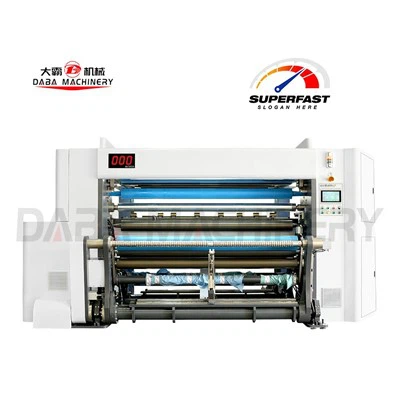
Slitting Machine References
- Soroka, W. (2019). Fundamentals of Packaging Technology. Institute of Packaging Professionals.
- Han, J., & Park, K. J. (2021). “Recent Advances in Self-Sealing Polymer Packaging Materials.” Journal of Polymer Science and Packaging.
- Environmental Protection Agency. (2022). “Packaging Waste Generation and Management in the U.S.”
- American Society for Testing and Materials. (2020). Standard Test Methods for Seal Strength of Flexible Barrier Materials.
Wenzhou Daba Machinery Co., Ltd.
With abundant experience, we are one of the most professional self-sealing bag manufacturers and suppliers in China. We warmly welcome you to wholesale advanced self-sealing bag at competitive price from our factory. If you have any enquiry about cooperation, please feel free to email us.
Address: Qianbu Industrial Zone, Xincheng Street, Ruian City, Wenzhou, China.
E-mail: info1@dabamachinery.com
WebSite: https://www.dabaflexpack.com/
