Hey there, if you’ve ever worked with industrial electrical systems, you’ve probably heard the term "vacuum circuit breaker" thrown around—maybe even as a better option than old-school oil or air breakers. But today, let’s get real about the number that matters most for these bad boys: breaking capacity. As a vacuum circuit breaker supplier, I get asked this question at least once a week, and it’s not just a random stat you can pull off a spec sheet. It’s the make-or-break (pun totally intended) number that keeps your equipment, your team, and your whole operation from going up in smoke. Vacuum Circuit Breaker
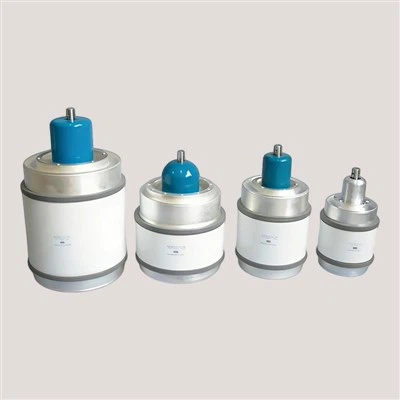
First off, let’s break down what breaking capacity actually is, in plain English. If your electrical system has a short circuit, that’s like a giant, unplanned loop of electricity that can blow fuses, fry transformers, or start fires. A circuit breaker’s job is to stop that current dead in its tracks—fast. Breaking capacity is the maximum amount of current a breaker can safely interrupt without getting damaged, right when that short happens. For vacuum CBs, this is way more reliable than other types because vacuum is a way better insulator than air or oil, but there’s a sweet spot here that’s easy to miss if you’re just glancing at numbers.
I see a lot of buyers mix up "rated breaking capacity" with something else, so let’s clarify that first. Rated breaking capacity (usually written as Ic or Ibr in specs) is the official number the manufacturer tests for—like, in a controlled lab, they hook the breaker up to a generator that pumps out a specific short current, and the breaker has to shut it off without arcing through the vacuum gap or getting pitted. But here’s where it gets tricky: real-world conditions are never as neat as a lab test. If your system has extra inductance (think long power lines or big motors), that can change the current’s behavior, so the breaking capacity might not be as straightforward as the spec sheet says. That’s why we, as a supplier, don’t just hand you a sheet and say "this is the number"—we ask about your specific setup.
Now, how is breaking capacity calculated for vacuum CBs? Let’s keep the science simple, no PhD required. The core formula is based on the voltage of your system and the short-circuit current at the breaker’s location. So if you have a 12kV system and your short current is 20kA, your minimum required breaking capacity is roughly 12kV x 20kA = 240 MVA (that’s megavolt-amperes, the unit most specs use). But vacuum CBs have a unique quirk here: their vacuum interrupter’s contact design plays a huge role. We use cup-shaped contacts in our vacuum interrupters instead of the old flat ones, right? Those cups swirl the arc into a spiral, so it doesn’t stay in one spot and burn through the contacts. That lets us get higher breaking capacity—some of our standard models go up to 50kA for medium-voltage systems, which is way more than most oil breakers can handle in the same size.
Wait, but let’s talk about what happens if you exceed the breaking capacity. I’ve seen this firsthand with a client last year—they picked a breaker with a 30kA breaking capacity for their 40kA short, because it was cheaper. Long story short, when the short hit, the vacuum arc didn’t quench properly. The contacts welded together, the breaker wouldn’t reset, and they had to shut down their entire factory for three days to replace the whole unit. That cost them way more than the extra $200 for the right breaker. So breaking capacity isn’t a suggestion—it’s a safety limit. Vacuum CBs might be tough, but they’re not invincible.
Here’s the part most people don’t know: there’s also "making capacity"—the maximum current a breaker can handle when it closes onto a short. But that’s a different number, and it’s usually higher than breaking capacity. For vacuum CBs, the making capacity is about 2.5 times the breaking capacity, because when you close onto a short, the arc is brief but the current surge is huge. We test both, obviously, but breaking capacity is what you need to worry about for interrupting a fault that’s already happened.
Let’s get into the practical side, since that’s what matters for you, not just lab numbers. If you’re in mining, for example, your equipment is constantly starting and stopping big motors, which creates more inrush current and higher short risks. You’ll need a higher breaking capacity than a small commercial building, where the short current is lower. If you’re a utility, working with distribution lines, you might use vacuum CBs with 25-40kA breaking capacity. For industrial plants with heavy machinery, we often recommend 40-50kA, because those shorts are more frequent and more intense.
Now, common myths I hear all the time. First myth: "Higher breaking capacity is always better." Nope. A breaker with too high a breaking capacity is bigger, heavier, and more expensive than you need. If your system only has a 20kA short, a 50kA breaker isn’t necessary—it’s just wasted money. We help you calculate exactly what you need based on your system’s short-circuit study, which is a free service we offer for all our regular clients. Second myth: "Vacuum CBs have the same breaking capacity forever." Wrong. The vacuum in the interrupter can leak over time (rare, but it happens), or contacts can erode from repeated operations, which lowers the breaking capacity. That’s why we recommend inspecting your vacuum CB every 5-7 years, instead of waiting for a fault.
Another thing: ambient temperature affects breaking capacity. If your breaker is in a hot environment—like a factory with no AC, or a desert location—the vacuum’s insulation properties drop a little. So we adjust the recommended breaking capacity for those conditions. For example, a 35kA breaker in standard temp might only do 30kA in 50°C heat. We mark all our specs with temperature correction factors, so you don’t end up with an underrated unit.
Let’s throw in a real example from our catalog. Our VB-12 series vacuum breakers, which are super popular for 12kV industrial systems, have a rated breaking capacity of 25kA. But for clients in hotter climates, we can tweak the contact design a bit to get that up to 27kA, no extra cost. That’s the kind of attention we give, because we don’t just sell breakers—we make sure they work for your setup.
Now, what about when you’re selecting a breaker beyond just breaking capacity? Don’t sleep on other specs: rated voltage, frequency, number of poles, and how often you can operate it without maintenance. But breaking capacity is the base—without that, nothing else matters. A breaker might fit your voltage, but if it can’t stop a short, it’s just a fancy switch.
Okay, let’s wrap this up for you. If you’re shopping for a vacuum circuit breaker, here’s your checklist: 1) Get a short-circuit study of your system to find the exact current at the breaker’s location. 2) Match that number to the breaker’s rated breaking capacity, with a 10-15% buffer just in case. 3) Factor in your environment (temperature, altitude) when adjusting that number. 4) Talk to a supplier that doesn’t just spit specs but asks about your actual setup.
We do this every single day. Whether you’re a small shop needing a single breaker or a big utility needing a hundred units, we can walk you through the numbers, help you pick the right one, and even offer testing services for existing breakers to check if their breaking capacity is still up to par. No jargon, no hidden fees—just straight talk about what your system needs.

If you’re tired of guessing about breaking capacity and want to make sure your setup is safe, hit us up for a free consultation. We’ll send over a quick form to get your system details, and we’ll get back to you with a tailored recommendation. No pushy sales stuff, just honest advice from a supplier that’s been in the vacuum breaker game for years.
Vacuum Relay References
- Electrical Engineering Portal. (n.d.). Vacuum Circuit Breaker Basics: Working Principle, Construction, Types, and Applications.
- IEEE Standard for High-Voltage Switchgear. (2017). IEEE Std C37.04-2017.
- Schneider Electric. (2022). Vacuum Circuit Breaker Selection Guide: Breaking Capacity and Application Notes.
- Industrial Automation Digest. (2021). How Short-Circuit Studies Impact Vacuum Circuit Breaker Sizing.
Jingdezhen Wanping Electric Co., Ltd.
As one of the most professional vacuum circuit breaker manufacturers and suppliers in China, we also support customized service. We warmly welcome you to buy high quality vacuum circuit breaker made in China here and get pricelist from our factory. For price consultation, contact us.
Address: Zhangshukeng, Jingdezhen City, Jiangxi Province.
E-mail: jdzwpdq0815@163.com
WebSite: https://www.cewpdq.com/
