If you’ve ever popped the hood of a car or followed automotive emissions regulations, you’ve probably heard the term air fuel ratio sensor thrown around—often paired with phrases like “critical for tailpipe tests” or “the thing that keeps your check engine light off.” But if you’re like most people, you might not realize how much this small, unassuming component shapes both a vehicle’s performance and its ability to meet global emissions standards. As a supplier of emission control components, we work with engine builders, repair shops, and fleet managers every day, and more often than not, the conversation starts with someone asking, “Wait, what does an air fuel ratio sensor actually do, anyway?” Let’s break this down simply, with the technical detail that matters, and tie it to why it’s non-negotiable for anyone focused on reducing emissions or keeping engines running right. Emission Control Components
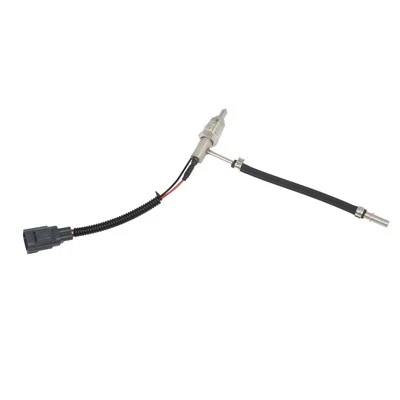
First, let’s start with the basics: the air fuel ratio (AFR) is the measure of how much air mixes with fuel before it ignites in an engine’s cylinders. For gasoline engines, the ideal ratio is 14.7 parts of air to 1 part of fuel—this is called “stoichiometric.” It’s the sweet spot where fuel burns completely, releasing the most energy with the least leftover unburned hydrocarbons (HC) and carbon monoxide (CO). Too little air (a “rich” mixture), and fuel doesn’t burn fully; leftover fuel and other pollutants get released into the air. Too much air (a “lean” mixture), and combustion gets too hot, which can damage engine parts and also creates nitrogen oxides (NOx)—another major greenhouse gas and air pollutant. That’s where the air fuel ratio sensor comes in. It’s the engine’s continuous feedback tool, constantly measuring the exhaust gasses after combustion to adjust the fuel injection, keeping the AFR right where it needs to be.
There are two main types of air fuel ratio sensors you’ll encounter in modern vehicles and heavy-duty engines, and understanding the difference is key to choosing the right part for your needs (which is where our experience as an emission control components supplier comes in). The first is the narrowband AFR sensor, which has been around for decades. This one is only accurate around the stoichiometric 14.7 AFR mark—it can’t tell the difference between a 13.5 and a 15.0 ratio, for example. It works by measuring the amount of oxygen left in the exhaust gas: if there’s a lot of oxygen, the mixture is lean; if there’s almost no oxygen, it’s rich. It sends a simple voltage signal to the engine control unit (ECU)—usually bouncing between 0.1 volts (lean) and 0.9 volts (rich). For older passenger cars, this was enough, but as emissions rules tightened in the 2000s, narrowband sensors hit a limit. That’s when wideband AFR sensors became standard.
Wideband sensors are the workhorses of today’s emission control systems. They can measure a huge range of AFRs, from 10 (very rich) all the way up to 20 (very lean)—way beyond the narrowband’s range. That precision comes from a more complex design: instead of just measuring residual oxygen, the wideband sensor uses a pump cell to push extra oxygen into or out of the sensing chamber, creating a controlled environment. The amount of voltage needed for that pump tells the ECU exactly what the current AFR is, to within 0.01 accuracy. Why does that matter? Because modern engines use this data not just for fuel efficiency, but also to run catalytic converters at peak performance. Catalytic converters rely on a very precise AFR to turn harmful emissions into water vapor and carbon dioxide—if the ratio is off, the converter doesn’t work, and you fail emissions tests. For heavy-duty diesel engines, which have even stricter NOx limits, wideband sensors also work with exhaust gas recirculation (EGR) systems to tune combustion temperatures, cutting down on smog-forming pollutants.
Now, let’s talk about why this is more than just a car part. Emissions regulations worldwide—from the U.S. EPA’s Tier 3 standards to the EU’s Euro 7 rules—don’t just set limits on tailpipe pollution; they require real-time monitoring of engine performance. The air fuel ratio sensor is the core of that monitoring. If it fails, your ECU can’t adjust fuel flow, which leads to higher emissions, worse gas mileage, and a lit check engine light. For fleet operators, a single faulty AFR sensor can mean tens of thousands of dollars in excess fuel costs or missed compliance deadlines. For repair shops, using a cheap, counterfeit sensor that doesn’t meet OE (original equipment) specifications might fix the check engine light temporarily, but it will lead to repeated emissions failures and broken-down engines down the line. That’s where our role as an emission control components supplier starts: we don’t just sell sensors—we provide ones tested to meet OE and regulatory standards, so you can rely on the sensor to perform when it matters.
One question we get a lot: how do air fuel ratio sensors work with other emission control parts? Let’s walk through a quick example of a modern gasoline light-duty vehicle. When you start the engine, the ECU uses a pre-set fuel map for cold starts, but within seconds, the air fuel ratio sensor’s reading takes over. It sends data to the ECU every 100 milliseconds, adjusting the fuel injector’s pulse length to keep AFR right at 14.7. Upstream of the catalytic converter, the primary AFR sensor monitors exhaust before the converter, and a downstream sensor checks exhaust after the converter. If the downstream sensor shows that the converter isn’t reducing emissions properly, the ECU will adjust the fuel mix to fix it—all thanks to that feedback loop from the sensors. For diesel engines, which run lean most of the time, wideband sensors work with diesel particulate filters (DPFs) and selective catalytic reduction (SCR) systems to manage NOx and soot, making sure every system in the emission control chain works in sync.
Of course, sensors don’t last forever. High exhaust temperatures, road grime, and contamination from bad fuel can wear out an AFR sensor over time. How can you tell if yours is failing? Common signs are a check engine light that won’t go away, rough idling, reduced gas mileage, or a failed emissions test. When that happens, it’s critical to replace the sensor with one that’s calibrated correctly for your engine. A wrong sensor—even if it fits physically—will send incorrect data, leading to all of the problems we mentioned earlier. As someone who’s spent years working with emission control components, I can’t stress enough that cutting corners on a sensor isn’t worth the risk. A $10 sensor might seem like a bargain, but if it leads to a $500 emissions test failure or a damaged catalytic converter, it’s a bad investment.
Let’s circle back to the original question: What is an air fuel ratio sensor? It’s not just a part—it’s a critical link between engine performance and emissions compliance. It’s the small, constant worker that keeps your car running smoothly while reducing the pollution that harms our air. For anyone in the automotive industry, whether you’re managing a fleet, running a repair shop, or engineering a new engine, understanding how these sensors work is key to staying on top of regulations and keeping vehicles reliable.

At our company, we specialize in emission control components, and we’ve built our reputation on providing high-quality, tested AFR sensors that meet the exacting standards required for both passenger cars and heavy-duty engines. We work with a wide range of customers, from small repair shops to large fleet operators, and we’re here to help you find the right sensor for your needs. If you’re looking to upgrade your emission control system, replace a faulty sensor, or just have questions about how air fuel ratio sensors work with your specific engine, don’t hesitate to reach out to our team to discuss your requirements.
EGR Valve References:
- EPA. (2022). "Light-Duty Vehicle Emission Standards and Regulations." U.S. Environmental Protection Agency.
- SAE International. (2020). "Air Fuel Ratio Sensors for Automotive Applications." SAE International Journal of Engines.
- Heywood, J. B. (1988). Internal Combustion Engine Fundamentals. McGraw-Hill Education.
- European Commission. (2023). "Euro 7 Emission Standards for Passenger Cars and Light Commercial Vehicles." European Union.
Wenzhou Pinyi Automobile Accessory Co., Ltd.
Wenzhou Pinyi Automobile Accessory Co., Ltd. is one of the most professional emission control components manufacturers and suppliers in China, also supports customized service with low price. Welcome to wholesale advanced emission control components in stock here and get pricelist from our factory. 2 years warranty is available.
Address: Building 5, Jiale Automobile Zhipei Tech.Park, No.88, Fengdu First Rd. Ruian City, Zhejiang Province, China
E-mail: manager@pyparts.com
WebSite: https://www.pyecs.com/
