When I first started working as a drive motor supplier back in 2012, I’d sit across the table from potential clients who’d ask, “We need a motor that works hard all day—what size do I need?” My standard answer used to be, “Well, it depends on how hard you work it.” Back then, I thought that was enough. Now, after more than a decade of troubleshooting, customizing, and standing behind thousands of motors for everything from material handling conveyors to electric shuttle buses, I know that answer is incomplete. The real question those clients were trying to ask? What is a drive motor’s duty cycle? It’s not just a technical term—it’s the backbone of whether a motor will run smoothly for 10,000 hours or conk out halfway through a single shift. Today, I want to break this down like I do with my onsite customers: plain talk, no jargon, and real examples tied to how we design and supply motors every day. Drive Motor
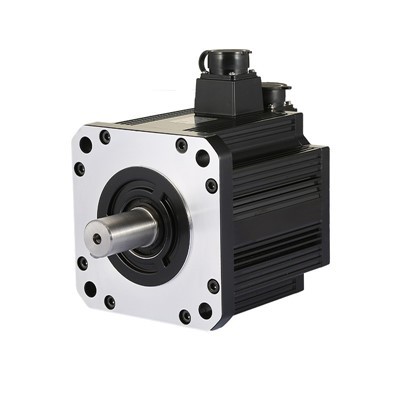
First, let’s strip duty cycle down to its core. Put simply, a drive motor’s duty cycle is the pattern of operation—when it turns on, when it runs, how much load it carries, and when it turns off—that defines how it’s supposed to work over time. It’s not a one-size-fits-all number; it’s a profile unique to every application. Think of it like a work schedule. A teacher’s duty cycle is 9-to-5, Monday through Friday, with breaks for lunch, grading, and summer vacation. A firefighter’s duty cycle is 24-hour shifts, high-intensity bursts of work, then rest, no two shifts exactly the same. A motor’s duty cycle is the same: it tells you exactly what work the motor is built to handle, without overheating, wearing out too fast, or wasting energy.
The biggest mistake I see new customers make is treating a motor like a light switch that’s either on 100% or off. I had a food processing client two years ago who ordered a 5HP motor rated for continuous use, but installed it on a slicing line that runs 12 hours a day, only slowing down for 10-minute breaks every hour. Within three months, the winding insulation cracked, the bearings seized, and they were stuck with a $15,000 production delay. When we pulled the old motor apart, the problem was not the motor’s power—it was the duty cycle mismatch. The continuous-duty motor was built to run nonstop, but the slicing line’s stop-start pattern meant it was carrying peak load for too many short bursts, generating heat it couldn’t dissipate fast enough during those tiny breaks. That’s when I realized how much confusion exists around this term, even among people who rely on drive motors to keep their operations running.
Now, let’s talk about the standard duty cycles you’ll encounter, because these are the ones we use every day to spec motors for our clients. The International Electrotechnical Commission (IEC) and National Electrical Manufacturers Association (NEMA) define these, and they’re the industry standard for good reason. The most common ones I deal with are S1, S3, and S5—those are the ones that cover 90% of the applications we serve.
S1 is Continuous Duty. This is the straightforward one. It’s when a motor runs nonstop, at a constant rated load, long enough to reach thermal stability—meaning it’s not heating up more over time. Think of a conveyor belt that moves boxes 24/7 in a warehouse, or a pump that circulates water for a commercial HVAC system. We supply a lot of S1 duty motors for these applications because they’re designed to handle consistent heat. The tradeoff? They’re built with heavier insulation and larger cooling fans to dissipate heat around the clock, which makes them a bit more efficient for steady use, but not ideal for jobs with frequent stops.
Then there’s S3, Intermittent Periodic Duty. This is the pattern that tripped up that food processing client. S3 is when a motor runs for a set amount of time, then turns off for another set amount of time, repeating the cycle over and over. The key here is that the run time is short enough that the motor never reaches thermal stability in the “on” phase, and the off time is long enough that it cools back down to ambient temperature. For example, a crane hoist that lifts heavy steel beams for 2 minutes, then sits idle for 8 minutes before the next lift. That’s a perfect S3 duty cycle—periods of high load, regular rest, no overheating. We work with a lot of metal fabrication shops on S3 motors, because their material handling equipment moves heavy loads in short bursts, not nonstop.
S5 is another intermittent duty, but it’s a step up from S3 because it includes starts. Every time a motor turns on, there’s inrush current—momentary extra power that’s way higher than the rated load—and that generates extra heat. S5 duty cycles account for those start-ups, as well as possible braking periods. Think of a automated guided vehicle (AGV) in a fulfillment center that accelerates from a stop, carries a heavy load for 5 minutes, brakes to a stop, waits for 2 minutes, then repeats. Each start adds a little heat, so S5 motors are built to handle more frequent, higher-stress cycles than S3. I had an e-commerce client a year ago who came to us with an AGV motor that kept failing every 6 months. They were using an S3 motor rated for short bursts but no frequent starts, which meant the inrush current every time the AGV turned on was wearing down the winding insulation faster than it should. We swapped it for an S5 duty motor, and they haven’t had a failure since 2023.
Beyond these three, there are S2 (Short-Time Duty, for motors that only run a few minutes then rest for hours) and S4/S6 (duty cycles with variable loads or continuous operation with periodic stops), but for most of our industrial, commercial, and material handling clients, S1, S3, and S5 cover 95% of their needs.
Here’s the part that matters most for someone ordering a drive motor: how duty cycle directly impacts motor lifespan, efficiency, and cost. Let’s break this down. First, lifespan. A motor’s life is tied to heat—every 10°C increase in operating temperature cuts insulation life in half. That’s not a guess; that’s a standard rule of thumb from motor engineering. If you put an S3 motor on an S1 application, it will run hotter than its rating, even if its power is the same, and insulation will wear out twice as fast. Conversely, if you put an S1 continuous-duty motor on an S3 application, you’re overspending on a motor you don’t need. S1 motors have heavier cooling systems that add weight and cost, so you’ll pay 15-20% more for a continuous-duty motor than an S3 motor of the same power rating. If you don’t need that constant cooling, you’re wasting money.
Then there’s efficiency. Motors are most efficient when they’re running at or near their rated load, at a consistent speed. A duty cycle that forces a motor to run at partial load for long periods, or start/stop frequently, drops efficiency. That means higher energy bills. The food processing client I mentioned earlier didn’t just lose money on a replacement motor—their new motor was using 12% more energy than it should have, because the S1 motor was running at partial load for most of the shift. Over a year, that added up to $4,000 in extra electricity costs. That’s why we don’t just ask, “What power do you need?” We ask, “How often does it turn on, how long does it run, how heavy is the load when it’s on, and how long does it rest between runs?” Those answers tell us the exact duty cycle, and we can spec the right motor to save them money on upfront costs, energy, and maintenance.
A lot of new clients ask me, “Can’t I just upsize the motor to handle the hard work?” The short answer is: not usually, and here’s why. If you take a small S3 motor rated for 5HP intermittent use and swap it for a 7.5HP S1 continuous motor, you’ve solved the overheating problem, but you’ve created another one. An oversized motor running at partial load is inefficient, and it can cause torque issues when the load isn’t heavy enough. It’s like driving a semi-truck to the grocery store—you have way too much power, it wastes gas, and it’s not built for that light, short trip. We had a packaging client try this a few years ago, and their electric cart’s motor failed prematurely because the oversized motor was cycling on and off too frequently, with too little load each time. The fix? Spec an S5 duty motor rated for exactly the power they needed, tailored to their start-stop cycle, and that lasted 4 years without an issue.
Now, how do we figure out the right duty cycle for a client? This is where our team adds value as a drive motor supplier, not just a parts vendor. We don’t just look at spec sheets—we ask questions. Let’s say a client needs a motor for a conveyor that moves 500-pound pallets. We don’t just say, “Here’s a 10HP motor.” We ask: How many pallets do you move an hour? That tells us the run time per hour. How long is the break between pallets? That tells us the rest time. Do you have to speed up or slow down often? That tells us if we need to account for starts/stops, which points to S5 or S3. Do you run this conveyor 24/7, or only during 8-hour shifts? That tells us S1 vs. intermittent duty. We even do onsite assessments sometimes—we’ll watch the operation for an hour, note when it’s running, what load it’s carrying, how much it’s resting, to make sure we get the duty cycle exactly right.
I always tell clients that duty cycle isn’t an afterthought—it’s the foundation of a good motor selection. It’s the difference between a motor that will last 15 years with minimal maintenance, and one that will leave you stranded when you need it most. As a supplier, we’ve seen too many operations go down because someone skipped this step, and it’s avoidable. We take the time to get the details right because we’re not just selling a motor—we’re selling a partner that keeps your operation running smoothly.
If you’re out there right now troubleshooting a motor that’s failing too often, or ordering a new motor and not sure if you’re getting the right fit, let’s talk. Whether you’re in manufacturing, material handling, agriculture, or any industry that relies on drive motors, we can walk through your operation, figure out the exact duty cycle you need, and supply a motor built to handle it. No guesswork, no mismatched parts, no unnecessary costs.
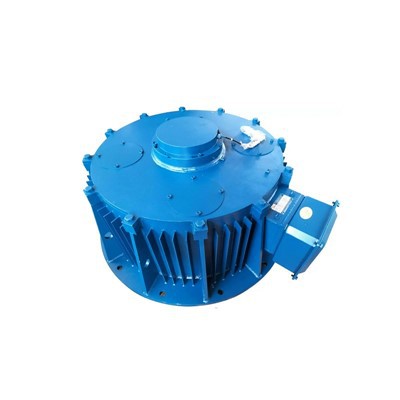
When I started this business, I thought drive motors were just big metal boxes that spin. Over the years, I’ve learned they’re custom solutions for the work you need them to do. Duty cycle is the key to unlocking that solution, and it’s why we focus on getting it right for every single client. If you’re ready to stop worrying about motor failures and start investing in a motor that works for your schedule, reach out to us to discuss your application details. We’re here to help you make the right choice for your operation.
Brushless Motor References
- International Electrotechnical Commission (IEC 60034-1): Rotating electrical machines – Part 1: Rating and performance, 2022.
- National Electrical Manufacturers Association (NEMA MG 1): Motors and Generators, 2023.
- Bolt, D.M. “Motor Duty Cycles: Understanding Their Impact on Selection and Performance.” IEEE Industry Applications Magazine, vol. 22, no. 3, 2016, pp. 45-52.
- United States Department of Energy (DOE): “Motor Systems Best Practices Guide: Duty Cycle Analysis for Industrial Motors”, 2021.
- Electrical Construction Maintenance (EC) Magazine: “How Duty Cycles Affect Motor Lifespan and Efficiency”, vol. 38, no. 7, 2020, pp. 18-22.
Zibo Auric Mechanical and Electrical Technology Co., Ltd.
As one of the leading drive motor manufacturers and suppliers in China, we warmly welcome you to buy advanced drive motor for sale here from our factory. All customized motors are with high quality and competitive price.
Address: B419, High-tech Entrepreneurship Park, High-tech Zone, Zibo City
E-mail: cui@auricmotor.com
WebSite: https://www.auricmotor.com/
