Hey everyone, Automotive Brake Disc
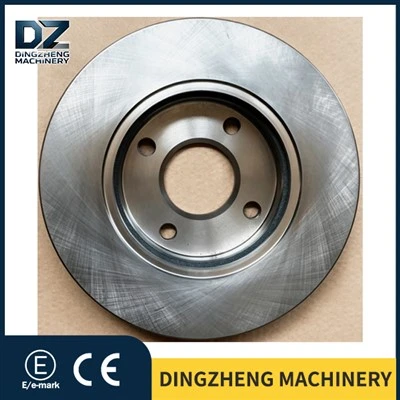
Let’s cut to the chase—if you’re here, chances are you’re either a gearhead trying to save a few bucks on your brake job, a small auto shop owner trying to price services correctly, or maybe even someone who’s just realized their car’s brake discs sound like a coffee grinder and is googling their next move. I’m gonna keep this real because I’m not some corporate marketing drone— I’m part of the team that makes brake discs for a living, so I’ve talked to hundreds of people asking the exact same question: How much does it actually cost to resurface brake discs? And no, the answer isn’t just “a few dollars” or “way too much”—it depends on a whole bunch of stuff, and I’m gonna break it down like we’re sitting at a garage workbench drinking a soda.
First, let’s get one thing straight: Resurfacing (aka turning, machining, or “cutting” brake discs) isn’t for every disc. If yours is warped so bad it’s got more runout than a toddler at a birthday party, or the thickness is under the minimum spec stamped right on the disc—chances are it’s time to replace it, not resurface it. That’s not us trying to get you to buy new parts; that’s safety 101. You don’t want your brakes failing because you tried to save $20 on a bad disc. Got that? Cool, moving on to the good stuff.
Now, the cost. Let’s start with the DIY route because I know a lot of you like to get your hands dirty (no judgment— I started changing my own oil when I was 16). If you own a brake disc lathe (and no, not the $50 Amazon special that’s really just a router with a fancy name—we’re talking about the real, garage-grade ones that cost a couple grand), the parts and labor to resurface a single disc are basically just a bit of coolant and a tiny bit of tool wear. Wait, that’s like $2? But here’s the catch: Most people don’t own a brake lathe. Unless you do auto work as a side gig or full-time, renting one from an auto parts store or a local machine shop will run you between $20 and $50 per disc. But wait, you also need the discs to be on the car, right? Because most DIY lathes require the wheel and hub to stay in place (on-car lathes) or you have to remove the disc and take it to the shop (off-car). Removing and installing the disc isn’t hard, but if you mess up the wheel bolts or don’t torque them right, that’s a whole other problem. So DIY might be cheap, but it’s not for everyone.
Next, the local independent auto shop. These guys are the ones I trust most, honestly—they usually care more about their regulars than the chain stores with corporate quotas. For an independent shop, resurfacing a pair of front brake discs will run you between $80 and $150. A pair of rears is a bit less, usually $60 to $120, because rear discs are often smaller and don’t have as much surface area to machine. Wait, why the range? Let’s break that down. Some shops use cheap, entry-level lathes that take a bit longer or might not do as good a job, so they charge less. Other shops use high-precision, computer-controlled lathes (the kind we use when we’re finishing production parts, actually) that get a smoother, more even cut, so their prices are on the higher end. Also, if you need the rotors cleaned, inspected, or if the shop has to buff off heavy rust before machining, that might add a tiny fee, but usually it’s built into the base price.
Then there’s the chain auto shops—you know the ones, the big names with neon signs and oil changes for $19.99. Their pricing is a bit more rigid, and usually marked up a touch because of overhead. You’re looking at $100 to $180 for a pair of fronts, $70 to $140 for rears. The tradeoff here is convenience—most of them have same-day service, and if something goes wrong, they’ve got a corporate customer service line, but sometimes the techs are new or rushing through jobs to hit quotas, so you might want to double-check their work when you pick up your car.
Wait a second—what about when someone quotes you “$20 per rotor” and you think that’s a steal? I’ve heard that before, and nine times out of 10, that’s a scam. They either use a cheap tool that leaves tiny metal shavings on the disc (which will wear out your brake pads way faster), or they machine the disc beyond the minimum thickness (which is a safety hazard, by the way—under-thick discs can crack under hard braking), or they’re counting on selling you new pads or another service once you’re there. Don’t fall for that. If a price seems too good to be true, it probably is.
Now, let’s talk about the factors that actually change the cost, because that’s what most people miss. First, disc size. A disc for a tiny Honda Civic is way smaller than one for a full-size Ford F-150 or a performance sports car. The bigger the disc, the more material you have to machine, so the shop will charge more. I’ve seen performance discs with cross-drilled or slotted surfaces that are way more expensive to resurface too—those specialty cuts mean the lathe has to work harder to get a smooth finish, so add $20 to $40 per disc for that.
Second, condition of the disc. If your discs are covered in heavy rust, have deep grooves from old brake pads, or are warped from years of hard braking, the shop might have to make multiple passes with the lathe, or even fix the hub runout before they can even start machining. That adds an hour or so of labor, so you might pay an extra $30 to $60 on top of the base price. We see this a lot with people who only change their brakes when they hear a squeal—by then, the disc is already damaged beyond basic resurfacing, so they end up replacing it anyway. Pro tip: Change your brake pads every 30k to 40k miles, and get your discs checked every other pad change, to avoid extra fees.
Third, add-ons. Some shops will offer to sandblast the discs after machining to get rid of any leftover metal or rust, or install new hardware (like caliper slide pins or brake clips) while they’re at it. Those are nice extras, but they’ll add $20 to $50 total to the bill. Are they worth it? If you’re already having the discs resurfaced, yeah—getting new hardware means you won’t have to go back in 6 months because a clip broke. If you’re on a tight budget, you can skip them, but just know it’s a risk.
Wait, let’s compare that to replacing the discs, because a lot of people weigh these two options. A pair of basic replacement discs (the OEM equivalent, not the cheap no-name ones) is usually $50 to $100, plus labor which is another $80 to $150. So total for replacing is around $130 to $250, while resurfacing is $60 to $150. That’s a big difference, but only if your discs are actually resurfaceable. If the disc is too thin or too warped, resurfacing will do nothing—you’ll just end up paying for a half-baked job and still have to replace them. That’s why the first thing a good shop will do is measure the disc thickness with a micrometer, check for runout with a dial indicator, and tell you straight up if resurfacing is worth it.
Now, let’s get to the stuff most of you don’t think about as consumers, but we deal with every day as a brake disc supplier. We sell discs to shops and parts stores, and we get tons of questions about whether resurfacing is better than new. The truth is, a properly resurfaced disc is almost as good as a new one—if it’s within spec. But here’s the thing: When we manufacture a new disc, we machine it to a super precise finish (like a 0.8 micron surface roughness) to make sure it works smoothly with your brake pads. A shop’s lathe will get it pretty close, but it’s never going to be as perfect as a new disc. That’s why you might get a tiny bit of brake noise for the first 100 miles after resurfacing, whereas new discs are almost break-in quiet.
Also, let’s talk about quality vs. quantity. I’ve seen shops buy cheap lathes for $5,000 that can’t hold a consistent cut over a 12-inch disc, and then charge the same as a shop with a $50,000 CNC lathe that’s calibrated every week. You get what you pay for, basically. A cheap lathe might leave the disc slightly out of round, which will make your brake vibration come back in a month or two, so you’ve wasted your money. Ask the shop what kind of lathe they use—if they say it’s an older manual one, you might want to go elsewhere; if it’s computer-controlled and calibrated regularly, that’s a good sign.
Another common question: Can I resurface my discs myself and then sell them? No, not really. The tools you need to do a professional-quality job are way too expensive for a regular person, and most states have regulations about machining brake components—you have to make sure the thickness is within the minimum legal limit, which is only stamped on the disc, so you can’t eyeball that.
Now, let’s wrap this up with a quick, real-world example. Say you drive a 2018 Honda Civic, your front discs are a bit warped, no deep grooves, and within the minimum thickness. You take it to a local independent shop with a good reputation, they use a CNC lathe, check runout, and machine the pair of fronts. The total cost is $110, which includes the machining, a quick cleaning, and new brake clips. That’s a fair deal. If you took it to a chain shop, it might be $130, same job. If you tried to DIY and rent the on-car lathe, it’d be $40, but you have to remove the discs, which takes an hour or so of work.
Here’s the bottom line: Resurfacing brake discs costs between $60 and $180 per pair, depending on where you go, the size/type of disc, its condition, and the quality of work. It’s a great option if your discs are in good shape, within spec, and don’t have major damage. If they’re too thin, warped beyond repair, or have deep grooves, skip resurfacing and get new ones. And whatever you do, don’t go for the $10 per rotor deal—you’ll regret it when your brakes start squealing or vibrating again.
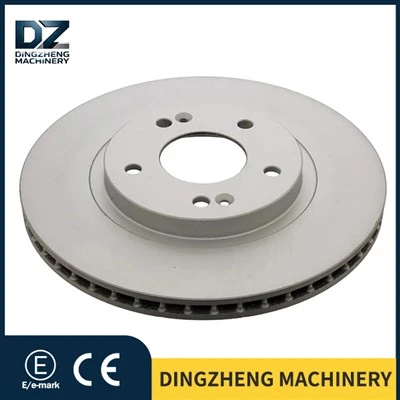
If you’re a shop owner, a fleet manager, or someone who needs bulk brake disc supply and reliable, consistent parts to pair with your resurfacing or replacement services, hit us up. We make high-grade, precision-machined brake discs that are built to last, so whether you’re doing a quick resurfacing job or a full disc replacement, you can count on our parts to keep your customers safe. We’re not here to upsell you on stuff you don’t need—we’re here to give you the parts you need at a fair price, no hidden fees, no garbage quality. Drop us a line when you’re ready to chat.
CHEVROLET Series Brake Discs References
- National Highway Traffic Safety Administration (NHTSA). 2021. Brake System Safety Standards for Passenger Vehicles.
- Automotive Service Association (ASA). 2022. Guide to Brake Disc Resurfacing Best Practices.
- Society of Automotive Engineers (SAE). 2020. Surface Finish Specifications for Brake Rotors.
- Automotive Aftermarket Suppliers Association (AASA). 2023. 2023 Brake Service Cost Benchmark Report.
Laizhou Dingzheng Machinery Co., Ltd.
As one of the most professional automotive brake disc manufacturers and suppliers in China, we’re featured by quality products and good price. Please rest assured to buy cheap automotive brake disc for sale here from our factory. We also accept customized orders.
Address: Luan Jia village, Tushan town, Laizhou city, Shangdong
E-mail: AMY@cndingzheng.com
WebSite: https://www.dingzhengbrake.com/
