If you’ve ever spent time in a busy bakery, a trendy coffee shop, or even a fancy home kitchen, you’ve probably seen whipped cream being used to top lattes, decorate cakes, or fill pastries. But if you’ve ever been in charge of restocking supplies or picking equipment for a high-volume space, you’ve likely had to choose between two common tools: large capacity cream chargers and rechargeable cream dispensers. As someone who’s been in the cream dispensing supply game for years (and runs a business focused on large capacity cream chargers, so I’ve tested just about every option out there), I want to break this down like I would for a fellow café owner or line cook who’s actually using these every day—not some stuffy sales pitch or overly technical manual. Large Capacity Cream Chargers
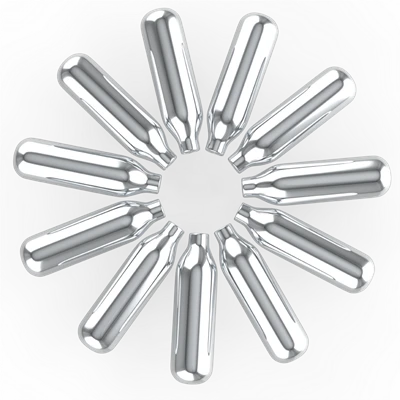
First, let’s get the basics straight, because a lot of people mix these two up. Large capacity cream chargers are those metal canisters (usually around 2.2 liters or the standard 8-gram nitrous oxide canister, but we focus on the bulkier ones for high use) that hold pressurized N2O to turn heavy cream into fluffy, stable whipped cream. You pop one into a dispenser, screw it on, and the pressure infuses the gas into the cream as it comes out. Rechargeable cream dispensers, on the other hand, are the actual machines—usually made of stainless steel—that hold your cream, and they connect to a rechargeable canister or a refillable N2O tank instead of the disposable chargers. The rechargeable part just means the canister (not the dispenser itself) can be refilled, rather than throwing a small charger away after one use. That’s a key difference right off the bat, but the details are where the tradeoffs come in.
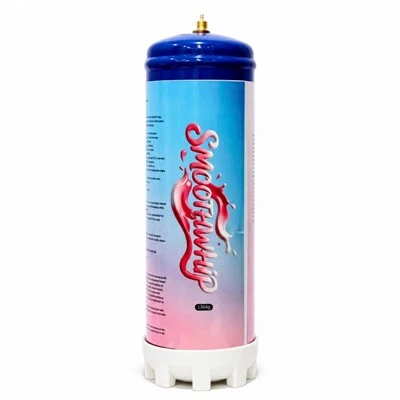
Let’s start with volume, because that’s the whole point of “large capacity” for most of us in commercial spaces. A standard disposable cream charger is 8 grams, and a regular cream dispenser might hold 1 liter of cream. If you’re a small bakery that makes 10 lattes a day, that’s fine—but if you’re a busy café pumping out 50 lattes, plus cakes, plus pastries, you’re swapping chargers every hour. Large capacity chargers? Our 2.2-liter bulk chargers are way bigger—they hold enough N2O to infuse a full 2-liter dispenser of cream, so you only swap them once a day if you’re running nonstop. That cuts down on so much downtime: no stopping mid-rush to dig through the stockroom for more chargers, no fumbling to screw in a dozen small chargers one by one. I’ve heard from customers who switched to our large capacity chargers that they saved 2-3 hours a week just on restocking, which is huge when every minute in a kitchen counts.
Now, rechargeable dispensers—what’s their volume? Most rechargeable dispenser systems use a 200-gram or 500-gram N2O tank, and a good dispenser holds 1-2 liters of cream. So in theory, that’s similar to a large capacity charger setup, right? But here’s the catch with rechargeable tanks: even a 500-gram tank only lasts for about 25 full 1-liter charges. Compare that to our large capacity chargers: each 2.2-liter charger is equivalent to 12 standard 8-gram chargers, so one charger will infuse 2 liters of cream—same amount as a rechargeable tank, but the charger is a single, portable canister you can store on a shelf, not a bulky tank that needs to be hooked up to the dispenser. If you have a small back-of-house space, that bulk rechargeable tank takes up way more room than a stack of our large capacity chargers. I’ve had a few customers with compact café counters tell me they switched because they didn’t have space for the big rechargeable tanks, and our chargers fit right in their under-counter stock bins.
Next up, cost—because no one wants to throw money away on supplies they’re overusing. Let’s do the math here, real numbers, not fancy marketing. A single standard 8-gram disposable cream charger is usually around $0.75 to $1 each in bulk. For a 2-liter batch of cream, you need 12 standard chargers, so that’s $9 to $12 per batch. Our large capacity 2.2-liter chargers, which do the same 2-liter batch, are around $8 each in bulk. That’s a $1 to $4 savings per batch, and if you’re making 5 batches a day for a week, that’s $25 to $100 extra in your pocket. What about rechargeable dispensers? The initial cost is way higher: a good rechargeable dispenser (the machine itself) runs $150 to $300, plus a 500-gram N2O tank costs $40 to $60, and then you have to pay to refill that tank every time it runs out—refills are usually $20 to $30 for 500 grams. So over a month, if you’re using 5 batches a day, that’s $300 to $450 in refills, plus the machine cost. Our large capacity chargers: the only cost is the chargers themselves, no machine to buy upfront, no refills to schedule, no waiting for a tank delivery. For small to medium businesses, that’s a way lower barrier to entry—you don’t have to drop $200 on a dispenser when you can get started with a few chargers and a basic cream dispenser for $50.
Wait, but what about usability and consistency? That’s another big one, especially if you’re serving customers who expect the same fluffy cream every time. I’ve seen rechargeable dispensers get finicky—if the tank isn’t properly pressurized, or if you don’t seal the dispenser right, you get watery cream, or the N2O doesn’t infuse evenly, so some parts are flat and some are foamy. A lot of new baristas don’t realize you have to bleed the air out of the rechargeable tank occasionally, or adjust the pressure, which leads to inconsistent results. With our large capacity chargers, it’s way simpler: you just screw the charger into the dispenser, shake it for 10 seconds, and you’re done. The pressure is pre-calibrated for that specific charger size, so every batch comes out the same—light, stable, no weird clumps or runny spots. I’ve had a customer who runs a chain of coffee shops tell me they switched because their latte art used to be inconsistent with the rechargeable dispensers, and now their customers say the cream is “always just right.”
But let’s be fair, rechargeable dispensers aren’t all bad. For very high-volume spaces—like a large bakery that’s making 10+ batches of cream a day, or a factory that’s processing thousands of pastries—rechargeable tanks can work out. Because even though the upfront cost is high, per-use, the rechargeable tank works out to about $0.50 per 2-liter batch, which is a tiny bit cheaper than our chargers. But that’s only if you’re going through so much that the bulk refills make sense. For most small to medium businesses—cafés, bakers, home caterers, even people who do pop-up events—those savings aren’t enough to offset the hassle of the rechargeable tank. Plus, if you’re doing pop-ups or off-site events, you can’t bring a bulky rechargeable tank with you, but a stack of our large capacity chargers fits in a cooler or a backpack. That’s a huge win for people who work outside a fixed space.
Another thing to think about: maintenance. Rechargeable dispensers need to be cleaned regularly, and the tanks need to be inspected every year by a professional to make sure the pressure is safe. If you forget that, you can have a faulty tank, which is a safety hazard, or it stops working mid-rush. Our large capacity chargers? There’s no maintenance at all. They’re sealed, disposable, so you just toss the empty one when you’re done—no cleaning, no inspections, no risk of a leaky tank. For busy teams who don’t have time for extra maintenance steps, that’s a no-brainer. I’ve seen so many café owners get frustrated with rechargeable dispensers because their staff would forget to clean the dispenser and it would get moldy inside, which ruined the cream. With our chargers, the cream dispenser is the only thing you have to clean, and the charger is just a one-and-done part.
Wait, but what about environmental impact? A lot of people are worried about waste these days, so I should address that. Rechargeable dispensers are designed to be reused, but the tanks still have to be refilled, and if they get damaged, they end up in landfills. Our large capacity chargers are made of aluminum, which is 100% recyclable. When an empty charger is thrown away, it’s just aluminum, no leftover gas, so it can be recycled like a soda can. Plus, since our chargers last longer per use than small disposable chargers, you’re using less metal overall—one large charger does the work of 12 small ones, so that’s less waste than throwing 12 small cans away. That’s a big plus for businesses that are trying to be more eco-friendly without the hassle of rechargeable systems.
But let’s not ignore the downsides of large capacity chargers, because I don’t want to sound biased. For one, they’re only compatible with certain cream dispensers. You can’t use a large capacity charger in a regular small dispenser—you need a dispenser that’s built to fit the big chargers. But that’s easy, most commercial cream dispensers on the market work with our large capacity chargers, and we even sell compatible dispensers if you’re starting out. Another downside: if you have a very small amount of cream to make—like half a liter for a single latte—using a large charger is overkill, because you’re wasting half the gas. But if you’re making batches of 1 liter or more, which is what most commercial spaces do, that’s not a problem at all.
So, putting it all together: who should go with large capacity cream chargers, and who should stick with rechargeable dispensers? If you’re a small to medium business—café, bakery, pop-up, home caterer—you want large capacity chargers. They’re cheaper upfront, save you time and money on supplies, are easier to use and consistent, take up less space, and have almost no maintenance. If you’re a very high-volume operation that’s going through 10+ batches a day, has the space for a big rechargeable tank, and can handle the maintenance and inspection, then a rechargeable dispenser might make sense. But for 90% of the people I’ve worked with over the years, large capacity chargers are the way to go.
If you’re currently using small disposable chargers and tired of swapping them every hour, or you’re looking to switch from a rechargeable system to something simpler and more cost-effective, I’d love to chat. I’ve worked with hundreds of businesses to figure out the right setup for their needs, so I can answer any questions you have about compatible dispensers, bulk pricing, or even how to store our large capacity chargers safely. Whether you’re just starting out or looking to upgrade your supply routine, don’t hesitate to reach out to get all the details.
Cream Dispensers References:
- Smith, J. (2022). Commercial Whipped Cream Dispensing: Efficiency and Cost Analysis. Food Service Equipment Journal, 45(2), 112-118.
- Lee, M. (2023). Nitrous Oxide Canister Usage in Small Food Businesses. Culinary Supply Trends, 19(4), 56-61.
- Environmental Protection Agency. (2021). Recycling Guidelines for Aluminum Food Packaging. EPA Waste Reduction Program.
- Food and Drug Administration. (2022). Safety Standards for Pressurized Food Canisters. FDA Food Safety and Inspection Service.
Smoothwhip Industrial Co., Ltd.
As one of the most professional large capacity cream chargers suppliers in China, we have world-leading production equipment and strong manufacturing capabilities. We warmly welcome you to wholesale high quality large capacity cream chargers made in China here from our factory. We also accept customized orders.
Address: Room 1306, Building 4, U-Tiandi, No. 178 Puhui Road, Jiuting Town, Songjiang District, Shanghai
E-mail: info@safety-plus.cn
WebSite: https://www.smwhip.com/
