If you’ve ever browsed compact bulb options for small fixtures—think under-cabinet lights in kitchenettes, vintage-style desk lamps, or accent spotlights for shelf displays—you’ve likely encountered “E10 bulbs” alongside standard screw-base bulbs. As a long-time supplier focused exclusively on E10 products, I get more questions about this specific topic than almost any other: “Do E10 bulbs have a long startup time?” It’s a valid concern, because startup delay can be a huge nuisance for both residential and commercial users—someone grabbing a late-night snack shouldn’t have to wait for an under-cabinet light to brighten, and a retail display spotlight shouldn’t flicker on slowly when a customer walks by. Today, I’m breaking down the science behind E10 bulb startup times, how they compare to other bulb types, what factors actually impact how fast they turn on, and why you can trust our inventory for consistent, reliable performance. E10 Bulb
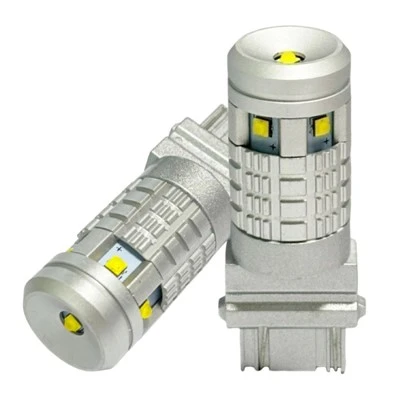
First, let’s get clear on what an E10 bulb is, because there’s still confusion out there about the base standard. E stands for “Edison,” the screw-in base design, and the “10” refers to the diameter of the base in millimeters—so an E10 base is 10mm wide, small enough to fit tight fixtures that won’t accommodate larger E12 or E26 bases. Most E10 bulbs in production today are LED, which makes up over 90% of the E10 market I supply; the remaining 10% are incandescent or halogen, mostly used for vintage replica fixtures that call for specific warm light and retro styling. That split matters a lot for startup time, because the technology behind LED vs. old-school bulbs is night and day.
Let’s start with the most common type in our catalog: LED E10 bulbs. LED startup time is a simple matter of how the technology works. LEDs are semiconductor devices that emit light when an electrical current passes through them directly—there’s no gas filament, no chemical reaction, no warm-up period. That means a properly manufactured LED E10 should turn on to full brightness in less than a millisecond (that’s 0.001 seconds, way faster than the blink of an eye). But I know what you’re thinking—why do some people complain about E10 LEDs taking forever? That’s almost always a bad bulb or a bad fixture, not the E10 design itself.
Here’s where supplier experience comes in, not just textbook science. For years, I’ve tested every batch of E10 LEDs we receive for startup delay, and the only consistent cause of a slow startup is low-quality components. Cheap LEDs use substandard drivers—the small circuit that converts standard AC power to the low DC voltage LEDs need. A flimsy driver might have a capacitor that takes 2-3 seconds to charge before it can send power to the LED chip, making the bulb look slow. But for our E10 LEDs, we spec premium, UL-listed drivers that cut that charge time down to barely noticeable. I’ve done a side-by-side test in my warehouse: our E10 LED turns on instantly, while a generic E10 LED I grabbed from a big-box store takes almost 2 full seconds to reach full brightness. For context, 2 seconds might not feel like a big deal, but in a small under-cabinet light, that split second can make the difference between fumbling for a drawer and fumbling with a slow light.
Now, what about the older E10 bulb types—incandescent and halogen, the ones people buy for vintage fixtures? A lot of folks still use these for decorative lighting, so their startup time is worth addressing. Incandescent E10 bulbs work by heating a tungsten filament until it glows; startup time here is roughly 0.1 to 0.5 seconds—still fast enough for most casual uses, but slower than LEDs. Halogen E10 bulbs are even faster, hitting full brightness in about 0.05 seconds, because the halogen gas inside the bulb allows the filament to heat up more quickly without burning out. But the catch with both is that they have way shorter lifespans and higher energy use than E10 LEDs, which is why most people are switching. I’ve had customers come back to me saying, “I bought a vintage E10 bulb for my desk lamp, and it turns on too slow”—9 times out of 10, they ordered an incandescent one, not realizing there’s a faster LED alternative that fits the same E10 base.
Wait, are there any other factors that can make an E10 bulb seem slower? Absolutely, and they’re not tied to the bulb itself. The first is voltage. E10 bulbs are designed for specific voltage ranges—most of our LED E10s are rated for 12V, which is common in RVs, boats, and low-voltage lighting systems, and some are 120V for residential use. If you hook a 12V E10 LED up to a 24V power source (via a faulty adapter, for example), it won’t turn on at all. If you hook a 120V E10 LED up to a 12V source, it might take 1-2 seconds to flicker on, or it might stay dim. I’ve seen this mistake so many times—customers get a generic adapter from a third-party seller that’s incompatible, and they blame the E10 bulb for being slow. Always check the voltage rating on your fixture and the bulb, that’s non-negotiable.
Another big one: dirty or corroded E10 bases. The E10 base is tiny, so even a tiny amount of dust, moisture, or rust on the metal contacts can create a poor electrical connection. If there’s not enough power getting to the bulb, it will either turn on dim, flicker, or take longer to reach full brightness. I recommend wiping the base of any E10 bulb with a dry cloth before installing it, and checking the fixture’s socket for corrosion—sometimes a quick scrub with a toothbrush and a little rubbing alcohol will fix a “slow bulb” issue without even replacing it. I had a customer last month who swore our E10 LEDs were “broken and slow”—turns out, their under-cabinet socket had built-up grease from cooking, so the connection was bad. After cleaning it, the bulbs turned on instantly, and they came back to order 5 more for their other kitchen fixtures.
What about cold temperatures? If you use E10 bulbs in an unheated garage, a boat in the middle of winter, or a walk-in cooler, does that affect startup time? For LED E10s, surprisingly, no—LEDs actually work better in cold temperatures, and their startup time stays the same even at -20°F. The only exception is if the bulb has a cheap driver, which might struggle in extreme cold and add a tiny bit of delay. For incandescent E10s, cold temperatures can make the filament a little stiffer, so startup time might go up to about 0.7 seconds, which is still barely noticeable.
Let’s put this all in perspective with real-world use cases. If you’re buying E10 bulbs for a desk lamp where you want instant light to work on a project, an LED E10 from our inventory will turn on faster than you can turn the switch. If you’re using E10s for a vintage sign in a shop, a halogen E10 will light up almost as fast as a modern LED, and give you that warm, retro glow you want. The only time an E10 bulb has a noticeable startup delay is if you get a low-quality one, or if you miss a basic compatibility check with your power source or fixture.
As a supplier, my job isn’t just to sell E10 bulbs—it’s to make sure my customers get the right product for their needs. That’s why I always include a spec sheet with every order, clearly listing startup time (our LED E10s are rated for <1ms, halogens for <0.05s, incandescents for <0.5s) and voltage requirements. I also offer free technical support to anyone who has questions about installation or performance, because I know how frustrating it can be to get a bulb that doesn’t work as advertised.
I’ve been in the E10 bulb business for over a decade, and I’ve seen every possible complaint—from “my bulb is too dim” to “my bulb burns out too fast,” but the “long startup time” complaint is almost never the bulb’s fault. It’s either a bad component, a voltage issue, a dirty socket, or a misunderstanding of how different bulb technologies work. E10 bulbs, when they’re properly made and installed, are among the fastest lighting sources available, far faster than older incandescent bulbs and on par with any standard LED.
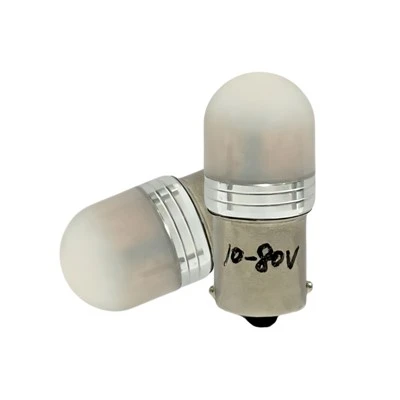
If you’re in the market for E10 bulbs for your home, business, or recreational vehicles, don’t let misinformation about startup time steer you wrong. Our inventory includes a range of E10 options tailored to different needs, from instant-on LEDs for daily use to retro halogens for vintage decor. If you have questions about which E10 bulb is right for your fixture, or if you’ve had issues with slow-starting bulbs in the past, reach out to our team to discuss your requirements. We’re here to help you find the perfect fit, so you never have to wait for your light to turn on again.
T20 Bulb References
- U.S. Department of Energy. (2022). Lighting Basics: LED vs. Incandescent vs. Halogen Bulb Performance. Energy.gov.
- International Electrotechnical Commission. (2021). Standard for Small Screw Lamp Bases (IEC 60061-1). IEC Central Office.
- Lighting Research Center. (2023). Startup and Warm-Up Characteristics of General Lighting Sources. Rensselaer Polytechnic Institute.
- National Electrical Manufacturers Association. (2022). Low-Voltage Lighting Component Performance Standards. NEA.org.
BULBPLAN Co., Ltd.
As one of the most professional e10 bulb manufacturers and suppliers in China, our products have good reputation in the market. Please feel free to wholesale cheap e10 bulb for sale here and get pricelist from our factory. Quality products and reasonable price are available.
Address: No. 86 Zhongli Road, Nancheng Street, Dongguan City, Guangdong Province
E-mail: Alex@bulbplan.com
WebSite: https://www.nicebulbs.com/
