If you’ve ever stood in a café, your multifunction power bank at 12% and your laptop charger buried in your tote bag, you’ve probably thought this: why can’t my all-in-one power bank just charge wirelessly? As a supplier of multifunction power banks, I get this question at least a dozen times a week, and it’s one that splits our customer base right down the middle. Some swear by the convenience of wireless charging for their phones, others insist wired is still faster for their power banks themselves. Today, I’m breaking down the science, the common myths, and what this actually means for anyone looking to add a multifunction power bank to their daily gear. Multifunction Power Bank

First, let’s start with the basics of how wireless charging works, because this is where most people get stuck. When we talk about wireless charging for devices like smartphones, we’re referring to Qi charging—short for “chee,” the Chinese word for energy flow, developed by the Wireless Power Consortium. Qi uses electromagnetic induction: a charging pad has a copper coil that sends an alternating current, which creates a magnetic field. When a device with a matching coil (like a phone or wireless power bank) is placed on the pad, that magnetic field converts back to electricity to charge the battery. It’s efficient enough for small, low-power devices, but the second you bump up to larger, higher-capacity devices—like a power bank that holds 20,000 mAh or more—the rules change fast.
Now, what is a multifunction power bank, anyway? For context, our product line includes units that not only charge phones, tablets, and laptops, but also have built-in cables, foldable stands, LED flashlights, and even wireless charging pads on their own top surface. These are designed for people who hate carrying multiple chargers and adapters—for remote workers, festival goers, or parents juggling a kid’s tablet and their own phone on a road trip. The question of whether this type of power bank can be charged wirelessly isn’t just a “can it be done?” It’s a “should it be done?” and “how well will it hold up over time?”
Let’s tackle the core question: yes, a multifunction power bank can be charged wirelessly—in most cases. But here’s the catch: not all power banks are built to support it, and many that do have limitations. When we design our wireless-enabled multifunction power banks, we have to address three big technical hurdles that don’t exist for wired charging: power loss, heat, and coil alignment.
Power loss is the first and most measurable issue. Wired charging transfers nearly all the current from the wall outlet to your power bank’s battery. Wireless charging? You’re looking at 15% to 30% energy loss, even for high-end Qi chargers. That means if you plug a 25W wired charger into your power bank, it will take roughly 1 hour to go from 0 to 100%, but a 15W wireless charger will take 1.5 to 2 hours. For a 10,000 mAh power bank, that might not be a game-changer, but for a 27,000 mAh unit that’s meant to charge a laptop, that extra time adds up fast. We see this all the time: customers who buy a wireless multifunction power bank expecting it to charge as quickly as their old wired one are often surprised when it takes twice as long. That’s not a flaw in the product—it’s physics.
Next, heat. Electromagnetic induction generates heat as a byproduct, and the larger the power being transferred, the more heat is produced. Multifunction power banks already have more parts than a regular power bank: extra coils, built-in cables, LED circuits, sometimes even a wireless charging pad on top. Add wireless charging, and that’s more circuitry working harder, generating more heat. Overheating is a big risk here—excess heat can degrade the lithium-ion battery inside the power bank, shortening its lifespan by months or even years. That’s why we build temperature sensors into our wireless-enabled models, and we recommend not charging them overnight on soft surfaces like beds or couches, which block heat dissipation. For power banks that support high-capacity charging (20W or higher), we also use thicker insulation material to keep heat levels in check, a cost we’ve absorbed because we don’t want our customers replacing their power banks every six months.
Coil alignment is the third big limitation. Wireless charging only works well if the coil in your power bank lines up perfectly with the coil in the charging pad. If they’re even a millimeter off, energy transfer drops sharply. I’ve lost count of the number of customer emails I’ve gotten that say “my power bank won’t charge wirelessly” only to find out they set it down crookedly on the pad. Wired charging is plug-and-play—you stick a cable in, and it connects immediately. Wireless requires a little more care, which is a tradeoff for the convenience of not carrying a cable. Some newer charging pads have multi-coil arrays that work even if the device is off-center, but those are more expensive, and many budget wireless chargers don’t have this feature. That’s why we recommend pairing our multifunction power banks with mid-range Qi chargers that support 15W fast wireless charging, rather than the cheap $5 pads you get from a gas station—they’re more likely to have the right coils and consistent power transfer.
Now, why would a supplier like us offer a multifunction power bank with wireless charging at all, if it’s slower and has more drawbacks? For a lot of our customers, the tradeoff is worth it. Let’s say you’re a student living in a dorm with limited outlets: you can charge your multifunction power bank wirelessly on your desk while you study, then charge your phone wirelessly on the same power bank without fumbling with cables. Or if you’re traveling through an airport with wireless charging tables at your gate, you can top up your power bank while waiting for your flight, no need to carry an extra cable. It’s all about use case. For people who only need a small power bank for their phone, wireless charging is a nice convenience. For larger units that charge multiple devices, it’s a complement to wired charging, not a replacement—we always include a fast USB-C port for wired charging, because we know sometimes speed matters more.
I also need to address a common misconception: all wireless charging for power banks is the same. Some budget multifunction power banks advertise “wireless charging support” but only offer 5W charging, which is the same as old phone chargers from 10 years ago. That’s slow, inefficient, and barely worth using. Our wireless-enabled models offer 15W fast wireless charging, which is the sweet spot for balancing speed and heat. We test every unit to make sure it meets our performance standards, and we publish all our charging specs on our product pages so customers know exactly what they’re getting—no hidden fine print.
What about wear and tear? A lot of people worry that charging their power bank wirelessly will wear out the charging coil faster than wired. From what we’ve seen in our testing, that’s not a significant issue as long as the unit is well-built. The coils are made of durable copper wires encased in plastic, and the only real wear comes from repeatedly placing the power bank on and off the pad. That’s a tiny amount of wear, way less than the wear on a USB-C port from plugging and unplugging a cable every day. So if you hate fumbling with small cable connectors, wireless charging is gentler on both your power bank and your charger’s ports.
Of course, there are scenarios where wireless charging for a multifunction power bank just doesn’t make sense. If you need to charge your power bank in a hurry before a long day, wired is always better. If you’re using a power bank that’s meant for heavy laptop charging (20,000 mAh or more), wireless charging will take so long that you’re better off plugging it in. And if you’re on a tight budget, a non-wireless multifunction power bank will give you more features for less money, since you’re not paying for the extra coil and circuitry.
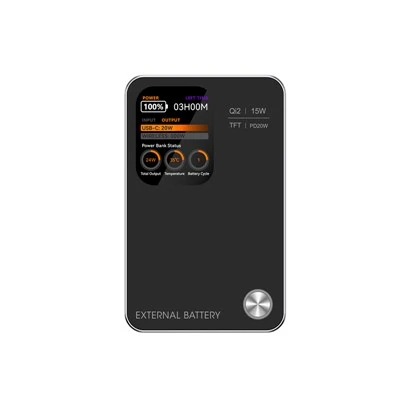
At the end of the day, the answer to “Can a multifunction power bank be charged wirelessly?” is yes—but it’s not a one-size-fits-all answer. It depends on the model, the charging pad you use, and what you’re using the power bank for. As a supplier, our job is to build products that fit real people’s needs, not just chase every trend. We’ve found that our customers who use their multifunction power banks for daily commutes and short trips love the wireless charging feature, while those who use theirs for camping or long work trips prefer the reliable, fast wired charging. That’s why we offer both options in our line: some models with wireless charging, some without, so customers can pick what works for them.
Multifunction Power Bank If you’re in the market for a multifunction power bank and want to learn more about wireless charging compatibility, or if you’re interested in bulk purchasing for your business, we’d love to connect. We build each unit with durability and convenience in mind, and our team is happy to walk you through our product specs, testing processes, and customization options for any project. Don’t hesitate to reach out to us to discuss your needs and find the right power bank for your customers or your own daily use.
References
- Wireless Power Consortium. (2023). Qi Wireless Charging Specification 1.3.
- Battery University. (2022). Li-ion Battery Charging Efficiency and Losses.
- International Electrotechnical Commission. (2021). Safety Requirements for Wireless Power Transfer Systems for Portable and Consumer Use.
- Journal of Power Sources. (2020). Thermal Management in High-Power Wireless Charging Systems for Lithium-Ion Batteries.
- Consumer Technology Association. (2023). Multifunction Portable Power Bank Usage and Performance Report.
KOMOS Co., Ltd.
As one of the most professional multifunction power bank manufacturers and suppliers in China, we are committed to providing high quality custom service and OEM service. Please feel free to wholesale bulk durable multifunction power bank at competitive price from our factory. Welcome to contact us for quotation.
Address: 4th Floor, Building 3, Zhongxi Buchong Community, Shajing Street, Bao’an District, Shenzhen City, Guangdong Province, China 518104
E-mail: contact@komos-tech.com
WebSite: https://www.komos-tech.com/
