Hey there, it’s Jake from the metal stamping team, and I get this question at least twice a week from guys building heavy-duty equipment, industrial ovens, even aerospace prototypes: Can metal stamped parts hold up in high-heat environments? Let me cut to the chase—yes, they absolutely can, but it’s not a one-size-fits-all answer. I’ve seen too many projects go south because someone grabbed random stamped steel parts without thinking through the heat specs, so I’m breaking down what actually works here, no jargon, no fluff. Metal Stamped Parts
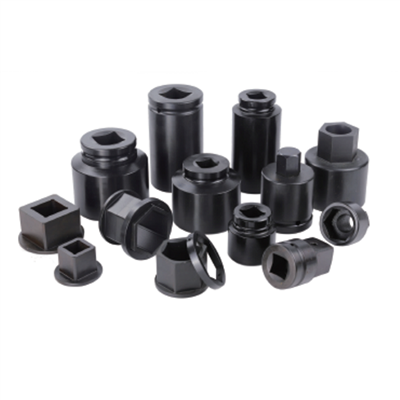
First, let’s talk about why stamped parts even make sense for high heat in the first place. Stamping is that process where we flatten metal sheets, punch, bend, or shape ’em with custom dies, right? It’s way cheaper and faster than machining solid blocks, which is why everyone from construction companies to medical device makers uses our parts. But when it comes to heat, the magic’s all in the base metal we pick—same as if you were welding or forging parts, but stamping just lets us make complex, precise shapes without wasting a ton of material.
Let’s start with the basics: what counts as “high temperature”? For a lot of folks, that’s anything over 500°F, but if you’re talking furnaces, turbine components, or exhaust systems? That’s 1,000°F and up. I once worked on a project for a commercial pizza oven manufacturer—they needed small stamped brackets that hold the heating elements in their high-volume commercial units. The old parts they were using were regular cold-rolled steel, and within a month, they’d warp and start pulling loose. Switched us to stamped 304 stainless steel, and those parts are still running strong 3 years later in ovens that cycle 12 hours a day, every day. That’s the kind of win we’re talking about.
But wait, not all stainless is created equal. 304 works for up to around 1,500°F in continuous use, but if you’re pushing higher—like 1,800°F for industrial kiln parts—you need something like 310 stainless. That stuff has extra chromium and nickel, so it forms a tight oxide layer that stops rust and warping even when it’s red hot. I learned this the hard way early in my career: a customer asked for stamped parts for a heat treat furnace that runs at 1,900°F, I grabbed 304 because it was cheaper, and they called me back a week later saying the parts had crumbled. Oops. Now we double-check every spec, no exceptions.
Beyond stainless, there are other metals we stamp that handle heat like champs. Inconel is a superalloy we use for aerospace and gas turbine components—can take constant temps up to 2,000°F, and even holds its strength when you start cycling heat on and off (thermal cycling is a big one, by the way—constant heating and cooling makes some parts crack over time). Then there’s tool steel, like H13, which we stamp for die parts or furnace fixtures that see intermittent high heat. We had a mining customer that needed stamped wear parts for their ore dryers—they were using cast parts before, which would break every few weeks, and switched to stamped H13, now those parts last 6 months easy.
Here’s the thing that most people don’t realize: stamping actually strengthens parts in high heat, if you do it right. When we stamp metal, we work-harden it—bending, punching, shaping makes the crystal structure tighter, so it’s less likely to soften or deform when heated. That’s a huge perk over parts that are machined from solid, which don’t get that work-hardening. But you have to be careful with the stamping process itself—if we use too much force during a bend or punch, we can create tiny micro-cracks that show up when the metal heats up. We check every batch of dies, test sample parts for stress, so that doesn’t happen. I tell our guys: if a part feels “off” when it’s being stamped, we scrap it, no matter how tight the deadline is.
Now, let’s talk about the pitfalls—because not every stamped part is made for high heat, and that’s where people mess up. The biggest mistake is picking the wrong metal for the temp range. Like, regular carbon steel (the cheap stuff you see in tin cans) maxes out around 400°F before it starts losing strength and rusting badly. If you use that for a car exhaust manifold or a furnace bracket, it’ll fail fast. Another mistake is ignoring surface treatments. We often add a ceramic coating or a black oxide finish to high-heat stamped parts—those don’t just make ’em look nice, they act as a barrier against oxidation, which is what eats metal away at high temps. We had a customer building commercial grills that skipped the coating on their stamped grates, and within a few months, the grates had pitted so bad they couldn’t hold food. Added the coating, and that problem was gone.
Thermal expansion is another big one. All metals expand when heated, at different rates. If you’re mating two stamped parts made of different metals (say, a stainless bracket and an aluminum fastener), one will expand more than the other, which can cause gaps, warping, or even parts pulling apart. We work with customers to match thermal expansion rates, or add small gaps or slots in the stamping design to account for that. For example, when we made stamped parts for a solar thermal collector, we added tiny curved slots in the brackets so they could expand without pulling the whole collector out of alignment. That was a design call we made during the prototyping phase, and it saved their whole project.
I also want to call out a common myth: people think stamping only works for simple parts, so you can’t get complex shapes for high-heat apps. No way—we make stamped parts with embossments, holes, bends, even custom cutouts that are perfect for high heat. Last year, we did a project for a semiconductor manufacturing company—they needed tiny stamped heat shields for their wafer fabrication tools, parts that have to hold up to 1,600°F and be precise to within 0.001 inches. Stamping was the only way to make those parts cost-effectively, and they’ve been using them nonstop since with zero issues. Way better than machining those tiny parts, which would take forever and cost a fortune.
So, when is stamping NOT the right call for high heat? If you need parts that are over 2 feet long, for one thing—stamping large parts can get tricky because the metal might warp during the process or when it’s heated. Also, if you’re looking at temps over 2,200°F, stamping might not be the best option, because even Inconel starts to soften around there. In those cases, we usually point customers to forged parts, since forging is better for ultra-high-heat, ultra-high-stress apps. But for 90% of high-heat industrial, commercial, and even some aerospace uses? Stamped parts are perfect.
Wait, let’s get real with a recent example to make this concrete. A few months back, a customer reached out who runs a line of industrial furnace doors. Their old door latches were machined from aluminum, and they kept melting at the 1,200°F temp their furnaces run at. They came to us, and we stamped custom latches from 316 stainless (extra corrosion resistance, just in case the furnaces have any moisture or chemicals) with a slight curve to handle thermal expansion. The latches have been in use for 3 months now, no warping, no melting, no failures. They even placed a reorder for 10,000 more parts. That’s the kind of result I live for.
Now, if you’re a project manager, engineer, or shop foreman reading this, what should you take away? First, don’t just assume stamped parts can’t handle high heat—they absolutely can, as long as you pick the right metal and design the part with heat in mind. Second, work with a stamping supplier that knows high-heat materials, not just someone that cranks out phone cases or shelf brackets. We test every metal’s heat resistance before we stamp, we adjust designs for thermal expansion, and we stand behind our parts when they’re used as intended.

If you’re working on a project that involves high heat—whether it’s exhaust systems, furnaces, kilns, aerospace components, industrial machinery, even cooking equipment like those commercial pizza ovens I mentioned earlier—hit us up to talk through your parts. We can help you pick the right material, design the part to hold up to consistent or cyclical high heat, and get you a quote that’s way better than machining or other processes. No hidden fees, no rushed work, no parts that fail after a month. We’ve been doing this for over 15 years, and we’ve fixed more high-heat part headaches than I can count.
Metal Stamped Parts References
- ASM International. (2006). Materials Properties Handbook: Stainless Steels. ASM International.
- Dieter, G. E. (1986). Mechanical Metallurgy (3rd ed.). McGraw-Hill Education.
- Incropera, F. P., & DeWitt, D. P. (2002). Introduction to Heat Transfer (4th ed.). John Wiley & Sons.
- The Fabricator. (2021). “High-Temperature Metal Stamping: Material Selection & Design Considerations.” The Fabricator.
Hangzhou Zhalihui Import And Export Co., Ltd.
We are one of the most experienced metal stamped parts manufacturers and suppliers in China, specialized in providing high quality customized products. Please feel free to buy discount metal stamped parts in stock here from our factory. Contact us for quotation.
Address: Room 2801, Building 2, Taifu Plaza, No.17, Tonghui Middle Road, Chengxiang Street, Xiaoshan, Hangzhou, Zhejiang
E-mail: Chars_1979@hotmail.com
WebSite: https://www.zhalihui.com/
