In the realm of modern manufacturing, the choice of machining methods can significantly impact the quality, efficiency, and cost – effectiveness of production. As a supplier of EDM (Electrical Discharge Machining) machines, I’ve had the privilege of witnessing firsthand the unique capabilities of EDM and how it stacks up against other traditional and advanced machining techniques. In this blog, we’ll delve into a comprehensive comparison of EDM machines with other prominent machining methods to understand their respective strengths and weaknesses. EDM Machine
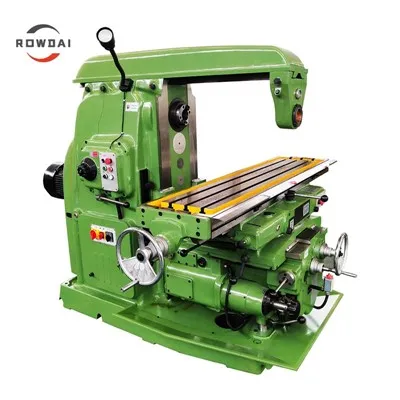
1. Traditional Machining Methods: Turning and Milling
Turning
Turning is a machining process in which a cutting tool, typically a single – point cutting tool, is used to remove material from a rotating workpiece. This method is highly effective for creating cylindrical parts, such as shafts and spindles.
- Advantages: High material removal rates can be achieved, especially for large – scale production of simple cylindrical components. It is relatively fast, and the setup is straightforward for basic turning operations. The surface finish can be well – controlled with proper tool selection and cutting parameters.
- Limitations: Turning is restricted to cylindrical shapes. Complex geometries, especially those with deep cavities or non – rotational features, cannot be produced using this method. Hard materials, such as hardened steels and some superalloys, can cause rapid tool wear and may require special cutting tools, increasing costs.
Milling
Milling involves the use of a rotating multi – point cutting tool to remove material from a workpiece. It is capable of creating flat surfaces, slots, and complex shapes.
- Advantages: Milling is a very versatile process. It can produce a wide range of geometries, including 2D and 3D shapes. With the advent of CNC (Computer Numerical Control) milling, high precision and repeatability can be achieved. It is suitable for both small – batch and large – scale production.
- Limitations: Similar to turning, milling has difficulties in machining extremely hard materials. The cutting forces can be significant, which may cause deformation in thin – walled parts. Also, for features with very small radii or deep, narrow cavities, the tool access can be a challenge.
Comparison with EDM
- Material Compatibility: EDM can machine any electrically conductive material, regardless of its hardness. This is a significant advantage over turning and milling, as these mechanical machining methods struggle with very hard materials. For example, EDM can effortlessly machine hardened tool steels, tungsten carbides, and titanium alloys, which would cause excessive tool wear in traditional machining.
- Geometric Capabilities: EDM can create complex shapes with high precision, including thin – walled parts, deep cavities, and sharp internal corners. Traditional machining methods often face limitations in machining such geometries due to tool access and cutting force issues. For instance, creating a mold with intricate internal details is much easier with EDM than with milling or turning.
- Surface Finish: EDM can produce a fine surface finish, especially in the finishing operations. In some cases, the surface finish achieved by EDM can be superior to that of traditional machining, as it does not involve direct mechanical contact between the tool and the workpiece, reducing the risk of surface damage.
2. Grinding
Grinding is an abrasive machining process that uses a grinding wheel to remove material from a workpiece. It is mainly used for achieving high – precision dimensions and excellent surface finishes.
- Advantages: Grinding can provide extremely tight tolerances, often in the range of micrometers. It can produce very smooth surface finishes, making it ideal for applications where high – quality surfaces are required, such as in the aerospace and automotive industries.
- Limitations: The material removal rate in grinding is relatively low compared to some other machining methods. It generates a significant amount of heat, which can cause thermal damage to the workpiece, such as quenching cracks and changes in the material’s microstructure. Grinding wheels also need to be dressed regularly to maintain their cutting ability, which adds to the operating cost.
Comparison with EDM
- Material Removal Rate: EDM can offer a competitive material removal rate in roughing operations, especially for large – volume removal. While grinding is better suited for fine – finishing operations due to its low material removal rate, EDM can be used for both roughing and finishing, providing a more versatile solution.
- Heat Affected Zone (HAZ): Grinding generates a substantial amount of heat, which can have a negative impact on the material properties of the workpiece. EDM, on the other hand, can control the HAZ more effectively. By adjusting the pulse parameters, the thermal damage to the workpiece can be minimized, making it suitable for applications where the integrity of the material is crucial.
- Geometric Flexibility: Similar to traditional machining, grinding has limitations in machining complex geometries. The shape of the grinding wheel restricts the types of features that can be produced. EDM, with its ability to create complex shapes, offers greater geometric flexibility.
3. Laser Machining
Laser machining uses a high – power laser beam to melt, vaporize, or remove material from a workpiece. It is a non – contact machining method.
- Advantages: Laser machining is extremely precise and can produce very small and detailed features. It can process a wide range of materials, including metals, plastics, ceramics, and composites. The heat – affected zone is relatively small, and there is no direct mechanical contact with the workpiece, reducing the risk of mechanical damage.
- Limitations: The equipment cost for laser machining is high. The energy consumption is also significant, resulting in higher operating costs. Laser machining may not be suitable for thick materials, as the laser beam may lose its cutting ability due to absorption and scattering within the material.
Comparison with EDM
- Material Thickness and Type: EDM is more effective for machining thick conductive materials. While laser machining can struggle with thick – section materials, EDM can easily handle them. However, laser machining has an edge when it comes to processing non – conductive materials, such as plastics and ceramics, where EDM is not applicable.
- Cost – effectiveness: For small – scale production or applications where high – precision machining of thin materials is required, laser machining can be a cost – effective option. However, for large – scale production of conductive parts, especially those with complex geometries, EDM can offer a more favorable cost – to – performance ratio.
- Surface Quality: Both EDM and laser machining can achieve high – quality surface finishes. However, laser machining may leave some heat – affected surface irregularities, while EDM can provide a more uniform surface finish, especially with proper parameter setting.
4. Benefits of Choosing EDM Machines from Our Supply
As a supplier of EDM machines, we provide a range of products that offer unique benefits. Our EDM machines are equipped with advanced control systems that allow for precise adjustment of pulse parameters, ensuring optimal machining results. We also offer excellent after – sales service, including technical support and maintenance, to ensure the smooth operation of your machinery.

Our EDM machines are designed to be energy – efficient, reducing your operating costs. They are also user – friendly, with intuitive interfaces that make it easy for operators to program and operate. Whether you are in the automotive, aerospace, tooling, or jewelry industry, our EDM machines can meet your machining needs.
5. Invitation to Contact for Procurement
EDM Machine If you are looking for a reliable and high – performance EDM machine for your manufacturing operations, we encourage you to contact us. We can provide you with detailed information about our products, including specifications, features, and pricing. Our team of experts is also available to answer any questions you may have and to help you select the right EDM machine for your specific requirements. Let’s start a discussion and see how our EDM machines can enhance your production capabilities.
References
- Kalpakjian, S., & Schmid, S. R. (2009). Manufacturing Engineering and Technology. Pearson Prentice Hall.
- Groover, M. P. (2010). Fundamentals of Modern Manufacturing: Materials, Processes, and Systems. Wiley.
- Dornfeld, D. A., Minis, I., & Takeuchi, Y. (2006). Handbook of Machining and Metalworking Calculations. CRC Press.
Henan Rowdai Machinery Equipment Co., Ltd.
As one of the most professional edm machine manufacturers in China, we’re featured by quality products and good price. Please rest assured to buy high-grade edm machine for sale here from our factory. If you have any enquiry about cooperation, please feel free to email us.
Address: Building 9, E-Commerce Industrial Park, High-Tech Zone, Zhengzhou, Henan, China
E-mail: rowdai@rowdai.com
WebSite: https://www.rowdai.com/
