Hey there, let’s cut through the noise for a sec—if you’re in the market for respiratory test kits, you’ve probably spent way too much time Googling “how long do lab respiratory test kit results take” and coming up with a million conflicting answers. I’m part of the team that makes these kits, so I’ve fielded this question every single day from clinics, schools, small businesses, even parents scrambling to test their kids’ strep or RSV. Let’s break this down like we’re chatting over coffee, no jargon, no fluff. Respiratory Tract Test Kit
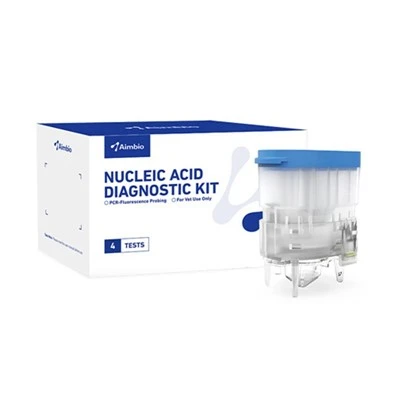
First off, let’s get one thing straight: not all respiratory test kits are the same, and “lab results” covers a huge range. We manufacture kits that are sent to CLIA-waived labs, high-complexity hospital labs, and even reference labs that handle backlog for whole regions. The timeline isn’t just about how fast the lab runs the test—there’s a whole chain that starts before your swab even hits a test tube, and ends when you get that final number or positive/negative. Let’s walk through each step so you can stop guessing.
When a clinic uses our kits, here’s what happens: a nurse or tech takes a nasopharyngeal swab (the deep one, or the quick nasal one, depending on the test type) from a patient, sticks the swab into a viral transport medium (VTM) tube, seals it, and fills out the patient’s order form. That’s step one, and it’s usually the same no matter where the lab is. But when does that get shipped? A lot of people forget that labs don’t pick up samples every hour. If a clinic runs a test at 3pm, the courier might only swing by at 7am the next day. Even if you drop the sample off yourself at a reference lab’s drop box, the lab might not process it until their next shift starts at 8am. That first delay—sample transport and intake—can add 12 to 36 hours right off the bat, no matter how efficient the test itself is.
Next, the lab’s processing. Our kits are made for two main lab types: antigen tests and molecular (PCR) tests. Antigen tests are the quick ones, right? Wait, no—if you’re sending to a lab, even the lab-run antigen tests are faster than PCR, but not as fast as the at-home ones. Lab antigen tests take about 1 to 2 hours once the sample is in the machine. But here’s the catch: most clinics send samples for molecular tests now, because they’re way more sensitive—you don’t get as many false negatives, which matters for stuff like flu, COVID, RSV, or strep. Molecular tests (PCR) are the workhorse for serious respiratory cases, but they have more steps.
PCR works by copying the viral genetic material over and over until it’s detectable. The actual “run time” for a PCR test is about 2 to 4 hours. But labs don’t run one sample at a time—they batch them. If a lab is swamped (hello, flu season, or a COVID surge), they might hold samples until they have 50 or 100 to run through their machines. That batch delay can add another 6 to 24 hours. Plus, some labs have to do a “nucleic acid extraction” step before the PCR—separating the viral DNA/RNA from the goop in the VTM—and that adds another 1 to 3 hours if it’s not automated. Put that together, and if the lab is not backlogged, you’re looking at a total of 24 to 48 hours from sample collection to results.
But wait—what about backlog? That’s the biggest variable, and it’s not the lab’s fault. Last winter, we had clinics sending 3x more samples than a reference lab in Chicago could handle, because that area had a triple surge of flu, RSV, and COVID. The lab said publicly their turnaround time was 3 to 5 days, but some samples took 7 because they were processing samples from schools and nursing homes first. We’ve also seen smaller, rural labs that only run tests a few days a week—so if you drop a sample off on Friday, you might not get results until Wednesday, because the lab is closed on weekends. That’s a huge thing most people don’t factor in: lab operating hours. If it’s a small clinic lab, their turnaround might be 48 hours, but only if the sample is collected between Monday and Thursday.
Now, let’s compare that to what our kits are designed for, because we don’t make a one-size-fits-all product. We have three main lines of lab-ready respiratory kits: our standard multiplex PCR kit (tests for 10+ respiratory viruses and bacteria in one swab), our rapid lab antigen kit (for fast, low-acuity cases like routine screening), and our swab kits that work with both hospital labs and reference labs. For the multiplex PCR, our internal testing shows that when a lab is at normal capacity, results come back in 28 to 48 hours. If there’s a surge, that jumps to 3 to 5 days. The rapid lab antigen kits? Once the sample is at the lab, results are back in 2 to 6 hours, no batch delay needed because they’re simple tests. But again, that’s only if you’re sending to a lab that runs antigen tests in-house.
I get it—why would anyone wait 5 days for results? For one, PCR is way more accurate. If you’re a small business doing pre-employment testing, you might need fast results, so the rapid lab antigen is perfect. But if you’re a pediatrician trying to figure out if a kid has RSV vs. a regular cold, you need the multiplex PCR because it catches all the possible pathogens in one test, instead of running three separate ones. That accuracy takes time, which is why we engineer our kits to work efficiently in both high-volume and low-volume labs, so turnaround is as short as possible no matter where you’re sending samples.
Another thing that people ask me all the time: do the kit components affect the turnaround time? Absolutely. We use VTM that keeps samples stable at room temp for up to 7 days, so if a lab is backed up, your sample doesn’t go bad while they wait to process it. A lot of cheap kits on the market use VTM that needs to be refrigerated, which means if you have to ship a sample overnight, you need dry ice, adding delay and cost. Our VTM is room-stable, so you can ship via standard courier, no extra steps. Also, our PCR reagents are optimized for faster amplification—cutting that 2-hour run time down to 90 minutes, which adds up when you’re batching 100 samples. We spent a year testing that with labs across the country, because we heard over and over that kit inefficiencies were making turnaround longer for everyone.
Wait, let’s talk about common myths. A lot of folks think lab results are “in 24 hours” no matter what, but that’s only if you drop a sample off at 8am at a lab that runs 24/7, no backlog. Another myth: if you get a “pending” result after 24 hours, that’s a bad sign. More often than not, it just means the lab is running a second confirmatory test—something we design our kits to support, so labs can do that quickly without re-swabbing the patient. We’ve had clinics tell us that because of our kits, they only need 1 confirmatory run instead of 2, which cuts their total time by a day.
What about specific cases? Let’s say you’re a school nurse testing 50 kids for strep and flu after a positive case. If you use our rapid lab antigen kits, the lab can process all 50 samples in 4 hours, so the nurse has results by the end of the day—enough time to send kids home if they’re positive. If you use our multiplex PCR, you’re looking at 2 days, but you’ll know exactly which virus it is, so you don’t have to test again later. For a nursing home outbreak, the multiplex is better because you can test for all pathogens at once, and with our optimized reagents, labs can process batches faster, so you get results before the outbreak spreads further.
Now, if you’re a procurement manager, clinic owner, or small business looking to order these kits, here’s what you should ask your lab before you place an order: “What’s your average turnaround time for respiratory tests using [kit type]?” Don’t just ask for the “typical” time—ask for the time during off-surge and on-surge. That’s the real number that matters. And when you order kits, make sure to confirm that they’re compatible with your lab’s equipment—we provide free technical support to make sure our kits work with any standard lab machine, so you don’t have to worry about compatibility adding delay.
Let me wrap this up by saying: the “how long” question doesn’t have a one-word answer, but it’s not rocket science. It’s a chain: sample collection → transport → lab intake → test processing (batch, run time) → result validation. Our kits are built to make every link as fast as possible, because we know that whether you’re a clinic saving a kid’s life or a business getting back to work, time matters.
If you’re in the market for lab-ready respiratory test kits, whether you need multiplex PCR for high accuracy or rapid antigen for fast results, reach out to our team to chat through your specific needs. We don’t do generic quotes—we’ll help you figure out the right kit, the right lab workflow, and how to cut down your turnaround time without sacrificing accuracy.
Molecular Diagnostic Instruments References:
- Centers for Disease Control and Prevention. (2023). Respiratory Virus Testing Guidelines for Clinical Laboratories.
- Clinical and Laboratory Standards Institute. (2022). Molecular Diagnostic Testing for Respiratory Pathogens.
- American Medical Association. (2023). Turnaround Time Benchmarks for Point-of-Care and Laboratory-Based Respiratory Tests.
- Journal of Clinical Microbiology. (2022). Impact of Sample Transport and Processing Delays on Respiratory Test Accuracy and Turnaround Time.
Hangzhou Aimbio Technology Co., Ltd.
Hangzhou Aimbio Technology Co., Ltd. is one of the most experienced respiratory tract test kit manufacturers and suppliers in China, featured by quality products and good price. We warmly welcome you to buy customized respiratory tract test kit made in China here from our factory. If you have any enquiry about quotation, please feel free to email us.
Address: Room 101, Building 2, No. 658 Bin’an Road, Binjiang District, Hangzhou, Zhejiang, China
E-mail: b2b@aim-bio.com
WebSite: https://www.aimbio-products.com/
