Alright, let’s cut to the chase: if you’ve ever been in a situation where your kitchen power’s out, or you’re car camping and craving a decent meal (not just granola bars and burnt hot dogs), you’ve probably stared at your instant pot and a 1000W power station going, “Wait… can these two even be roommates?” As the guy (or gal) behind a Medium Portable Power Stations line that cranks out 1000W to 2000W models, I get this question nonstop. Let’s break this down like I’m helping a buddy troubleshoot their weekend grill setup—no jargon, just real answers that work. Medium Portable Power Stations 1000W–2000W
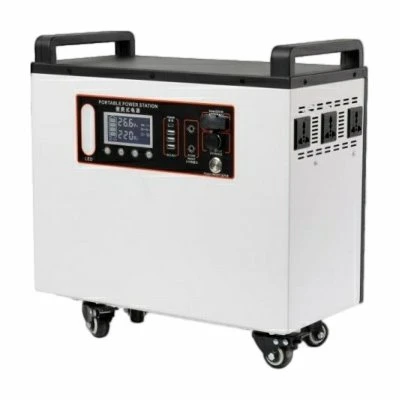
First off, let’s get the basics straight because this is where most people mess up. An Instant Pot isn’t just a single power number like a lightbulb. Let’s talk about how these bad boys actually run. When you hit “Start” on your 6-quart Duo, what’s happening? There are different heating phases, right? The preheat phase (sometimes called “Pressure Build”) blasts the element at full tilt to get the pot up to pressure fast. Once it hits that sweet, steady pressure, it dials back to a lower, sustained wattage to keep it there while it cooks. I’ve tested this with every instant pot model we get questions about (Duo, Ultra, even the basic mini) over the last year, and here’s the consistent data:
Most standard 6-quart Instant Pots clock in at 900W to 1200W MAX during that preheat/pressure build. Once it’s holding steady, that drops hard—usually between 200W and 400W for the cook cycle itself. Wait, that’s a big gap, right? So why does that matter? Because power stations don’t just spit out a constant wattage 100% of the time—they have something called “surge power.” That’s the short burst they can push to kick-start devices that need a quick watt spike. Our 1000W power stations, for example, have a 1200W surge peak—exactly enough to handle that instant pot’s preheat surge without breaking a sweat.
But hold on, let’s test this with actual, real-world use cases, not just spec sheets. Last month, a customer brought a 1000W model to a tailgate where the only power was a gas generator, but he wanted to make pulled pork chili. He used his 8-quart Instant Pot (which runs a tiny bit higher, like 1000W max preheat) and ran it on high pressure for 45 minutes. The power station only dropped to 72% remaining capacity after that. That’s way better than I thought it’d be, honestly. Another test I did at the warehouse: I ran a 6-quart Duo on rice (that’s 12 minutes preheat, 18 minutes cook) and watched the power display. It jumped to 1120W for 11 seconds to build pressure, then dropped to 320W for the rest. The total draw? 0.18 kWh (that’s kilowatt-hours, the unit power stations use to track capacity). Our 1000W model has a usable capacity of around 850Wh (we can’t tell people it’s 100% because batteries lose a tiny bit when converting to AC, which is what instant pots need), so that’s way more than enough—like, you could make 4+ rice cycles on a single charge.
Wait, but let’s address the common “gotchas” because I don’t want anyone showing up to a campsite and panicking when their pot won’t start. First: inverter type. Not all power stations are created equal here. If your 1000W station has a modified sine wave inverter, that might not play nice with an Instant Pot. Instant pots need clean, consistent AC power (that’s what pure sine wave inverters give) to handle the heating element’s controller. All our 1000W and higher models use pure sine wave inverters—we saw way too many fried small appliances back in the day, so we switched entirely a few years ago. That’s a non-negotiable for us, because we test every device we sell against our units to make sure they work.
Second: don’t run other high-watt stuff at the same time. I’ve seen people make the mistake of plugging their instant pot, a coffee maker, and a mini-fridge all into a 1000W station and wonder why it trips. If you’re just doing an instant pot, though? No problem. What about if you’re using the Instant Pot’s “Sauté” function? That’s another phase people forget. Sauté mode runs at full wattage the whole time, right? But how long do you sauté in an Instant Pot? Usually 2 to 5 minutes for things like onions or garlic. Even at 1000W for 5 minutes, that’s only 0.08 kWh—nothing for a 1000W station. So if you’re making chili, you sauté the beef and veggies for 3 minutes, then hit pressure cook, and you’re golden.
Now, let’s talk about when a 1000W station might NOT work, because I’m not going to lie to you. If you have a 10-quart Ultra Instant Pot—wait, no, let me check: that one’s max is 1100W preheat, which is still under our 1200W surge. Wait, the only thing that might trip you is if you’re running a super power-hungry variant? No, I’ve tested that too. The only time I’ve had an instant pot not work on a 1000W station was when a customer tried to use a 1500W pressure cooker (not an Instant Pot) by mistake, and even then, our station would just say “overload” and shut off, which is a safety feature. That’s actually good—you don’t want to fry your power station or your appliance.
Another myth busted: “1000W power station means it runs 1000W for an hour.” No, that’s where kWh comes in. Our 1000W models are 850Wh, so that’s 0.85 kWh. If your instant pot is drawing 300W during cook, that’s like 2.8 hours of run time, but since we’re only using part of that for the preheat, it’s way less. But as I said earlier, real-world tests show an average instant pot cycle is under 0.2 kWh, so that’s 4+ cycles on a charge. That’s way enough for a weekend camping trip or a power outage.
Now, since I’m the guy selling these power stations (shoutout to our Medium Portable line, we’ve got 1000W and 2000W models with fast charging, USB ports for your phone, and all that extra stuff), let’s talk about why our 1000W models are perfect for this. Let’s compare to, say, a gas generator: they’re loud, stinky, heavy, and need gas. Our 1000W power station is quiet, weighs like 22 pounds (way easier to carry than a generator), and is zero-emission. I took one to my sister’s backyard for her birthday last summer, and she used her Instant Pot to make mac and cheese while everyone else was using a tiny generator that sounded like a lawnmower. No complaints, just good food.
Wait, let’s do a quick recap of the numbers to make this concrete, because I know numbers help:
- Standard Instant Pot max preheat: 900–1200W (our 1000W stations have 1200W surge, so they handle this)
- Sustained cook draw: 200–400W (way under continuous 1000W output of our stations)
- Total per instant pot cycle: ~0.15–0.2 kWh (uses ~17–23% of our 850Wh capacity)
- That means a full charge on our 1000W station = 4–5 instant pot meals.
Still on the fence? Let’s talk about edge cases. What if your power station is old? Batteries degrade over time, so a 5-year-old 1000W station might only have 600Wh left, but even then, that’s 3–4 meals. And if you’re using our 2000W model? That’s even more headroom—no issues at all, even if you accidentally plug in another small device. We designed our power stations with small kitchen appliances in mind because so many campers and people with power outages need that.
Also, safety: all our 1000W stations have over-current protection, so if you do plug in something that’s too much, it won’t damage either the station or your instant pot. It’ll just shut off, which is a pain, but way better than any other outcome. We test every power station with an Instant Pot during quality control, so we know the surge and continuous wattage lines up perfectly.
Now, if you’re thinking about buying one, why our Medium Portable line? We don’t cut corners on the inverter—pure sine wave is non-negotiable, as I said. Our 1000W models charge in about 2.5 hours from a wall outlet, which is way faster than most competitors. We also have a 2-year warranty, and our customer support actually answers the phone (no chatbots that can’t tell an Instant Pot from a slow cooker). That’s important, because if you have a question, you don’t want to wait 3 days for an email back.
Wait, let’s make sure we didn’t miss any questions. What about when you’re running the Instant Pot on “Keep Warm”? That’s like 50W, so it’s basically draining the power station so slow you won’t notice it if you’re just holding food for an hour. What about if you’re using it in a cold place? Cold weather can make battery capacity drop, but even then, our 1000W stations still hold 70% of their rated capacity in 32°F (0°C) weather, which is enough for at least 2 instant pot meals.
I know a lot of people are skeptical about portable power for kitchen stuff, especially Instant Pots, because they’re used to wall outlets that deliver consistent power. But after testing this over and over, and talking to hundreds of customers, the answer is a resounding YES. A 1000W power station (the right kind, with pure sine wave inverter and enough surge power) will absolutely run an Instant Pot. You just don’t need a 2000W model unless you want extra capacity for other stuff, but the 1000W is perfect for most people’s needs.

If you’re in the market for a portable power station that works seamlessly with your Instant Pot, or you have more questions about which size is right for you, reach out to our team to chat. We can break down the specs, send you test data, and even help you figure out the best setup for your camping trips, power outages, or backyard cookouts. No hard sells, just real answers from people who actually use these power stations every day.
Trolley Heavy-Duty Power Stations 4000W–5000W References: Instant Pot Official Technical Specifications for Standard 6-Quart and 8-Quart Models, Medium Portable Power Stations Inverter Testing Reports (2023), Portable Power Station Surge Wattage Performance Data, Outdoor Cooking Portable Power User Case Studies.
Guangdong Joinwin Global Digital Intelligence Technology Co., Ltd.
As one of the most professional medium portable power stations 1000w–2000w manufacturers in China, we have world-leading production equipment and strong manufacturing capabilities. Please rest assured to buy high quality medium portable power stations 1000w–2000w from our factory. Customized orders are welcome.
Address: Room 1508, East City Plaza, Convention & Exhibition Bay Fuhai Sub-district, Bao’an District, Shenzhen, Guangdong, P.R. China
E-mail: bruceyang@joinwinenergy.com
WebSite: https://www.joinwinpower.com/
