If you’ve ever reached out to a cold room sandwich panel supplier asking about installation costs, you’ve probably noticed that the answer is never a flat number. That’s because cold room installations aren’t one-size-fits-all—every project has unique needs, and as someone who’s spent 12 years working directly with cold storage builders, restaurant owners, and pharmaceutical logistics teams, I can tell you the installation cost for these panels depends on far more than just the price of the panels themselves. Let’s break it down plainly, no industry jargon, and explain exactly what goes into that final number so you know what to expect when you’re planning your cold room build. Cold Room Sandwich Panel
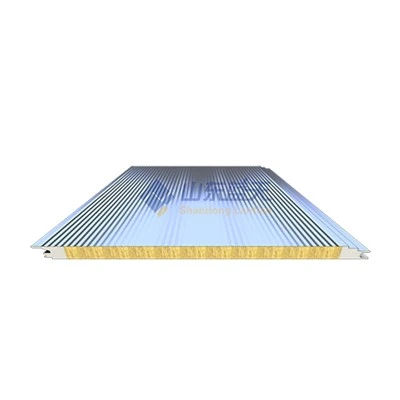
First, let’s get clear on what a cold room sandwich panel actually is, for anyone new to the space. These are the panels that form the walls, ceiling, and floor of a cold room—they’re made of two rigid metal sheets (usually galvanized steel or aluminum) bonded to a core of insulating material, like polyurethane (PUR), polyisocyanurate (PIR), or expanded polystyrene (EPS). The insulation is what keeps the cold air in and the hot air out, which makes the panel’s core type, thickness, and quality foundational—but installation costs separate a professional, long-lasting cold room from a shoddy one that will cost you thousands in energy bills and repairs down the line.
Now, let’s dive into the biggest factors that drive installation costs, because these are the things that change from job to job. I’ll start with the size of your cold room, because that’s the most obvious place to start. A small walk-in cooler for a café that’s 8ft x 10ft x 8ft tall is way different from a 20,000 sq ft industrial cold storage warehouse for a grocery distributor. For small, standalone cold rooms, installation is often priced per linear foot of panel installed. Right now, in North America, that rate runs between $8 and $16 per linear foot, but that’s not fixed. For reference, a standard 8ft tall wall has 16 linear feet (4ft on each side, 8ft tall), so a 10ft long wall would be 10ft x 2 sides = 20 linear feet, plus the ceiling would be 10ft x 10ft = 10 linear feet, so total linear feet for that small cooler would be around 50. That would put installation cost between $400 and $800, before you factor in foundations, doors, and labor.
But for large industrial cold rooms, we don’t price per linear foot—we price per square foot of useable space, or as a total project cost. Industrial installation costs for sandwich panels usually land between $2.50 and $6 per sq ft of interior space, again depending on complexity. That makes sense because large-scale projects require more coordination, crane access, and specialized labor. For example, a 10,000 sq ft cold storage room would have panel installation costs between $25,000 and $60,000, which is a huge range, and that leads us to the next big factor: panel specifications.
The thickness of your panels directly impacts cost, and it’s non-negotiable for your intended use. A small café cooler that’s set to maintain 35°F (for produce) might use 2-inch thick PIR panels, which are lighter and easier to install. A deep freezer that needs to stay at -20°F, or a pharmaceutical cold room that requires precise temperature control, will need 4-inch or even 6-inch thick panels. Thicker panels add weight, so you need stronger fasteners, and they take more time to align during installation—for every extra inch of thickness, labor time goes up by about 10 to 15%. That means a 4-inch panel’s installation cost is roughly 20% higher than a 2-inch panel, all else being equal.
Another panel spec that affects installation cost is the type of metal finish. Galvanized steel is the most common, and it’s affordable, but if your cold room is in a harsh environment—like a meat processing plant where there’s constant moisture and cleaning chemicals, or a coastal area with high salt air—you’ll need stainless steel. Stainless steel panels are heavier, require specialized cutting tools, and need more careful handling to avoid scratching, which adds 30 to 50% to installation costs compared to galvanized steel. That’s not just a quirk—it’s a necessity; a scratched panel can develop rust or gaps that let moisture in, ruining the insulation and wasting energy.
Then there’s the site prep, which is something many first-time cold room builders overlook, and it can add thousands to your installation cost. Before we even bring a single panel to the job site, the space has to be level, waterproof, and structurally sound. If you’re building a cold room indoors, you might need to pour a concrete foundation that’s reinforced to support the weight of the panels and the insulation. If you’re building outdoors, you might need to excavate and lay a base that prevents frost heave, which is when the ground freezes and shifts, warping your cold room walls. If the site isn’t prepped correctly, we can’t install the panels properly—so we often factor site prep into the total cost, or we note that you’ll need to budget for it separately. I once worked with a small restaurant owner who thought installation was only for the panels, and they had to spend $3,000 on concrete repairs after their old floor was uneven, doubling their total project cost. That’s the kind of surprise we want to avoid.
Next, labor is a huge part of the equation, and it’s not just how many workers you have—it’s their experience. Installing cold room sandwich panels isn’t like putting up drywall. You need workers who know how to seal the panel edges correctly to eliminate air leaks, how to cut panels without damaging the insulation, and how to align them so the door fits right. Unskilled labor might be cheaper, but a botched installation can lead to 20 to 30% higher energy bills every month, which adds up to tens of thousands over the life of the cold room. As a supplier, we work exclusively with certified cold room installers, and their rates are usually higher than general contractors, but they guarantee the work is done to industry standards. On average, labor makes up 50 to 60% of the total installation cost, so if you’re getting a quote that seems too good to be true, the labor is probably the cut-rate part, and that’s a risk.
Accessibility is another factor you might not think about. If your cold room is going into a small retail space with narrow hallways, or on a rooftop where we need a crane to move panels, that adds time and cost. Large panels (standard cold room panels are 4ft wide and 8ft or 10ft tall) are hard to maneuver in tight spaces, so if you have to cut panels on-site because they can’t fit through a door, that’s more labor. For example, we recently installed a cold room in a historic downtown bakery where the doorways were only 3ft wide, so we had to cut each panel in half on-site, adding 15% to the installation time and cost because each piece had to be aligned perfectly to maintain the seal.
Now, let’s talk about add-ons that are often included in installation costs, because they’re not optional for a functional cold room. The door is a big one: a standard walk-in cooler door is around $1,500 to $3,000, and installation adds another $500 to $1,000 for fitting it correctly and sealing around the frame. For industrial cold storage doors, like sliding or rolling doors, that can be $5,000 or more, with higher installation costs. Then there’s the refrigeration system, which is usually a separate quote, but some installers will include basic refrigerant line runs and electrical work for the evaporator and condenser units. We always note that refrigeration work needs to be done by a licensed HVAC technician, so that’s a separate line item, but it’s important to factor that in when budgeting.
Wait, let’s get to a common question: do you save money by installing panels yourself? I get this all the time from small business owners who want to cut costs. The short answer is almost never. Even if you have general construction experience, cold room panels require precision sealing to prevent air infiltration, which is the #1 cause of high energy costs in cold rooms. Air leaks can add 15 to 25% to your monthly utility bill, so even if you save $2,000 on installation, you’ll make that back in a year and then some. Plus, most cold room manufacturers require professional installation to maintain the warranty—if you install the panels yourself and a gap forms that ruins the insulation, your warranty is void. That’s a big risk for anyone who relies on their cold room to store perishable goods or sensitive products.
Now, let’s give some real-world numbers to make this concrete, based on projects I’ve worked on in the last two years. A 8ft x 10ft x 8ft walk-in cooler for a café, using 2-inch PIR panels, galvanized steel walls, a standard swing door, and site prep for a concrete pad: total installation cost (panels + labor + door) would be around $4,500 to $6,000. A 1,000 sq ft industrial cold storage room for a local food distributor, using 4-inch PIR panels, stainless steel walls, a sliding door, and full site prep including a reinforced foundation: total installation cost (panels + labor + door + basic electrical) would be around $18,000 to $25,000. A 5,000 sq ft deep freezer for a pharmaceutical company, using 6-inch PIR panels, all stainless steel, and crane access for large panels: installation cost would be around $45,000 to $60,000. These numbers are in USD, and they can vary a bit by region—labor is more expensive in urban areas like New York or Los Angeles than in rural Midwest, for example.
I want to be clear: these are just estimates, and every project is unique. The best way to get an accurate installation cost is to share your project details with a reputable cold room sandwich panel supplier and installer. When you reach out, have these ready: the dimensions of your cold room, the temperature you need to maintain, the location of the build, and any specific requirements (like stainless steel, rooftop installation, or access limits). That way, we can give you a quote that’s tailored to your needs, not a generic number that might leave you with hidden costs.
As someone who’s been in this industry for years, I’ve seen too many projects where owners cut corners on installation and end up with cold rooms that don’t work as well as they should, or cost a fortune to run. The installation of cold room sandwich panels isn’t just putting pieces together—it’s the foundation of a functional, energy-efficient cold storage space that will last 20 years or more. Whether you’re a small café owner looking for a walk-in cooler, a logistics manager planning an industrial cold storage warehouse, or a pharmaceutical professional needing temperature-controlled space, getting the installation right is just as important as choosing the right panels.

If you’re planning a cold room build and want a clear, no-obligation quote for cold room sandwich panels and professional installation, reach out to us to discuss your project details. We’ll walk you through every cost factor, answer all your questions, and help you create a plan that fits your budget without cutting corners on quality.
GI Steel Coil References
- Cold Storage Insulation Best Practices, International Association of Refrigerated Warehouses, 2022.
- Commercial Cold Room Installation Standards, Air-Conditioning, Heating, and Refrigeration Institute, 2023.
- Energy Efficiency for Food Storage Facilities, U.S. Department of Energy, Office of Energy Efficiency & Renewable Energy, 2021.
- Cold Room Sandwich Panel Specifications and Installation Guidelines, North American Insulation Manufacturers Association, 2022.
Shandong Lantian New Material Technology Co., Ltd.
Shandong Lantian New Material Technology Co., Ltd. is one of the most reliable manufacturers and suppliers of cold room sandwich panel in China, featured by quality products and low price. Please rest assured to buy bulk cold room sandwich panel for sale here from our factory. Contact us for pricelist and customized service.
Address: North End of Wanshida Road, Dianzi Town Industrial Park, Boxing County, Binzhou City, Shandong Province
E-mail: Lantian023@ltaaaaa.com
WebSite: https://www.ltpirpanels.com/
