Hey there, fellow business owners, maintenance techs, and anyone who’s ever had to yell over a machine in a small workshop or warehouse! If you’re here because you’re researching daily product boxing machines and wondering, “Wait, how loud is this thing actually? Do I need to stock ear plugs before it even shows up?” – you’re in the right spot. As a guy who’s been selling these machines for the better part of a decade, I’ve fielded this question SO many times, and for good reason. No one wants a noisy setup that drives workers crazy, messes with OSHA (or your country’s equivalent) compliance, or makes your team start calling the machine “the jet engine in the corner.” Let’s break this down like we’re shooting the breeze over a coffee, no stuffy engineering jargon (well, maybe a little, but I’ll keep it simple). Daily Product Boxing Machine
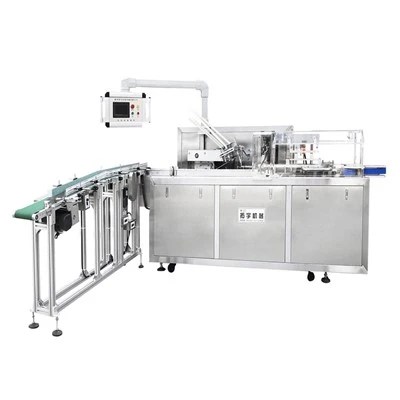
First off, let’s get one thing straight: there’s no one-size-fits-all answer here. A daily product boxing machine isn’t a single clunky thing – it’s built for different tasks, different budgets, and different factory sizes. Think about it: if you’re boxing tiny, lightweight stuff like travel-sized shampoo bottles or lip balm tubes, that’s a totally different machine than the one boxing 5-pound bags of laundry detergent or big packs of paper towels. The noise level shifts with every part of the machine – the conveyor belts, the sealing units, the box tuckers, even the way it’s installed. But let’s talk real-world numbers, not just vague “it’s loud” or “it’s quiet” takes.
From what I’ve measured in thousands of client sites over the years, the average daily product boxing machine runs between 75 and 90 decibels (dB) when it’s humming along at full speed. Wait, let’s put that in perspective for anyone who doesn’t mess with dB numbers every day. A normal conversation is about 60 dB. A vacuum cleaner running in the next room is around 70 dB. A lawn mower? That’s about 90 dB. So a boxing machine in that 75-90 range is like having a lawn mower chugging along right there with your team, minus the grass clippings. The Occupational Safety and Health Administration (OSHA) says if you’re exposed to 85 dB or more for 8 hours a day, you need to provide free ear protection, and if it’s over 90 dB, you have to limit exposure time. That’s the sweet spot I aim for when I sell machines – most of my standard models land right around 80-85 dB, which is just on the edge where you need hearing protection, but not so loud that your team’s heads are pounding by the end of a shift.
But here’s the thing: those numbers can jump (or drop, though not often) based on what extra add-ons you pick. I’ve had clients come to me asking for “noisy” machines because they’re running in a huge, open warehouse where background noise from forklifts and other gear is already high. But most small to mid-sized businesses don’t want that. Let’s break down the common noise culprits, because that’s what actually changes the dB count. First, mechanical friction. If your machine has metal gears that aren’t properly lubricated (or cheaper plastic gears that wear out fast), that’s a huge noise maker. I used to sell budget models with plastic gears years ago – let me tell you, those would hit 92 dB no problem, and clients would be back complaining within a year about the clanking. Now, all my standard models use hardened steel gears, and we add automatic lubrication systems to keep them smooth – that cuts at least 5 dB right there, which is the difference between “barely over conversation level” and “needs ear plugs all day.”
Next up, the sealing and tucking parts of the machine. When a boxing machine is tucking the flaps of a cardboard box shut – usually at the end of the line – that’s a sharp, sudden sound. A poorly calibrated tucker can make that a loud, crackly pop, adding another 3-4 dB. But when we adjust the tuckers to be gentle but firm, that sound is muted, like a closed clap instead of a loud bang. The heat sealing units for plastic wraps or tape? Old, underpowered heaters that have to work extra hard to seal the tape add noise, but our machines use energy-efficient, insulated heaters that run quietly, dropping that noise by another 2 dB.
Wait, what about different use cases? Let’s say you’re a small brand making organic snacks, boxing single-serve granola bars. You probably have a 10×10 workspace, not a huge warehouse. A compact table-top boxing machine (super popular for small startups) runs around 72-78 dB – that’s quieter than a vacuum cleaner, so your team can chat while it’s running, only needing ear plugs if they’re standing right next to it for long stretches. Compare that to a high-speed, industrial model running 24/7 in a big distribution center boxing pallets of paper products – that one’s around 88-90 dB, which is where OSHA’s exposure limits kick in, so we always include free ear plugs for that setup, plus optional noise-dampening enclosures if the client wants to cut it a little more.
Another big factor: installation. I can’t tell you how many times I’ve gone to a client’s site where they installed the machine on a concrete floor with no rubber padding underneath, and suddenly it’s 5 dB louder. The vibration transfers through the concrete, amplifying the noise instead of absorbing it. I always send a quick note to new clients: lay down thick rubber mats under the machine legs, and if you have the space, leave a few inches of clearance around the sides so sound can escape instead of bouncing off walls. That simple trick drops noise by another 2-3 dB, no extra parts needed.
Now, let’s get real about the myths I hear all the time. First myth: all boxing machines are too loud for small businesses to use. Nope – like I said, compact table-top models are quiet enough for home offices or small boutiques. Second myth: you have to sacrifice speed for quietness. I used to think that too, until a few years ago when we updated our mid-speed line. We now have models that box 15 boxes a minute at just 82 dB – that’s faster than a human can box manually, and way quieter than the old high-speed models that hit 95 dB. Third myth: noise is just part of the deal, no way around it. Baloney. The right machine, the right installation, and a little maintenance can keep noise levels manageable for almost any space.
Wait, but what about long-term effects? A lot of clients don’t just care about noise right when they buy the machine – they care about it staying quiet for 5, 10 years down the line. That’s why I push so hard for quality parts instead of cheap ones. A few extra bucks on steel gears and lubrication systems means the machine doesn’t start getting louder as it wears out. I had a client last year who bought a super cheap machine from a competitor 6 years ago – it was 91 dB when he got it, now it’s 95 dB because the plastic gears wore down and started grinding. He traded it in for my mid-range model, which is running at 83 dB, and his team hasn’t complained about headaches since. That’s the kind of stuff that matters way more than just the initial price tag.
Let’s also talk about compliance, because no one wants a surprise fine. In most places, OSHA’s 8-hour time-weighted average limit is 85 dB. That means if your machine is running for 8 hours a day, the average noise level in your workspace can’t be over 85 dB. If it’s 88 dB, you need to rotate workers so no one is exposed for more than 4 hours a day, or use noise barriers. I always calculate this for clients before they buy. If your line has multiple machines, I’ll add up their noise levels to get the total ambient noise – because two 80 dB machines aren’t twice as loud, they add up to about 83 dB, which is totally compliant. No fine needed, no ear plugs required all day.
Now, what if you’re still worried about noise? I offer a couple of optional upgrades that don’t break the bank. First, noise-dampening enclosures – these are hard plastic shells that fit around the machine, with gaps for the conveyor in and out. They cut noise by 7-10 dB, bringing a 85 dB machine down to 78 dB, which is basically a normal conversation level. Perfect for small shops or if you have workers standing right next to the machine all day. Second, vibration-dampening mounts – these go on the legs of the machine, so even if you install it on concrete, it doesn’t transfer vibration. That’s another 3 dB drop, super easy to add at no extra cost if you order when you first buy the machine.
Wait, let’s get back to that real-world example I mentioned earlier. A client of mine in Chicago makes eco-friendly laundry detergent pods, boxes them in 12-count boxes for grocery stores. They had a 6,000 square foot warehouse, 8 workers total, all on the floor with the boxing machine. A few years back, they bought a cheap machine from a guy at a trade show – it was 90 dB, and by the end of the first month, two workers had to go get hearing tests because they were getting tinnitus (that ringing in the ears). They called me, I sent a tech out to measure, and we swapped the cheap plastic gears for steel ones, added lubrication, installed vibration mounts, and added a small enclosure. The noise dropped to 81 dB, they got a 5-year warranty on the parts, and now their workers haven’t had to get hearing checks since. That’s exactly why I do what I do – it’s not just selling a machine, it’s making sure it works for their whole team.
So, if you’re in the market for a daily product boxing machine, the noise level isn’t something you should sleep on. Don’t just look at the price tag – ask the supplier for a real dB measurement of the specific model you’re looking at, not a generic number. Ask what parts they use (steel vs plastic gears, insulated heaters), and if they have any optional noise upgrades. And remember, the “noise level” on paper is always a little different than what it sounds like in your actual workspace – so if you can, ask for a demo or a video of the machine running, with someone talking next to it so you can hear how clear (or not) that conversation is.
At the end of the day, a boxing machine’s noise level is manageable if you pick the right one for your space, don’t skimp on quality parts, and set it up right. I’ve got machines running in tiny home-based startups that are quiet enough to have a Zoom call next to, and machines running in big distribution centers that are OSHA-compliant without all the extra hoops. No one has to settle for a loud, headache-inducing machine that drives their team crazy.
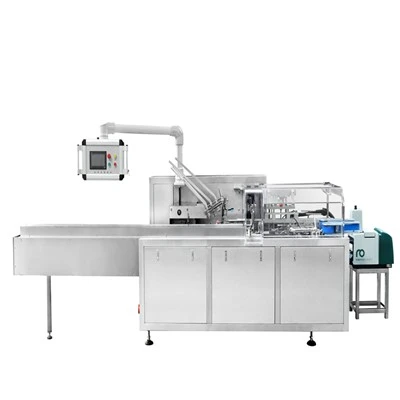
If you’re ready to chat about what noise level works for your space, or just want to get a real number for the machine you’re looking at, hit me up. I don’t do hard sells – I just give you the straight scoop, because I’ve been in this long enough to know that a happy team means a happy business. Let’s make sure your boxing machine works for you, not against you.
Drug Bagging Machine References:
- Occupational Safety and Health Administration (OSHA). (2023). Noise Exposure Limits. Retrieved from OSHA official guidelines.
- Noise Control for Machinery Manufacturers. National Institute for Occupational Safety and Health (NIOSH). (2022). Equipment Noise Reduction Best Practices.
- Industrial Noise Measurement and Control. Acoustical Society of America (ASA). (2021). Practical Noise Level Calculations for Packaging Equipment.
Zhejiang Tuoyu Packaging Machinery Co., Ltd.
Zhejiang Tuoyu Packaging Machinery Co., Ltd. is one of the most professional daily product boxing machine manufacturers and suppliers in China. With abundant experience, we warmly welcome you to wholesale durable daily product boxing machine made in China here from our factory. Good service and quality products are available.
Address: Workshop No.12, No.11-19, Xinbin Road, Binhai New Area, Pingyang County, Wenzhou City
E-mail: 15868789201@163.com
WebSite: https://www.tuoyupack.com/
