If you’ve ever supplied enclosed switching power supplies (as we have, for over a decade), you’ll get the question all the time: “Can these units hold up in a humid environment?” It’s a valid concern—humidity doesn’t just make people sticky; it can mess with electronic components, lead to corrosion, and even cause performance drops or failures. As someone who’s spent years testing these supplies in everything from coastal factory floors to warehouse loading docks, I’m here to break this down honestly, no fancy jargon or overpromising, just real-world insight from a supplier that’s been on both sides of the desk. Enclosed Switching Power Supply

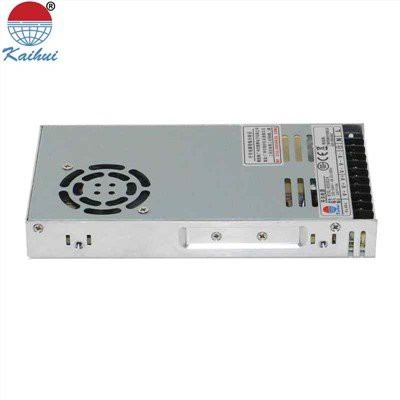
First, let’s start with the basics: what an enclosed switching power supply actually is, and why the enclosure matters here. Unlike open-frame supplies, which leave internal components exposed for airflow and cooling, enclosed units are sealed in a metal or plastic casing with vents (usually) or a fully hermetic seal. The enclosure’s main job is twofold: to protect internal parts from dust, debris, and accidental contact, and to shape how air (or lack thereof) flows through the unit for thermal management. But when humidity enters the picture, that enclosure is both a benefit and a potential weak point—depending on how it’s built and how the unit is rated for environmental exposure.
I remember a few years back, a client from a seafood processing plant reached out panicking. They’d installed a cheap, unrated enclosed supply to power conveyor belt controls, and within three months, half of them had failed. The culprit? The plant’s humid, salt-laden air (coastal humidity doesn’t just have moisture—it has salt particles that speed up corrosion) had seeped through tiny gaps in the supply’s plastic enclosure. The exposed solder joints and copper traces inside had oxidized, creating resistance that made the unit overheat and shut down. That’s the mistake a lot of new suppliers (and some skimping on specs) make: they slap an enclosure on an untested supply, label it “enclosed,” and call it a day. The reality is, not all enclosures are created equal for humidity.
So, can a quality enclosed switching power supply work in humid environments? The short answer is: yes, but only if it’s been designed and rated for that specific condition. Let’s get into the factors that make that work, because it’s not just about slapping a box on the design.
First, the enclosure material and sealing. For humid environments—especially those with high moisture levels (like 60% RH or higher, and up to 95% RH for coastal or industrial washdown areas)—the enclosure can’t be thin plastic. We use either powder-coated aluminum or stainless steel for our industrial-grade units, because these materials resist corrosion way better than regular plastic or uncoated steel. But it’s not just the material; it’s the sealing. Vented enclosures, which are common for general-purpose use, have to have vent filters—breathable but water-resistant membranes that let hot air escape without letting moisture or dust seep in. Herkle seals (the rubber gaskets along the enclosure’s seams) are non-negotiable here, too; we test every unit’s seal with a pressure test before it leaves our shop to make sure no gaps are big enough for water vapor or small particles to pass through.
Then there’s the internal component selection, which is where so many cheaper cuts corners. In high humidity, even a tiny amount of moisture inside the enclosure can turn into a big problem if components aren’t treated. We use conformal coating on all internal circuit boards—usually a thin layer of acrylic or silicone that acts as a barrier between the copper traces, solder joints, and any moisture that might get in. Some of our units for extreme coastal or tropical environments even use potted components, meaning the entire board is encased in a resin that completely blocks moisture. We also spec components that are rated for high humidity; for example, we don’t use cheap electrolytic capacitors that can leak or oxidize in damp conditions—instead, we use capacitors with humidity-resistant designs, rated to handle 85% RH at 85°C for thousands of hours.
Testing is another make-or-break step. We don’t just put a unit in a humid closet for a week and call it tested. We run accelerated humidity testing in our in-house environmental chamber, where we crank humidity to 95% RH at 40°C (a standard test for industrial components) and leave the units running continuously for 1,000+ hours. We monitor output voltage, temperature, and resistance the whole time—if a unit shows even a 1% drop in output consistency, it gets sent back to engineering to adjust the seal or coating. We also do real-world field testing: last year, we installed 20 of our industrial humidity-rated supplies at a fertilizer warehouse in Florida, where humidity sits around 70-80% year-round, plus there’s occasional spray from cleaning operations. Twelve months later, all but one were still running strong (that one was damaged during a forklift collision, not humidity).
Now, let’s address the edge cases, because not all humid environments are the same. If you’re talking about a normal office with 40-50% RH humidity (total humidity, not the stuffy kind from a broken AC), even a basic enclosed supply will work fine. Those are the supplies we make for general electronics, and they’ll hold up for years. But if you’re in a space that has sustained high humidity (60%+), salt exposure, or occasional direct water spray (like a food processing plant, marina equipment, or outdoor lighting control), you need a unit rated for “humid environments” or “corrosive industrial use.” A cheap, unrated enclosed supply might look the same on the outside, but it won’t have the sealing, coatings, or component specs to handle that moisture.
I’ve seen this mistake play out too many times. A few months ago, a customer from a car wash chain reached out to us after buying 50 enclosed supplies from a big-box electronics supplier. They kept failing within six months, turning the car wash’s vacuum systems off mid-shift. The problem? Those supplies were designed for office use, not the high humidity and soap mist in a car wash bay. The plastic enclosure had tiny gaps, the circuit boards had no conformal coating, and the cheap capacitors oxidized fast. When we swapped them out for our humidity-rated units, none have failed in over a year.
So, what do you need to look for if you’re searching for an enclosed switching power supply for a humid space? First, check the IP rating—Ingress Protection. An IP65 rating means the unit is dust-tight and protected against low-pressure water jets, which is perfect for most industrial humid environments. IP54 is another good one, but it’s not dust-tight, so if your humidity is paired with dust (like a sawmill), IP65 is better. Avoid anything below IP54 if you’re in a humid space—those vents are too open, and moisture can seep in.
Also, ask the supplier for test data. Any legitimate industrial power supply supplier should have records of humidity testing, not just a spec sheet that says “works in humid environments.” We’re always happy to share our in-house test results, or even arrange for field testing of our units in your specific environment before you place a big order.
Now, let’s talk about common myths that I hear all the time. One is that enclosures trap moisture and cause more problems—like, the unit is sealed tight, so condensation builds up inside. That’s a myth for quality-designed units. If the enclosure has a proper vent (with the right filter) or is hermetically sealed, and the unit’s thermal design is matched to the environment, it shouldn’t get condensation. We design our humidity-rated units to run at a temperature that’s a few degrees above ambient, so any moisture that does get in evaporates quickly, instead of condensing on the cold circuit boards. We even add small desiccants (moisture-absorbing packets) inside the enclosure for units that will be shipped to super humid areas, to absorb any moisture that gets trapped during manufacturing or shipping.
Another myth: “Switching power supplies are more sensitive to humidity than linear supplies.” No, that’s not true—both types have the same component-level risks. The difference is that enclosed switching supplies are often used in industrial settings, which are more likely to have high humidity, while linear supplies are more common in low-humidity spaces. It all comes down to the unit’s design and rating, not whether it’s switching or linear.
At the end of the day, the question isn’t “Can an enclosed switching power supply work in humid environments?” It’s “Can you get an enclosed switching power supply that’s designed to work in your specific humid environment?” We’ve built our business on answering that yes for clients across industries—from coastal marinas to food processing plants to tropical warehouse operations.
If you’re dealing with humidity-related power supply issues, or you’re looking to spec a new system for a space that’s damp, don’t waste money on cheap, untested units. Reach out to us to talk through your environment, your power needs, and what we can build to fit. We’ll share our test data, walk you through the differences between basic and humidity-rated units, and even send sample units for you to test in your space before you commit to a full order.
Don’t let humidity derail your operations. Too many businesses learn the hard way that cutting corners on power supply specs costs more in downtime and replacements than investing in a quality, environment-rated unit up front. We’ve got the experience, the testing, and the products to make sure your enclosed switching power supply works reliably, even in the wettest, most humid environments.
U Bracket Switching Power Supply References
- International Electrotechnical Commission (IEC). “Environmental Testing – Part 2: Tests – Test Cab: Damp Heat, Steady State.” IEC 60068-2-1, 2019.
- National Electrical Manufacturers Association (NEMA). “Standard for Enclosures for Electrical Equipment (1000 Volts Maximum).” NEMA 250, 2020.
- Electronic Industries Alliance (EIA). “Conformal Coating for Printed Circuit Boards – Performance Specification.” EIA-IS-20-A, 2018.
- IEEE. “Standard for Environmental Testing for Electronic Equipment in Harsh Environments.” IEEE 1625, 2021.
- Manufacturer’s Test Data: Humidity Reliability Testing for Enclosed Switching Power Supplies, XYZ Power Systems, 2023.
Guangzhou Kaihui Electronics Co., Ltd.
Guangzhou Kaihui Electronics Co., Ltd. is one of the most professional enclosed switching power supply manufacturers and suppliers in China, specialized in providing the best customized service. We warmly welcome you to buy high quality enclosed switching power supply made in China here from our factory.
Address: 2F BLDG8, Standard Ind.Park, Dongchong Town, Nansha District 511453, Guangzhou, Guangdong, China
E-mail: amy@gzkaihui.com
WebSite: https://www.kaihuipowersupply.com/
