If you’ve ever jumped into a car on a frigid morning, your first thought is probably “will the battery crank?” — and more often than not, that clunky, heavy lead-acid battery under the hood delivers. I’ve spent the last 12 years selling these batteries to fleets, auto repair shops, and agricultural equipment operators, and one of the most common questions I get isn’t about warranty terms or delivery times: it’s about how this old, seemingly clunky tech actually turns chemical goop into the electricity that starts an engine. Lead-Acid Battery

I’ll be honest, when I first started in this business as a part-time warehouse helper loading batteries for local mechanics, I thought it was just a big wet rock that made power. I’d watch guys swap them out in 10 minutes flat, never once wondering what was happening inside the gray plastic case. It wasn’t until a customer asked me to explain it in detail because he wanted to test a dead battery himself that I dug into the science — and realized how brilliant, and surprisingly simple, the process really is.
Let’s start with the basics: every lead-acid battery is a sealed (sort of) container full of key parts, and none of them are magic. Inside, you’ve got two sets of lead-based plates, a thick liquid called electrolyte, and separators that keep the plates from touching and shorting out. For most standard flooded lead-acid batteries — the kind you find in 90% of gas-powered cars, trucks, and tractors — one set of plates is made of pure, soft lead (that’s the anode, the negative side of the battery), and the other is made of lead dioxide (that’s the cathode, the positive side). The electrolyte is a mix of sulfuric acid and water, about 3 parts water to 1 part acid, and it’s corrosive for a reason — it’s the star of the whole operation.
When the battery is sitting unused, this mix just hangs out, right? No real action. But flip the key, and suddenly you close a circuit between the anode and the starter motor, and that’s when the chemistry kicks in. Electrons don’t just appear — they’re stripped from the lead plates, and that’s where the flow of electricity comes from. Here’s how the reaction works step by step: at the negative anode, the pure lead atoms break down, lose two electrons each, and bond with sulfate molecules from the sulfuric acid to make lead sulfate. Those electrons get pushed out of the anode, flow through the closed circuit to the starter, powering the engine, and then head back to the positive cathode. At the cathode, lead dioxide molecules, extra hydrogen ions from the electrolyte, and those incoming electrons combine with more sulfate molecules to make another batch of lead sulfate and water.
Over time, this reaction repeats every time you use the battery, and the lead sulfate builds up on both plates. That’s why batteries don’t last forever — it’s not just age, it’s the wear from all those chemical bonds breaking and re-forming. If you leave a battery sitting for weeks without charging it, the lead sulfate hardens into a crystal that won’t break back down when you try to charge it again, and that’s when you get a dead battery that won’t hold a charge. I see this all the time with farm equipment left out over the winter; a quick top-off charge with a smart charger can bring some back, but many end up needing replacement.
Wait, let’s make that clear: when you charge a battery, you’re actually reversing that reaction. The alternator in your car does this automatically as you drive — it takes the electrical power from the engine and pushes it back into the battery, forcing the lead sulfate on the plates to break apart, turning back into pure lead at the anode, lead dioxide at the cathode, and releasing sulfate back into the electrolyte. That’s why proper charging is so important; if you never let a battery fully charge, those hard sulfate crystals build up faster, cutting its life short. A standard flooded battery from a good supplier like the ones we provide will last 3-5 years with regular use and proper charging, but we’ve seen customers get 7 years out of them just by keeping their equipment plugged in when not in use.
I know this sounds like textbook science, but it’s worth tying it to why lead-acid batteries still matter so much, even with all the fancy lithium-ion batteries popping up. Lithium might be lighter, but lead-acid is cheap, reliable, and can deliver that big burst of power you need to start an engine in an instant — that’s why every car, truck, boat, and utility vehicle still uses them. We supply batteries for everything from semi-trucks that cross the country to golf carts at local courses, because our customers don’t want to deal with a battery that dies when they’re halfway through a route or on a busy construction site.
Let me share a quick story that drove this home for me. A few years back, I was dealing with a landscaping company that had 12 work trucks, all with lead-acid batteries that kept dying on hot summer days. Their old supplier was sending cheap batteries that couldn’t handle the heat, which makes lead sulfate build up even faster. We swapped them for our heavy-duty deep-cycle lead-acid batteries, built with thicker plates that can handle more charge and discharge cycles, and a higher-quality electrolyte mix that resists corrosion. By the end of the season, their battery failure rate dropped from 15% a month to zero. That’s when I realized: understanding the science isn’t just for engineers — it’s for anyone who needs a battery that works when they need it.
Here’s the part most people don’t talk about: how a battery is built affects how it generates electricity. The thickness of the lead plates, the density of the electrolyte, even the quality of the separators between the plates all change the amount of power it can deliver and how long it lasts. Cheap batteries use thin plates that degrade quickly, while our premium models use thicker, cast lead plates that can withstand thousands of charge-discharge cycles. That’s why we always tell customers that the initial cost of a good battery pays off in the long run — no more calling a tow truck because your battery died, no more replacing batteries every two years.
Another common misconception: when a battery is “dead,” it’s not that it’s out of power, it’s that the chemical reaction can’t keep moving. Once the lead sulfate covers the plates, there’s no more surface area left for the reaction to happen, so electrons can’t flow. That’s why jump-starting works — it temporarily charges the dead battery using power from a working one, breaking down some of the sulfate crystals and getting the reaction going again. I’ve used this trick more times than I can count on cold mornings at my shop, and it’s amazing how often it works.
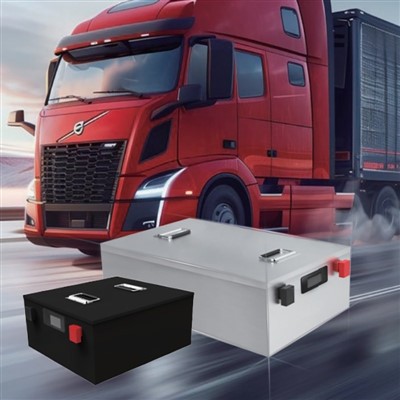
Now, I know if you’re reading this, you’re probably either curious about how batteries work, or you’re in the market for a reliable supplier for your fleet or equipment. Let’s cut to the chase: if you’re tired of batteries that die at the worst possible time, that have short lifespans, or that leave you stranded when you can afford to be, we can help. We’ve been supplying lead-acid batteries to businesses across the country for over a decade, and we work with everyone from small auto repair shops to large logistics companies. We don’t just sell batteries — we stand behind them, and we can help you pick the right model for your needs, whether you need a standard starting battery for a car, a deep-cycle battery for a golf cart, or a heavy-duty battery for a semi-truck.
Power Lithium Battery Whether you’re troubleshooting a dead battery on your own, just curious about how this workhorse technology works, or ready to switch to a reliable battery supplier, we’re here to help. Don’t waste time on cheap, short-lived batteries that cost you more in the long run. Reach out to us to talk about your needs, get a quote, or ask any questions you have about lead-acid batteries, how they work, or what model is right for you.
References
- Linden, D., & Reddy, T. B. (2002). Handbook of Batteries (3rd ed.). McGraw-Hill.
- Krum, D. (2018). Understanding Lead-Acid Battery Chemistry. Journal of Chemical Education, 95(10), 1682-1687.
- US Department of Energy. (2020). Lead-Acid Batteries: Fundamentals and Applications. Office of Energy Efficiency & Renewable Energy.
- Gary, L. (2019). The Longevity of Flooded Lead-Acid Batteries in Fleet Applications. Fleet Maintenance Magazine, 27(4), 45-49.
Shandong Yaoqian Energy Storage International Trade Co., Ltd.
We’re well-known as one of the leading lead-acid battery manufacturers and suppliers in China, featured by quality products and good price. Please rest assured to buy customized lead-acid battery made in China here from our factory.
Address: Lithium Battery Industrial Park, Xingcheng Street, Zaozhuang High-tech Zone, Shandong Province, China
E-mail: boss@yaoqiansmart.com
WebSite: https://www.yaoqiansmart.com/
