
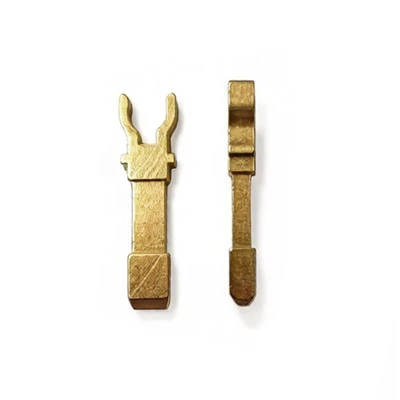
Jp Standard Plug Pin Hey folks, let’s cut to the chase: if you’ve ever had a wonky UK plug, or you’re messing around with electrical projects and wondering if you can just swap out pins from different UK plugs, you’ve probably Googled this exact question a hundred times. As someone who’s been supplying UK standard plug pins for over a decade, I get it—this stuff isn’t just a random “can I mix and match?” question. It’s the kind of thing that can get you in actual trouble if you skip the fine print, and trust me, I’ve seen way too many sketchy attempts at swapping pins that went sideways (think: blown fuses, dead appliances, even worse). First off, let’s debunk the myth everyone seems to believe: no, all UK plug pins aren’t the same—and before you yell at me, hear me out. I didn’t make the rules; the British Standards Institution (BSI) did, and they’re not messing around when it comes to electrical safety in this country. Let’s start with what a standard UK plug pin is, for anyone who’s a little rusty: those three prongs, right? There’s the live (brown), neutral (blue), and earth (green-yellow) ones, all shaped like chunky rectangles with rounded edges, each with a specific size. Wait, size is the big one here—everyone’s like “they look the same!” but nope, they’re precision-made. The standard BS 1363 defines exact dimensions: live and neutral pins are 20.8 mm long, 7.8 mm wide, and 2.8 mm thick, while the earth pin is a little longer at 22.7 mm (that’s for safety, to ground your device before power hits). Now, here’s where the interchangeability question gets messy. If you grab a pin from an old plug you found in a drawer and try to jam it into a new plug’s housing, most of the time, it won’t even fit—because manufacturers stick super close to those BS 1363 specs, right? Except… wait a second—hold on. What about cheaper no-name plugs from Amazon or discount shops? Yeah, those are often made to looser, uncertified specs. I’ve had customers send me photos of wonky pins that are 0.5 mm too short, or have rounded edges so blunt they won’t lock into a plug’s terminals. Those are not “interchangeable” with certified pins—they’re garbage, and swapping them can cause the pin to slip out, leading to exposed live wires. But even with BSI-approved pins, interchangeability isn’t a yes/no call. It depends on three big factors: material, plating, and current rating. Let’s break that down. Material first. Certified UK plug pins need to be made of a copper alloy, pure copper would be too soft—you’d bend the pin just plugging it in. The alloy has to have a specific tensile strength, so it stays rigid even after hundreds of insertions. Plating is next: the contact parts of the pins get plated with tin or silver? Wait no, BS 1363 says the working surfaces need to be tin-lead or silver plating to prevent corrosion and maintain good conductivity. If you grab a pin from a vintage plug, say a 1970s radio plug, it might be made of brass with old plating that’s worn down—swap that into a new plug, and you’ll get bad connections, which lead to overheating, maybe even a fire. Oh, and current rating! That’s another big one most people miss. Pins are rated for specific currents—most standard household plugs are 13 A, but if you’re dealing with a big appliance, like a washer or a dryer, some older industrial plugs might have 15 A or 20 A pins? Wait no, actually BS 1363 is mostly 13 A for domestic use, but the cross-section of the pin’s metal (the amount of conductive material) matches its current rating. So a pin rated for 13 A is thicker than one for a lower current, right? If you swap a low-current pin into a high-demand plug, it can overheat, melt the plastic housing, and cause a short. I’ve had a customer come to me last year who tried to fix his patio heater by swapping pins from a old phone charger plug—needless to say, that heater died, and luckily didn’t catch fire, but that’s exactly the kind of thing I’m talking about. Now, let’s get to the weird edge cases people ask about all the time: can you swap pins from a different plug that’s the same make? Say, two certified plugs from the same manufacturer. Even then, no—wait, no, actually, in that case, it’s usually safe? Wait no, hold on, I need to clarify. If two plugs are both fully compliant with BS 1363, and you’re swapping pins between them that are the same type (live to live, neutral to neutral, earth to earth), then technically, they are interchangeable—but only if you’re not cutting corners on other parts. Like, if you take a pin from a 1-year-old plug and put it into a 10-year-old plug, but the terminal screw in the new plug is rusty and can’t clamp the pin tight, then even a perfect pin is useless. Oh right! The pins only work if they connect properly to the plug’s terminals. That’s why when I supply pins to electricians or small manufacturers, I always include a free guide on how to check terminal tightness, because that’s half the battle. Another myth: what about pins from electric shavers or other small appliances that use the same three-pin shape? Those are usually 2 A or 5 A rated, right? Tiny pins, thin metal—definitely not interchangeable with standard 13 A pins. I had a bloke come to me a while back panicking because he’d plugged his coffee maker, which takes a 13 A pin, into a plug that had a shaver pin swapped in. The plug got so hot the plastic started melting. That’s not a “small mistake”—that’s dangerous. Let’s talk about why this is such a big deal from my side, as a supplier. I’ve been doing this for 12 years, and I’ve seen the market shift so much. Ten years ago, almost every plug I supplied was for fully certified BS 1363 plugs. Now, half the queries are from people trying to source replacement pins for old, vintage appliances, or small businesses making custom adapters. The thing is, when a customer comes to me asking if pins are interchangeable, 9 times out of 10, they don’t really mean “can I grab any pin from any plug and swap it?” They mean “can I get a replacement pin for my old plug without buying a whole new plug?” That’s a fair question, and my answer is usually “maybe, but only if you get the right pin.” Here’s the thing: certified pins are interchangeable within the BS 1363 standard, but only if they meet three non-negotiable checks: 1) Exact dimensions (no cutting corners on length, width, thickness), 2) Correct material and plating for conductivity and corrosion resistance, 3) Matched current rating for the appliance you’re using. If any of those three are off, it’s a no-go. I also see a lot of people on forums saying “I swapped pins and it worked fine for years”—lucky them, but that’s not a rule, that’s a fluke. I’ve seen a pin that was 0.2 mm too short work for 3 years, then slip out one day when someone was vacuuming, and the vacuum died. It’s not worth the risk. Now, let’s clear up another common confusion: what about Type G plugs (which is the UK standard, by the way—if you travel abroad, that’s the one with the three rectangular pins)? Wait, sometimes people mix up Type G pins with other three-pin plugs, like the Australian Type I, or the Indian Type D. No, those are totally different shapes, dimensions, everything—you can’t even jam them in, so that’s a no-brainer, but I still get questions about it. Back to the practical stuff: if you’re in the market for replacement pins, and you’re wondering if you can swap them, here’s my quick, no-nonsense check list that I give every customer: First, pull out the BS 1363 label on the plug itself. If it says “BS 1362” on the fuse, that means it’s certified. If there’s no BS mark, ditch it—no exceptions. Second, measure the pin: length, width, thickness. If it’s even a tiny bit off (more than 0.1 mm), don’t use it. Third, check the current rating of your appliance. If it’s a big device (washer, dryer, oven), it needs a 13 A pin; small devices (phone chargers, lamps) can use lower, but make sure the pin’s rating matches the appliance’s. Fourth, check the plating. If the pin’s contact part is dull, rusty, or looks like cheap bare metal, don’t use it. Even a slightly worn pin can cause bad connections. I once had a customer send me a photo of a pin he’d pulled from a plug that was 20 years old, and the plating was all flaking off—he tried to use it for his new electric scooter charger. I told him straight up that was a terrible idea, and he thanked me later when he didn’t have to deal with a fire. Now, let’s talk about why some people swear pins are totally interchangeable. It’s usually because they’ve only used certified pins, or they’ve been lucky with cheap no-name pins that happened to fit (but those are the ones that fail suddenly, not gradually). The problem with uncertified pins is that manufacturers cut costs: they use pure copper instead of copper alloy, so the pin bends; they use thin plating that wears off in months; they make the pins slightly too short so they don’t lock into the plug’s terminals. I’ve tested a load of no-name pins myself, just to see—they bend when you apply light pressure, which is exactly what you don’t want for something that’s carrying 230V. As a supplier, my job isn’t just to sell pins—it’s to make sure people don’t get hurt. That’s why I only sell pins that are BSI-approved, meet BS 1363 specs, and have been tested for tensile strength and conductivity. Every pin I supply has a batch number, so if there’s ever an issue, I can trace it back. I’ve had people ask me if I can sell them uncertified pins for cheaper, and I always say no—because a fire from a bad pin costs more than a few quid saved, and someone could get hurt. Here’s the thing: the UK doesn’t mess around with electrical safety rules, and for good reason. Over the past 20 years, the number of fires caused by faulty UK plugs has dropped by like 40%, thanks to stricter certification rules. But that doesn’t mean people still don’t cut corners. Swapping pins from random plugs is one of those corners. Let’s get one last thing straight: if you need to replace a pin, don’t dig through your junk drawer for old plugs. Buy a replacement pin from a reputable supplier, like myself (shameless, I know, but I’m being honest), and follow the proper steps to install it. If you’re not confident working with electricity, get a qualified electrician to do it—way better than risking a shock or a fire. So to answer the original question: are UK standard plug pins interchangeable? The short answer is: only if they meet strict BS 1363 standards, are matched for current rating, and are in good condition. If you grab a random pin from a junk plug? Probably not, and definitely not safely. Now, if you’re looking for certified replacement pins, or you have questions about which pin is right for your project, don’t hesitate to get in touch. We work with electricians, small manufacturers, and even regular folks fixing old appliances, so we can help you get exactly what you need, safely. Just reach out to our team to chat through your requirements. And for anyone who wants to learn more about the standards that govern UK plug pins, the official BSI guidelines and UK Electrical Safety Council resources are a great place to start. References: British Standards Institution. BS 1363: Plugs and socket-outlets for household and similar purposes. British Standards Institution, 2020.; Electrical Safety Council. UK Plug Safety Guide. Electrical Safety Council, 2022.; Department for Business, Energy & Industrial Strategy. Electrical Safety Standards in the UK. Gov.UK, 2021. Uk Standard Plug Pin
Dongguan Fangrun Metal Products Co., Ltd.
We’re well-known as one of the leading uk standard plug pin manufacturers in China, specialized in providing high quality customized products. Please feel free to buy discount uk standard plug pin made in China here from our factory. For quotation and free sample, contact us now.
Address: New Town Industrial Zone,Xiegang Village,Xie Gang Town,Dongguan City
E-mail: 825556703@qq.com
WebSite: https://www.fangrunpin.com/
