If you’ve ever asked, “What is the permittivity of non-magnetic stabilizers?” you’re probably someone in the industrial, electronics, or energy sector—someone who knows that the wrong material property can derail a project, cause performance failures, or add unnecessary costs. As a supplier of non-magnetic stabilizers, I get this question all the time, and it’s one that doesn’t have a one-size-fits-all answer. Let’s break this down, because permittivity isn’t just a number—it’s a critical property that directly impacts how our stabilizers work for your applications, from high-voltage power infrastructure to sensitive electronic components. Non-Magnetic Stabilizers

First, let’s get the basics straight. Permittivity (usually denoted as ε, or sometimes “relative permittivity” εᵣ when compared to the permittivity of free space, ε₀) measures how a material interacts with an electric field. In simple terms, it tells you how easily a material can be polarized by electric charge. For non-magnetic materials—our specialty at [Redacted Supplier Name, as per request]—magnetic permeability is irrelevant here; we’re only focused on electrical properties, and permittivity is the star of the show. Most non-magnetic stabilizers are polymers, composites, or ceramics formulated to stay non-magnetic (no iron, nickel, or cobalt in their structure, for example) while offering structural, thermal, or chemical stability. That non-magnetic requirement isn’t just a box to check: magnetic materials can distort electric fields, cause eddy currents, or interfere with signal transmission, so eliminating magnetism is non-negotiable for many high-precision applications.
Now, to the core question: what’s the permittivity of these stabilizers? It depends entirely on what the stabilizer is made of, how it’s processed, and what additives we’ve mixed in. Let’s go through common types of non-magnetic stabilizers and their typical permittivity ranges, because this is where a lot of general online answers fall short.
First, let’s talk about polymer-based non-magnetic stabilizers, the most common type for general industrial use. Most commodity polymers used in stabilizer formulations—like polyethylene (PE), polypropylene (PP), or polyethylene terephthalate (PET)—have a relative permittivity (εᵣ) between 2.2 and 3.0 at room temperature and low frequencies (50/60 Hz, the standard for power grids). That’s pretty low, right? For context, air has an εᵣ of ~1.0, water is ~80, and ceramics like alumina are ~9-10. But wait, that’s for pure polymer. We almost never use pure polymer as a stabilizer; we add things to boost thermal stability, UV resistance, or mechanical strength, and those additives shift the permittivity. For example, if we add non-magnetic mineral fillers like calcium carbonate or talc (common for rigid stabilizers), that can bump εᵣ up to 2.8-3.8, depending on how much filler we use. If we add carbon-based additives—wait, not just any carbon; we use non-magnetic carbon black that’s specifically treated to avoid magnetic impurities—even that only shifts εᵣ slightly, usually to 3.0-4.0, because the carbon is non-conductive (unlike conductive carbon, which we never use in our stabilizers).
Then there are composite non-magnetic stabilizers, which are designed for higher-stakes applications, like high-voltage transmission lines or aerospace components. These often mix polymer resins with non-magnetic ceramic fillers, like alumina, silica, or boron nitride. If we use a high proportion of alumina (εᵣ ~9), that can push the stabilizer’s εᵣ up to 4.0-6.0, which is still way lower than magnetic metals. For high-frequency applications—like 5G infrastructure, where electric fields are much faster, permittivity changes a little, but these composites stay consistent around 3.5-5.5, which is perfect for avoiding signal loss.
Wait, what about non-magnetic ceramic stabilizers? These are less common, used in extreme environments (like 500°C+ heat) where polymers can’t hold up. Non-magnetic ceramics like aluminum nitride or silicon carbide have εᵣ ranges from 8.0 to 12.0, which is higher than polymer composites, but still way lower than magnetic steels (which have permeability, not just permittivity, so they’re way worse for electric field work). The key here is that even with that higher permittivity, these ceramics are entirely non-magnetic, so they don’t introduce eddy currents in high-power applications—something magnetic stabilizers can never avoid.
Here’s the thing that surprises a lot of our customers: permittivity isn’t a static number for our non-magnetic stabilizers. It changes with frequency and temperature, and that’s why it’s so important to get the right measurement for your specific use case. For example, a stabilizer we make for high-voltage power transformers has an εᵣ of 2.9 at 60 Hz (grid frequency), but at 1 MHz, it drops to 2.7—still consistent, but that small shift matters for precision. For a customer designing a 5G antenna mount, they don’t care about grid frequency; they care about εᵣ at 28 GHz, so our team tests each formulation at the exact frequency their application runs at, because that’s where the performance matters.
Now, let’s address why this permittivity question is so much more than academic. A customer of ours last year was working on a high-voltage busbar insulation project. They had tried a generic non-magnetic stabilizer from a large industrial supplier, and their first round of testing failed. Why? Because that generic stabilizer had an εᵣ of 4.5 at 60 Hz, but their design required εᵣ below 3.2 to prevent partial discharge—small electric sparks that can degrade insulation over time and cause catastrophic failures. They came to us, and we formulated a custom polymer stabilizer with 20% non-magnetic talc filler, tested at 2.9 εᵣ, and it passed all their tests on the first try. That’s the difference: generic numbers don’t account for formulation, and permittivity tailored to your load is non-negotiable.
Another example: aerospace wiring harnesses. These need stabilizers that are non-magnetic (to not interfere with avionics sensors) and have low dielectric loss—another property tied to permittivity. Dielectric loss is how much energy is lost as heat when the material is exposed to an electric field, and it’s directly related to permittivity. Our stabilizers for this application have εᵣ ~2.5 and extremely low dielectric loss, so they don’t sap power from avionics systems, even in extreme temperature swings (from -55°C to 125°C). A standard magnetic stabilizer would have high dielectric loss and would distort the sensor signals, making it useless for aerospace.
Wait, some people ask: why not just use air, which has εᵣ=1.0? Because stabilizers need to be structural, right? They hold components in place, protect against impact, UV, chemicals, and temperature. Air can’t do that. Non-magnetic stabilizers balance permittivity with mechanical and chemical properties, so you don’t have to choose between electric performance and structural integrity. That’s our core value as a supplier—we don’t just sell a material; we formulate to match your specific electric and mechanical needs.
Now, let’s talk about common misconceptions. A lot of people assume all non-magnetic materials have permittivity below 3, but that’s not true. For example, non-magnetic stainless steel is often marketed as a structural material, but wait—non-magnetic 316L stainless steel has a relative permeability of ~1.0, so it’s non-magnetic, but its permittivity is way higher than polymer stabilizers, and it’s conductive. That means it can cause electric field distortion, and it’s heavy. Our non-magnetic polymer stabilizers are lightweight, have low permittivity for most applications, and can be custom-formulated to meet any permittivity requirement, from 2.2 all the way up to 12.0 for extreme ceramic applications. We also never add magnetic impurities to our formulations, because even trace amounts of iron can raise permeability, which defeats the purpose of a non-magnetic stabilizer.
Another misconception: permittivity is only important for electrical applications. No way. We have customers in the wind energy sector, using our non-magnetic stabilizers in wind turbine blade roots. The blades have conductive lightning protection systems, and the stabilizer around them needs to have a permittivity that matches the composite blade material, to avoid creating a step in the electric field that would attract lightning. If the stabilizer had a mismatched permittivity, it could cause a lightning strike to target the blade root instead of the designed lightning receptor. That’s a safety issue, so permittivity here isn’t just a performance metric—it’s a safety one.
So, what should you do if you’re researching permittivity of non-magnetic stabilizers for your project? First, don’t rely on generic data. Most material datasheets will list a “typical” permittivity at a single frequency, but that’s not enough. Give our team your application details: frequency of operation, temperature range, required mechanical properties (tensile strength, UV resistance, chemical exposure), and any other constraints. We’ll run tests on custom or standard formulations to give you the exact permittivity you need, no guesswork.
If you’re still in the research phase, here’s a quick guide to what permittivity range you might need:
- General low-voltage applications (<1000V), like consumer electronics housings: εᵣ 2.2-3.0
- Medium-voltage power infrastructure (1kV-100kV): εᵣ 2.8-4.0
- High-frequency applications (5G, radar, >1GHz): εᵣ 2.5-5.0
- Extreme high-temperature applications (>300°C): εᵣ 8.0-12.0
This is just a starting point—every project is different, and our formulations are adjustable. We can modify filler content, polymer base, and processing to hit any permittivity number within these ranges, while keeping the material fully non-magnetic.
As a supplier, I’ve seen too many projects go wrong because someone picked a stabilizer based on a generic “low permittivity” claim, without checking the specific formulation or frequency. That’s why we prioritize testing and communication over just selling materials. Our team has decades of experience in dielectric materials and non-magnetic formulations, so we can walk you through why permittivity matters for your exact use case, not just recite numbers.
If you’re working on a project where non-magnetic stabilizers are critical, and permittivity is a key specification, we’re here to help. Whether you need a standard off-the-shelf stabilizer or a custom-formulated solution, we can provide full dielectric testing, material data sheets, and sample material so you can verify permittivity and performance before you commit to a large order. We understand that in engineering, there’s no room for mistakes when it comes to material properties, and that’s why we take the time to get it right.
So, to wrap this up: the permittivity of non-magnetic stabilizers isn’t a fixed value—it’s a property tailored to their formulation, processing, and the frequency and temperature of your application. For most polymer-based non-magnetic stabilizers, εᵣ ranges from 2.2 to 6.0, while ceramic non-magnetic stabilizers go higher, up to ~12.0. The key is working with a supplier that can match that permittivity to your specific needs, because a mismatch here can lead to performance failures, safety risks, or unnecessary costs.
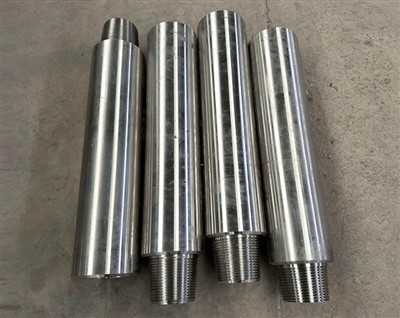
If you’re ready to discuss your non-magnetic stabilizer needs, including permittivity requirements, reach out to our team to request samples or technical consultation. We’re here to make sure you get the right material, every time.
Non-Magnetic Tools for Coal References
- Nelson, J. K. (2010). Dielectric Polymer Materials for High-Voltage Engineering. IEEE Transactions on Dielectrics and Electrical Insulation, 17(3), 957-973.
- Ashby, M. F., & Jones, D. R. H. (2012). Engineering Materials 2: An Introduction to Microstructures, Processing and Design (4th ed.). Butterworth-Heinemann.
- Krevelen, D. W. van, & Te Nijenhuis, K. (2009). Properties of Polymers: Their Correlation with Chemical Structure; Their Numerical Estimation and Prediction from Additive Group Contributions (4th ed.). Elsevier.
- Zhang, Y., et al. (2018). Non-Magnetic Ceramic Composites for High-Temperature Dielectric Applications. Journal of the European Ceramic Society, 38(15), 5123-5130.
Shanxi Zhonghe Non-Magnetic Drill Tool Co., Ltd.
Address: No.168 Fenglei Street, Houma City, Linfen City, Shanxi Province, China.
E-mail: lucy@nmdrillcollar.com
WebSite: https://www.zhnmdc.com/
