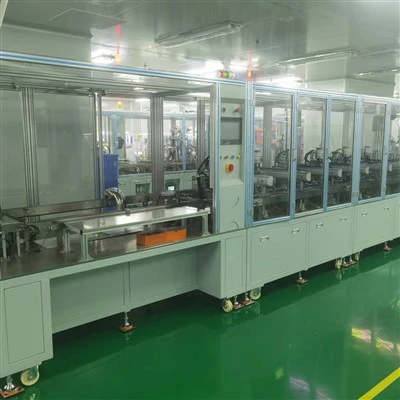
Hey there! I’m a supplier of the Front Assembly Riveting Production Line, and I often get asked about the requirements for the electrical power supply of this production line. So, I thought I’d write this blog to share some insights based on my experience. Front Assembly Riveting Production Line
Voltage and Frequency
First off, let’s talk about voltage and frequency. The Front Assembly Riveting Production Line usually runs on a specific voltage and frequency, which are determined by the design and components of the line. Most of the time, we see production lines operating at a voltage of around 380V in a three – phase system, which is quite common in industrial settings. The frequency is typically 50Hz or 60Hz, depending on the region.
In some regions where the power grid supplies a different voltage, we might need to use transformers to step up or step down the voltage to the appropriate level for the production line. For instance, if the local grid provides 220V, we’ll need a step – up transformer to get it to 380V. It’s crucial to ensure that the voltage and frequency are stable. Fluctuations can cause all sorts of problems, like malfunctions in the riveting machines, inaccurate riveting positions, or even damage to the electrical components.
Power Capacity
Another important requirement is the power capacity. The power capacity needed for a Front Assembly Riveting Production Line depends on the number of machines on the line, their power ratings, and the continuous operation time. You know, different types of riveting machines have different power consumption levels. Some high – speed and high – precision riveting machines can suck up a lot of power.
To calculate the total power capacity, we need to sum up the power ratings of all the electrical devices on the production line, including the riveting machines, conveyor belts, control systems, and lighting. And we also need to add a certain safety margin, usually around 20 – 30%. This is because during startup, some machines might draw a higher current than their normal operating current. So, if the total rated power of all the devices on the line is 100kW, we’d better have a power supply capacity of at least 120 – 130kW to be on the safe side.
Electrical Protection
Electrical protection is a must – have for the Front Assembly Riveting Production Line. We need to install various protection devices to safeguard the production line and the operators. One of the most important protection devices is the circuit breaker. It acts like aguardian angel. When there’s an over – current situation, such as a short – circuit or an overload, the circuit breaker will automatically trip and cut off the power supply, preventing damage to the electrical equipment and reducing the risk of fire.
We also need to use grounding systems properly. Grounding provides a safe path for electrical current in case of a fault. All the metal parts of the production line, like the frames of the riveting machines and the conveyor belts, should be grounded. And we should regularly check the grounding resistance to make sure it’s within the acceptable range.
In addition, surge protectors are essential. Lightning strikes or sudden power surges in the grid can send a huge amount of electrical energy into the production line. Surge protectors can divert this excess energy to the ground, protecting the sensitive electronic components on the line.
Power Quality
Power quality is something that often gets overlooked but is actually really important. Good power quality means a stable voltage, low harmonic distortion, and minimal voltage sags and swells. Harmonics are unwanted electrical frequencies that can be generated by non – linear loads, like variable – speed drives and some types of power supplies on the production line. High levels of harmonics can cause overheating of transformers, motors, and other electrical equipment, and can also interfere with the normal operation of the control systems.
To improve power quality, we can use harmonic filters. These filters can reduce the harmonic content in the electrical system, making the power supply cleaner. We also need to monitor the power quality regularly. There are some power quality analyzers available in the market that can measure parameters like voltage, current, frequency, and harmonic distortion.
Backup Power Supply
In a production line like the Front Assembly Riveting Production Line, unexpected power outages can be a real pain in the neck. They can lead to production delays, product quality issues, and even damage to the equipment. That’s why having a backup power supply is a great idea.
A common choice for a backup power supply is an uninterruptible power supply (UPS). A UPS can provide immediate power when the main power supply fails. It gives us enough time to safely shut down the production line or keep some critical systems running until the main power is restored.
For longer – term power outages, we can consider using a generator. A generator can supply power to the entire production line, allowing us to continue production without major disruptions. But we need to make sure that the generator is properly sized to meet the power requirements of the production line and that it’s maintained regularly.
Maintenance and Monitoring
Regular maintenance and monitoring of the electrical power supply are crucial for the smooth operation of the Front Assembly Riveting Production Line. We should have a maintenance schedule in place to check the electrical components, such as cables, connectors, and switches, for signs of wear and tear, loose connections, or corrosion.
Using monitoring systems can also help us detect potential problems early. There are some smart monitoring devices that can collect data on voltage, current, power consumption, and temperature. We can analyze this data to identify any abnormal trends or patterns, and take preventive actions before a major problem occurs.
In conclusion, the electrical power supply for the Front Assembly Riveting Production Line has several requirements, including proper voltage and frequency, sufficient power capacity, effective electrical protection, good power quality, backup power supply, and regular maintenance and monitoring. Meeting these requirements can ensure the reliable and efficient operation of the production line, reduce downtime, and improve the quality of the products.
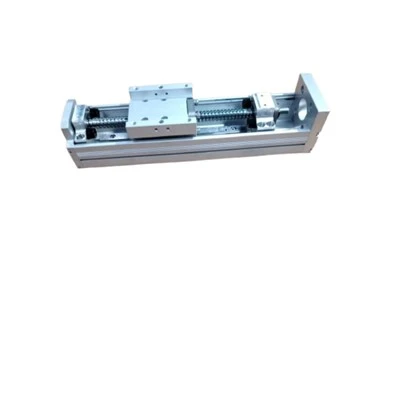
Slide Table and Linear Module If you’re in the market for a Front Assembly Riveting Production Line and want to know more about the electrical power supply requirements or have any other questions, feel free to reach out to me. I’m more than happy to have a chat and discuss how we can meet your specific needs. I can offer you professional advice and solutions to make your production process as smooth as possible. So, don’t hesitate to contact me for a detailed procurement discussion.
References
- Electrical Engineering Handbook, M. S. Shooman
- Industrial Power Systems Handbook, Roger C. Dorf
Yangning (Xiamen) Intelligent Technology Co., Ltd.
With abundant experience, we are one of the most professional front assembly riveting production line manufacturers in China. As we have world-leading production equipment and strong manufacturing capabilities, we warmly welcome you to buy bulk advanced front assembly riveting production line from our factory. Customized orders are welcome.
Address: Room 307-2, No. 15 Duiying Road, Software Park Phase III, Torch Hi-Tech Zone, Xiamen, Fujian, China
E-mail: mia@ynautos.com
WebSite: https://www.ynautos.com/
